28 Operations in 24 Hours: What Hezbollah's Drone Release Tells Us About the New Architecture of Escalation
Hezbollah's 24 May announcement of 28 operations in a single day, followed by drone footage of an attack in southern Lebanon, illustrates how non-state actors weaponize information as readily as they deploy hardware. The story is not just about the strikes — it is about who controls the frame, and why that control matters more than the casualty count.
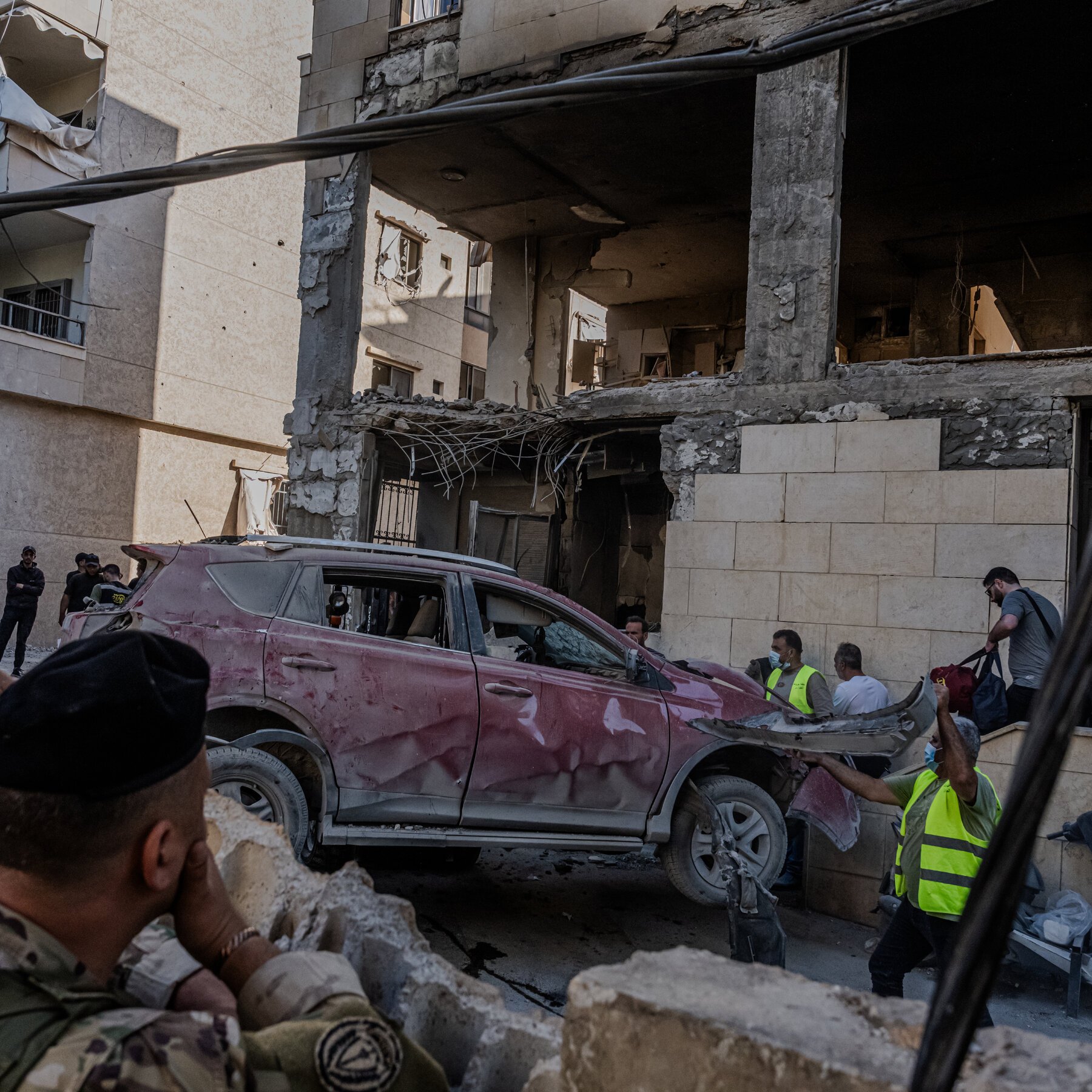
On 24 May 2026, Hezbollah announced it had carried out 28 distinct military operations against what it calls "Zionist army forces" within a single 24-hour window. That same day, the group released drone footage — authenticated by its own media apparatus and circulated via channels associated with the resistance axis — depicting an attack on Israeli military positions near Rashaf, a town in southern Lebanon. The video showed what the group described as a strike against Israeli forces; Israeli military sources had not issued a public confirmation or denial as of this publication's filing deadline.
The operational announcement and the video release are not separate events. They are two components of a single information architecture — one that Hezbollah has refined over years of coexistence with, and confrontation with, Israeli forces along the Lebanon frontier. The 28-operation figure is a signal calibrated for multiple audiences simultaneously.
The Signal Economy of the Resistance Axis
Hezbollah's public communications are not improvisation. The group runs a media operation that is as structurally sophisticated as its military wing. When it announces 28 operations in 24 hours, the specificity of the number is not incidental — it is the message. A precise figure implies a systematic operational tempo, a degree of battlefield tracking that suggests command-and-control infrastructure, and a willingness to be held to account by the audiences watching. That last point is often overlooked: resistance-axis communication is performative precisely because it is public. The announcement is addressed to Lebanese constituencies who want visible proof that the group is active, to regional audiences aligned with the resistance framework, to international observers tracking escalation thresholds, and to Israeli decision-makers who must factor Hezbollah's operational tempo into their own calculations.
The drone footage of the Rashaf attack serves a parallel function. Visual evidence of a strike — timestamped, geographically specific, depicting hardware in action — does work that a text statement cannot. It carries a different evidentiary weight. It also carries risk: a video can be analyzed frame by frame, geolocated, compared against open-source satellite imagery, and challenged by opposing sides with their own footage. Hezbollah's decision to release the Rashaf video suggests confidence that the footage will withstand scrutiny, or at minimum that the release serves its strategic purpose regardless of downstream verification.
Why the Numbers in the Announcement Matter Less Than the Framing Around Them
It is worth being precise about what the sources do and do not confirm. According to the Hezbollah statement carried by Tasnim News on 24 May 2026, Islamic resistance fighters conducted 28 separate military operations within a 24-hour period. Tasnim News is an Iranian state-affiliated outlet; its framing of the statement treats the operations as a unified campaign rather than discrete incidents. That framing choice is itself meaningful.
Western and Israeli sources have not independently verified the 28-operation figure as of this article's filing. Open-source intelligence analysts tracking the Lebanon frontier have noted that Hezbollah operational disclosures and Israeli military statements frequently describe the same incidents from opposing frames — with significant divergences in claimed outcomes, target types, and casualty figures. This is the normal epistemic condition of active conflict reporting: two sides with strong incentives to manage information, releasing data shaped by those incentives.
What the Rashaf video establishes more reliably is that Hezbollah possesses and is willing to deploy unmanned aerial capability against Israeli military positions in southern Lebanon. The footage, released on 24 May 2026, shows a drone engaging what the group describes as Israeli army forces. Israeli authorities had not issued a public response to the footage as of filing.
The Information Layer Is the Battlefield Now
The structural reality this episode illustrates is not unique to the Hezbollah-Israel dynamic, but it is legible there with unusual clarity. Non-state armed actors operating with significant territorial depth, sophisticated weapons systems, and durable political legitimacy have developed a capacity to shape the information environment around their military operations that once required state-level infrastructure.
Hezbollah announced operations, documented them with visual evidence, and controlled the primary frame through which those operations entered the information ecosystem — all within a 24-hour window on 24 May 2026. The footage was produced, presumably, by Hezbollah's own media personnel embedded with operational units or operating near the engagement zone. The statement was drafted, approved, and distributed with a precision that implies institutional coordination. The Telegram distribution was rapid enough that the footage had already reached resistance-axis media channels before most Western wire services had filed initial reports.
This is not improvised information warfare. It is a system. And systems can be studied, characterized, and assessed for their strategic logic.
The logic appears to be this: Hezbollah has concluded that controlling the primary narrative — even briefly — confers operational advantage in a conflict where the international attention horizon is short, where escalation pressure from external actors is a first-order variable, and where domestic Lebanese political legitimacy requires visible military activity. Announcing 28 operations in 24 hours does not require that all 28 operations be tactically decisive. It requires that they be documented, announced, and framed in a manner consistent with the group's strategic communication objectives. The threshold for an operation to be announced is lower than the threshold for it to be operationally significant. That asymmetry is the point.
What Remains Uncertain — and Why That Matters
Three things the sources do not establish with confidence. First, the military effect of the 28 announced operations — whether any achieved verified damage to Israeli positions, and whether any resulted in Israeli casualties — is not independently confirmed. Second, the specific tactical purpose of the Rashaf drone attack is not publicly confirmed by either side: whether it was a test of air defenses, a retaliation for a prior Israeli strike, or part of a planned operational sequence remains unclear. Third, Israeli military command's internal assessment of the escalation threshold — at what point routine operational tempo becomes something requiring a substantive response — is not publicly stated.
These gaps are not incidental. They define the space within which both sides operate. Hezbollah's information architecture fills those gaps with its own narrative; Israeli official statements fill them with theirs; the international system — which has limited leverage on the Israel-Lebanon frontier absent a ceasefire framework — observes and documents without materially shaping the dynamic.
The desk filed this story differently from how most wire outlets did on 24 May. Wire coverage this week has centered on ceasefire negotiations elsewhere in the region, with Hezbollah-related reporting subordinated to that frame. This publication treats the 28-operation announcement and the Rashaf video as first-order news — because the scale of operational tempo, the sophistication of the accompanying information architecture, and the implications for escalation management on the Lebanon frontier are not incidental to the regional picture. They are central to it.
The footage from Rashaf, whatever its ultimate tactical significance, confirms something the international system has struggled to process: the actor operating along Israel's northern border is not a militia that occasionally fires rockets. It is a structured military force with its own doctrine, its own media infrastructure, and its own strategic communication logic. When that force announces 28 operations in a single day, the relevant question is not whether the number is accurate. It is what the announcement is designed to accomplish — and whether the international system has any mechanism for responding to that design before the next cycle begins.
Wire provenance
This editorial synthesis draws on the following public wire/social posts:
- https://t.me/JahanTasnim/8923
- https://t.me/tasnimnews_en/5677
- https://t.me/JahanTasnim/8922