Ardibehesht Kitab: Inside Tehran's Annual Celebration of Reading and Cultural Identity
The Ardibehesht Kitab book festival opened at Tehran Book Garden on May 23, positioning Iran's reading culture as a vector for soft power and domestic cultural consolidation. The event's framing draws on longstanding official narratives about mass literacy — a claim with genuine historical weight but one that sits uneasily with contemporary socioeconomic pressures on Iranian households.
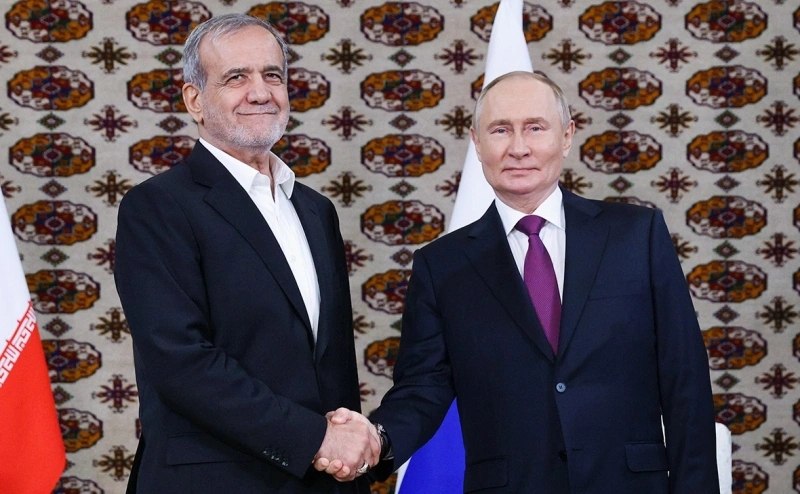
The Ardibehesht Kitab cultural event opened at Tehran Book Garden on May 23, 2026, the latest iteration of an annual gathering that Iranian officials frame as a statement about the country's literary culture. The event's tagline — "In the air of the world's most book-reading leader" — appeared in reporting by Tasnim News Agency, an Iranian state-affiliated news service, which described the festival as part of a broader effort to position reading as a defining feature of Iranian national identity.
The Tehran Book Garden, a purpose-built cultural complex in the capital's central districts, has hosted similar events since its opening. The venue's architecture — designed around interconnected pavilions and open reading spaces — reflects a deliberate investment in cultural infrastructure rather than purely commercial book retail. Whether the facility functions primarily as a genuine cultural centre or as a state-orchestrated backdrop for每年的宣传 on reading depends on whom you ask and what portion of Iran's fractured civil society you are willing to count.
What the literacy record actually says
Iran's literacy achievements are not invented. The country made significant progress through the 1970s and 1980s, driven by a combination of mandatory education reforms and intense post-revolution mobilisations that sent literacy workers into rural areas. By the early 2000s, UNESCO figures placed adult literacy rates in Iran above 85 percent — a genuine accomplishment relative to the country's starting point. The share of the population with university education has grown substantially over the past two decades, and Iran maintains a high density of published titles per capita compared to most countries in the region.
But the statistics sit uneasily alongside more recent trends. Economic pressure from sanctions has squeezed household budgets, and the cost of books — particularly imported titles and academic materials — has risen sharply relative to wages. Public libraries outside Tehran operate with uneven funding, and the digital generation's relationship with physical books has shifted in ways that official framing rarely acknowledges. Iranian social media circles regularly debate whether the "book-reading" self-image is more aspiration than lived reality — a conversation that rarely surfaces in state-linked media but is audible in independent Persian-language outlets and diaspora publications.
The gap between official narrative and lived experience is not unique to Iran. Most countries with state-sponsored cultural festivals combine genuine cultural investment with regime messaging. The question is the ratio — and that ratio varies across administrations and depends heavily on the political temperature of the moment.
The soft-power dimension
The timing of Ardibehesht Kitab matters contextually. Iran's external communications apparatus has increased its emphasis on cultural and educational messaging as direct diplomatic channels have narrowed under sanctions pressure. Book festivals in major capitals generate coverage in regional and international media, and the framing of such events as mass participation cultural phenomena serves purposes beyond the immediate literary community.
This is not unique to Tehran. Saudi Arabia has invested heavily in its own literary festivals, book fairs, and cultural infrastructure as part of Vision 2030. The UAE has built Dubai and Abu Dhabi into regional publishing hubs. Qatar's investment in education and cultural soft power through Al Jazeera and academic institutions is well documented. In a region where cultural credibility competes with economic and security messaging, books function as a low-cost, high-legitimacy vehicle for international positioning.
For Iran, the added dimension is the explicit reference to leadership. The "world's most book-reading leader" formulation links the festival to Supreme Leader Ali Khamenei's longstanding presentation of himself as a man of letters — a characterisation reinforced through state media channels and official publications that frequently document his reading habits and library collections. Whether Khamenei actually reads at a rate that justifies the title is unknowable from available sources; what is verifiable is that the framing positions reading as a loyalty marker, a quality associated with the person at the apex of Iran's political structure rather than with the population broadly.
Structural pressures on Iran's cultural institutions
The Ardibehesht Kitab festival operates within a publishing ecosystem under genuine strain. Iranian publishers — both state-affiliated and nominally independent — face recurring challenges acquiring foreign rights, printing materials, and maintaining distribution networks when sanctions complicate international transactions. Paper costs have risen sharply. Translation pipelines for new titles from English, French, German, and other major languages slow when the financial infrastructure for royalty payments is disrupted.
These pressures do not appear in event coverage that leads with slogans about reading culture. They are, however, documented in trade reporting by publishing industry monitors who track the Iranian market, and they represent the gap between official framing and operational reality that characterises much of Iran's cultural sector.
Independent Persian-language media have reported on publishers who have shifted to smaller print runs and shorter books — a practical response to rising costs — and on readers who describe a growing reliance on digital copies and second-hand markets rather than new purchases at official prices. This is not a system collapse; it is a managed contraction, with the state filling gaps in cultural infrastructure while the broader market adjusts to a changed economic environment.
What this event signals, and what it does not
Ardibehesht Kitab is, on its face, a book festival. It brings together publishers, authors, readers, and cultural officials in a setting designed to celebrate literature. That such events happen at all in Iran — despite genuine economic headwinds and a political environment that constrains some forms of expression — reflects a continuity of cultural investment that is not trivial.
What the event's framing obscures is the contested nature of Iran's reading culture at the grassroots level. The claim to being the world's most book-reading society is a political formulation, not a measurable standard. Iran's literacy achievements are real; the saturation of reading as a lived daily practice among the general population is less clearly established, and available independent reporting suggests meaningful variation by age, geography, and economic class.
The festival's actual significance may be less about reading rates than about institutional continuity — the maintenance of cultural routines through periods of external pressure and internal turbulence. Tehran Book Garden remains open. Events continue. The language of cultural achievement persists. Whether that language maps onto what is happening on the ground is a separate question, one the official framing does not invite.
This article was structured around the Tasnim News Agency report on the Ardibehesht Kitab event. Monexus sought to contextualise the festival within Iran's broader cultural landscape and publishing ecosystem, distinguishing between verifiable literacy achievements and the more promotional dimensions of the event's framing.
Wire provenance
This editorial synthesis draws on the following public wire/social posts:
- https://t.me/tasnimnews_en/28456