The Ballroom Economy: Why Trump's Market Scorekeeping Has Nothing to Do With Your Grocery Bill
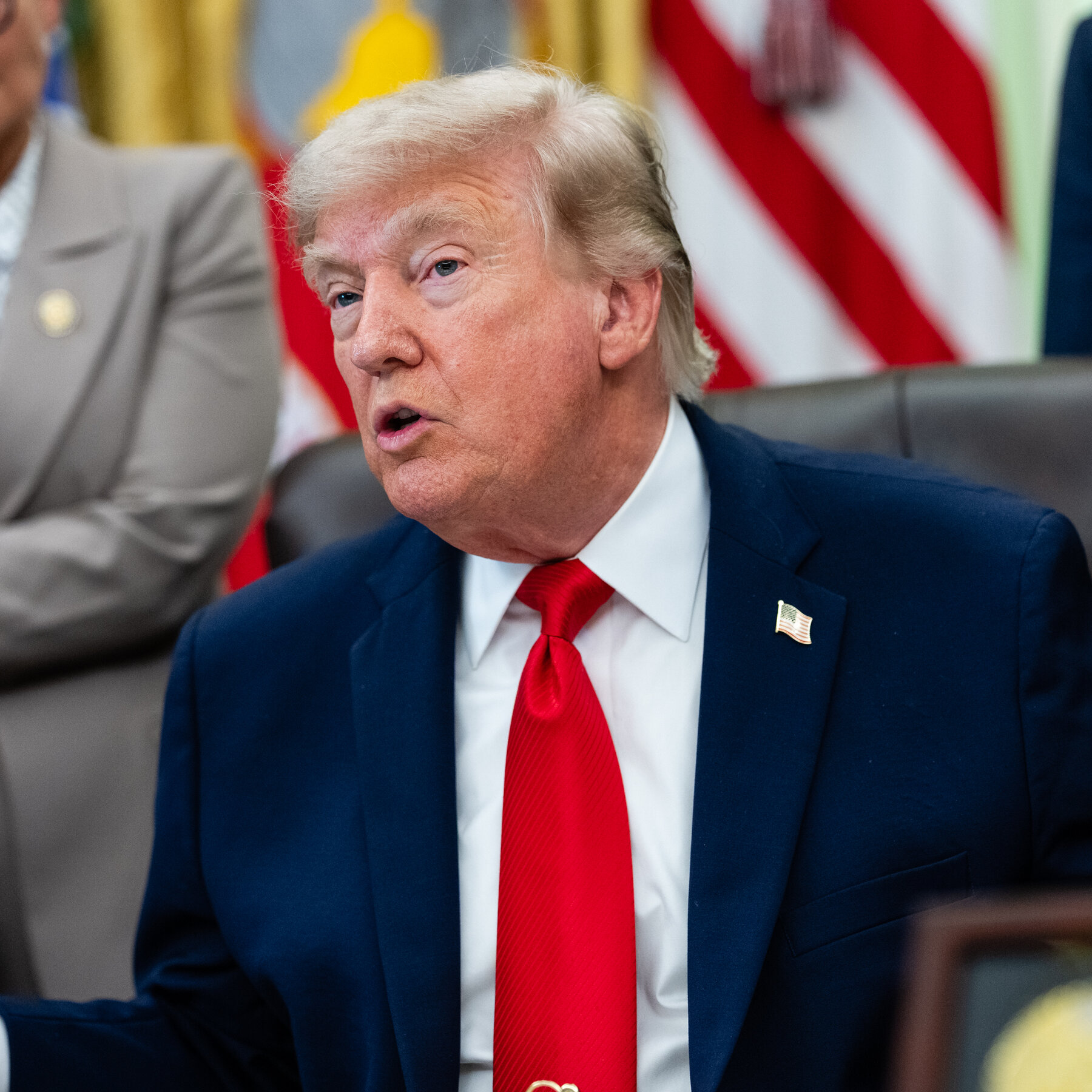
Donald Trump has a number he likes. Six hundred points. He said it to Kevin Warsh, the Federal Reserve governor, in front of cameras on 23 May 2026: the market is up 600 points, therefore they like you. The unspoken corollary, repeated dozens of times in press availabilities since January, is that the ballroom plan — a proposed overhaul of a federal tax provision governing certain venue-related business expenses — is working. The stock market is the report card. Six hundred points is the gold star.
The problem is that the stock market and the economy lived experience of most Americans have been tenuously connected for a decade, and are increasingly diverging in 2026 as tariff shock filters through supply chains, retail pricing, and small-business confidence. Trump's ballroom plan has been promoted in dozens of appearances. Americans' economic pain — measured in grocery price increases, tariff-driven input costs for manufacturers, and small-business borrowing tightening — has been systematically downplayed in the same forums. The president talks about what he can sell. He does not talk about what he cannot control.
The Market Is Up. You Are Not.
The conflation of equity price indices with national economic health is a rhetorical maneuver with a long history in Washington. Each administration finds its version of it. Trump's is unusually naked. On 24 May 2026, Reuters reported that the president had raised the ballroom plan dozens of times in public remarks while simultaneously deflecting questions about household-level inflation and consumer confidence data that continue to track below pre-tariff levels. The plan, which would expand deductions for certain business entertainment expenses under a legacy federal provision, is framed internally as a signal to markets: Washington is pro-growth.
The market signal, for now, appears receptive — partly because equity markets have priced in optimism about prospective trade deals, and partly because the dollar's reserve-currency status insulates Wall Street from currency-side consequences that typically constrain executive overreach. But a deduction available to businesses that maintain formal ballroom-style facilities is not a transfer payment to a family deciding between rent and groceries. These are categorically different economic mechanisms. Treating market-index performance as evidence that ordinary Americans are fine requires ignoring the consumer-price data that the Bureau of Labor Statistics has been publishing throughout 2026 — data that show food-at-home inflation remaining elevated and discretionary spending contracting in lower-income quintiles.
The Fed Is Not a Cheerleader
The Warsh encounter deserves attention precisely because it exposed the gap between executive preference and institutional mandate. On 23 May 2026, Trump told Warsh — in front of reporters — that the stock market's 600-point move meant markets liked him. Warsh, speaking the same day, stated the Federal Reserve's mandate plainly: price stability and maximum employment. He did not mention the president by name. He did not reference equity indices.
This is not a small thing. The Federal Reserve's operational independence is a structural feature of American monetary policy, not a courtesy extended to whoever sits in the Oval Office. Governors do not confirm or deny that market performance constitutes a referendum on executive competence. Trump's attempt to establish exactly that — to make Warsh a co-signatory on the administration's market scoreboard — is notable precisely because it failed. Warsh's reply was professionally calibrated, which is to say it was a non-reply. The president heard what he wanted to hear. The institutional record shows something quite different.
The Discipline of 'Good News Only'
Trump's statement to ABC News on 24 May 2026, that any deal news would be only good news, and that he does not make bad deals, is the most revealing line in the thread. It is not a policy statement. It is a communications directive. The president is not describing a negotiating posture — he is preemptively cancelling bad news. News that a deal fell through will not be announced as a deal that fell through. It will be retconned into something that was never a deal in the first place, or into a deal in formation, or into a decision deferred to a later perfect moment.
This is, fundamentally, a refusal of negative feedback. Markets require the capacity to process bad news in order to price efficiently. An executive who prospectively suppresses the announcement of disappointing results does not make markets more confident — he makes them more fragile. The information environment becomes unreliable. Positions that look solid at current valuations can conceal正在正在正在正在正在正在正在正在正在正在正在正在正在正在正在正在正在正在正在正在正在正在正在正在正在正在正在正在正在正在正在正在正在正在正在正在正在正在正在正在正在正在正在正在正在正在正在正在正在正在正在正在正在正在正在正在正在正在正在正在正在正在正在正在正在正在正在正在正在正在正在正在正在正在正在正在正在 being built on a ground floor that is no longer there.
Serious analysis of what this means for the Federal Reserve's independence and for consumer confidence in 2026 must grapple with a structural question that the president's communications strategy is designed to prevent: what happens when the gap between the market scoreboard and actual household economics becomes too large to bridge with optimism?
The ballroom plan may yet pass. The market may hold its 600-point gain. But the families making decisions at the kitchen table — not in the trading room — are operating in a different economy, with different prices, different interest rates on their credit cards, and a different set of concerns that no amount of positive-media framing is going to resolve.
Wire provenance
This editorial synthesis draws on the following public wire/social posts:
- http://reut.rs/4dCeXTK
- https://t.me/ClashReport