The Ceasefire That Was Never Really One: What Hezbollah's Statements Tell Us About Israel's Northern Front
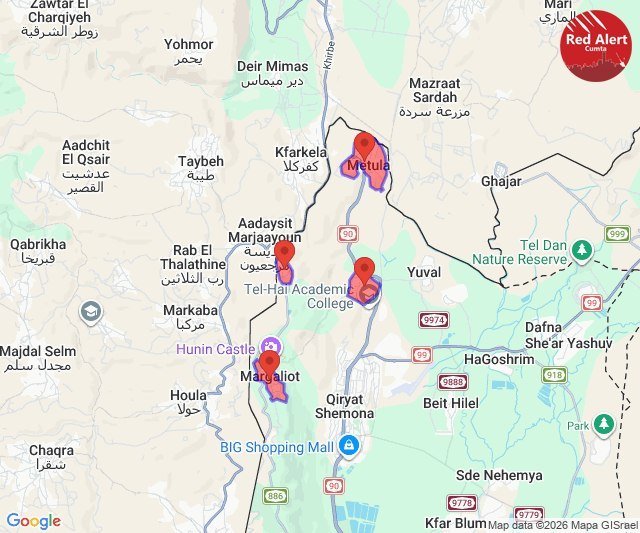
The fiction that the Israel-Hezbollah ceasefire was holding began dissolving before it was formally announced. On 24 May 2026, Hezbollah released multiple batches of statements confirming new military operations against Israeli forces in southern Lebanon — actions the group framed explicitly as responses to Israeli ceasefire violations and attacks on villages in the border area. The statements, distributed through Telegram channels including Al Alam and WarFallenWitness, described artillery and missile strikes targeting Israeli military gatherings at the Deir Siryan River and the town of Rashaf. Israeli forces, meanwhile, carried out their own strikes on the Lebanese village of Arabsalim, according to the same Arabic-language channels publishing Hezbollah's statements. Israel has not issued formal confirmation or denial of the specific strikes on Arabsalim at time of publication, though IDF forces have conducted repeated operations in the southern Lebanon border zone in preceding months.
This publication has long argued that ceasefire frameworks in asymmetric conflicts tend to function less as durable agreements than as intervals between phases of hostilities. What happened on 24 May 2026 offers a case study: not the collapse of a ceasefire, but the revelation that the ceasefire was always conditional — conditional on one side's willingness to stop shooting while the other defined "stopping" narrowly enough to continue what it was doing.
The Language of Escalation Obscures the Pattern
The first layer of misframing in this story is the word "escalation." Headlines describing Hezbollah's actions as an escalation treat the Lebanese group's move as the originating cause of a deterioration. The sourcing convention that leads newsrooms to frame conflict through the language of official spokespeople — Israeli military briefings, Western diplomatic readouts — produces a narrative structure that assigns cause in ways that follow institutional interest rather than evidence.
Hezbollah's statements on 24 May, released in at least two batches between 09:00 and 10:06 UTC, named their own operations explicitly as responses. The group cited what it described as Israeli ceasefire violations and attacks on villages in southern Lebanon, framing its strikes on Israeli military gatherings at the Deir Siryan River — struck, per the statements, on multiple occasions within hours — and the town of Rashaf as defensive in character. That framing is self-serving; it is also consistent with the pattern of statements the group has issued throughout the post-2024 period, and with the structural logic of how ceasefire violations are documented by any party that believes itself entitled to respond.
The question of which party violated first is not one that can be resolved by consulting Hezbollah's Telegram statements alone. But the question of whether the framing of "Hezbollah escalates" accurately describes the situation is separate from the question of who fired first. A ceasefire that one party considers violated is a ceasefire that one party considers ended. The language of escalation, which treats the second party's move as the news, systematically obscures that the first party may have already broken the compact.
Structural Ambiguity Was Always the Deal's Design
The second frame worth examining is the one embedded in the ceasefire architecture itself. The November 2024 ceasefire agreement between Israel and Hezbollah was, from its inception, a framework built on strategic ambiguity rather than enforceable terms. It stopped the fighting without resolving the underlying questions that had produced it — the status of the border zone, the presence of armed groups north of the Blue Line, the competing interpretations of what UN Security Council Resolution 1701 actually requires.
Both parties entered that agreement with incentives to stop fighting and different reasons for wanting the interval it provided. Israel needed space to address other fronts; Hezbollah needed time to rebuild; the United States and France needed a diplomatic win; Lebanon needed relief from a war it could not sustain. The deal worked precisely because it papered over contradictions rather than resolving them.
What Hezbollah's statements on 24 May reveal is that the interval is closing. When a party to an ambiguous ceasefire begins issuing formal statements citing violations — not isolated incidents but a pattern — it is signaling that the calculation has shifted. The deal is not working for them, or is working less well than the alternatives. This is not escalation in the sense that news coverage tends to imply — irrational aggression, unprovoked violence. It is the rational recalculation of a party that has decided the ceasefire no longer serves its interests, or that the other side has already effectively broken it.
The Telegram Source Problem Is Not Unique to Hezbollah
The third layer of complexity involves the sourcing itself. Hezbollah's statements are distributed primarily through Arabic-language Telegram channels with known affiliations — Al Alam is an Arabic-language service linked to Iranian state media. These channels are not neutral wire services. They are mouthpieces with a structural interest in framing Hezbollah's actions as legitimate defense and Israel's as aggression. That framing is the functional equivalent of what any military communications operation does: present its own actions in the most favorable legal and moral light.
This publication does not treat Al Alam or similar channels as authoritative. But treating them as irrelevant is equally wrong. The statements are the primary evidence of what Hezbollah claims to have done, how it justifies those actions, and what it is prepared to acknowledge publicly. Stripped of their propaganda function — the framing, the moral claims, the attribution of bad faith to the other side — they contain specific operational claims that can be cross-referenced against Israeli military statements and Western reporting. The gap between what Hezbollah says it struck and when, and what Israel acknowledges having been struck, is itself informative.
The question of sourcing is ultimately a question about the architecture of information in this conflict. Israeli military statements carry institutional authority in Western newsrooms. Iranian-aligned Telegram channels carry institutional stigma. Both deserve scrutiny; neither deserves uncritical acceptance. The facts of what was struck, when, and by whom, exist independent of the press releases that announce them — but accessing those facts requires navigating both sets of filters simultaneously.
What a Fragile Ceasefire Actually Means for Civilians
The ceasefire between Israel and Hezbollah displaced more than 100,000 civilians on the Lebanese side alone during the 2024 hostilities. Israeli communities along the northern border saw their residents evacuated for months. The agreement that ended those months was welcomed as a reprieve — not a solution, but a reprieve with real human value.
If that reprieve is now fraying, the consequences are not abstract. Lebanese villages in the south face renewed risk of strikes. Israeli communities face renewed risk of rocket fire. The humanitarian calculus does not favor either side's framing; it favors a ceasefire that holds, and it exposes the cost of one that does not.
What Hezbollah's 24 May statements suggest — whether one reads them as legitimate response or manufactured pretext — is that the framework is under pressure. The parties have not renegotiated the terms. They have not agreed on what the terms mean. They are operating under an agreement that was always a pause rather than a peace, and that pause is shortening.
The outcome on 24 May is not a single day's violence. It is the visible symptom of a ceasefire that was designed to be ambiguous and is now being tested against the limits of that ambiguity. Whether it holds — or is renegotiated, or collapses — will determine whether the northern border returns to the managed instability of the pre-2024 period or descends into a new phase of sustained conflict. Neither outcome is inevitable. But the trend line, on the evidence of the statements released this morning, runs in one direction only.
Wire provenance
This editorial synthesis draws on the following public wire/social posts:
- https://t.me/alalamarabic/78654
- https://t.me/alalamarabic/78656
- https://t.me/wfwitness/11234