The Ceasefire That Isn't a Deal: Time, Leverage, and the Iran Nuclear Slow-Walk
Trump says time is on Washington's side in Iran negotiations. The market disagrees — and so does the shape of the talks themselves.
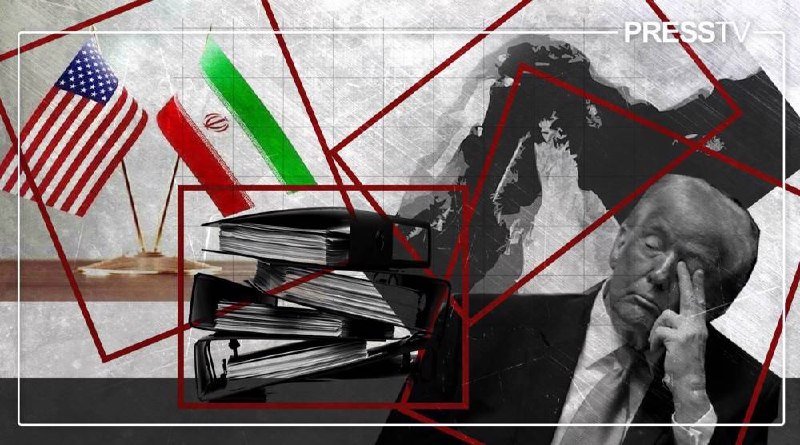
There is a ceasefire. There is not a deal. The distinction matters more than the diplomatic choreography suggests.
On 23 May 2026, reports surfaced that Washington and Tehran were closing in on a 60-day extension of the existing ceasefire — a breathing space, not a settlement. Hours earlier, reporting from Faytuks News indicated that President Trump had instructed his representatives to abandon any urgency. "Time is on our side," the president reportedly told his team. That framing — patient, declarative, confident in the weight of waiting — tells us something about the administration's theory of the negotiation. It also tells us something about what that theory cannot deliver.
The Shape of the Stalemate
The ceasefire that halted exchanges between the United States and Iran in the spring of 2026 is a managed pause, not a resolved conflict. Both sides have incentives to keep it in place. Iran faces an economic stranglehold that even a partial sanctions relief would ease. Washington has an interest in avoiding the escalation a resumed military campaign would bring, at least until the pressure it can apply has been fully tested. Neither party, on the available evidence, is prepared to make the concessions that a comprehensive agreement would require.
The Polymarket data is instructive here — not as prophecy, but as calibrated professional opinion. As of 23 May 2026, the probability that Iran agrees to surrender its enriched uranium stockpile by the end of the month stood at roughly 8 percent. A week earlier, that figure sat at 7 percent. The movement is marginal, noise within a signal that has been consistently clear: the market does not expect Tehran to capitulate on the nuclear question in the near term. Enriched uranium is not incidental to these negotiations — it is the core asset Tehran is being asked to give up. That the odds remain in single digits is not an accident of market irrationality. It reflects a sober reading of Iranian political dynamics, in which any government that surrendered the enrichment programme without equivalent structural concessions would face severe domestic backlash.
The Extension Gambit
The reported 60-day extension is a different animal. It preserves the ceasefire, extends the period of reduced tensions, and allows both delegations to return to their capitals with something to show. For Washington, it delays the pressure of having to decide whether to resume a military track. For Tehran, it buys time under a lighter sanctions regime than the one that would reassert if the talks collapse. Both sides can frame the extension as a success — which is precisely why it is possible.
But an extension is not a framework. It does not resolve the fundamental disagreement about what Iran's nuclear programme may look like in five years, or ten. The enriched uranium question — whether Iran retains the capacity to enrich, not just whether it surrenders existing stock — remains open. A stockpile handover without a verified cessation of enrichment capability would leave Iran in virtually the same position it occupied before the talks began, with additional time to advance its technical knowledge. That is a outcome the Trump administration's "time is on our side" posture is presumably designed to prevent. Whether it succeeds in using that time productively, rather than simply consuming it, is a different question.
What the Slow-Walk Cannot Solve
Trump's instinct — to wait, to apply pressure, to signal that the United States is not desperate for a deal — has a certain internal logic. Sanctions work slowly but they do work. The Iranian economy has contracted. The rial has weakened. Emigration of skilled professionals has accelerated. The regime's regional ambitions have been partially checked by the loss of interlocutors and the degraded logistics of proxy support.
The problem is that none of this has produced the behavioural change the maximum-pressure playbook promises. Iran's negotiating position remains constrained but coherent. The clerical establishment has survived previous rounds of heavy sanctions and has demonstrated a high tolerance for managed hardship. The慢 walk may accumulate leverage over years — but it does not produce the breakthrough that would allow the Trump administration to declare victory in time for a news cycle that rewards immediacy.
The Honest Uncertainty
The sources do not agree on what the endgame looks like. Al Jazeera's breaking coverage on 24 May noted that observers would not know who had won until the final outcome was determined — a formulation that concedes the genuine opacity of the situation. The 60-day extension, if confirmed, is real progress in the narrow sense that it prevents the ceasefire from lapsing. Whether it represents movement toward a comprehensive deal or simply the repetition of a holding pattern is something the available evidence does not resolve.
What can be said with confidence is this: the gap between a ceasefire and a deal is the gap between managing a problem and solving one. The Trump administration appears to have chosen management. Whether that is strategic patience or strategic avoidance of a harder choice is the question that will define the next chapter of this negotiation — and the one after that, and the one after that.
Wire provenance
This editorial synthesis draws on the following public wire/social posts:
- https://twitter.com/Faytuks/status/2058554485148954821/photo/1
- https://x.com/polymarket/status/2058176467100475392