Hezbollah Chief Demands Government Reversal, Calls for Street Protests Against Beirut
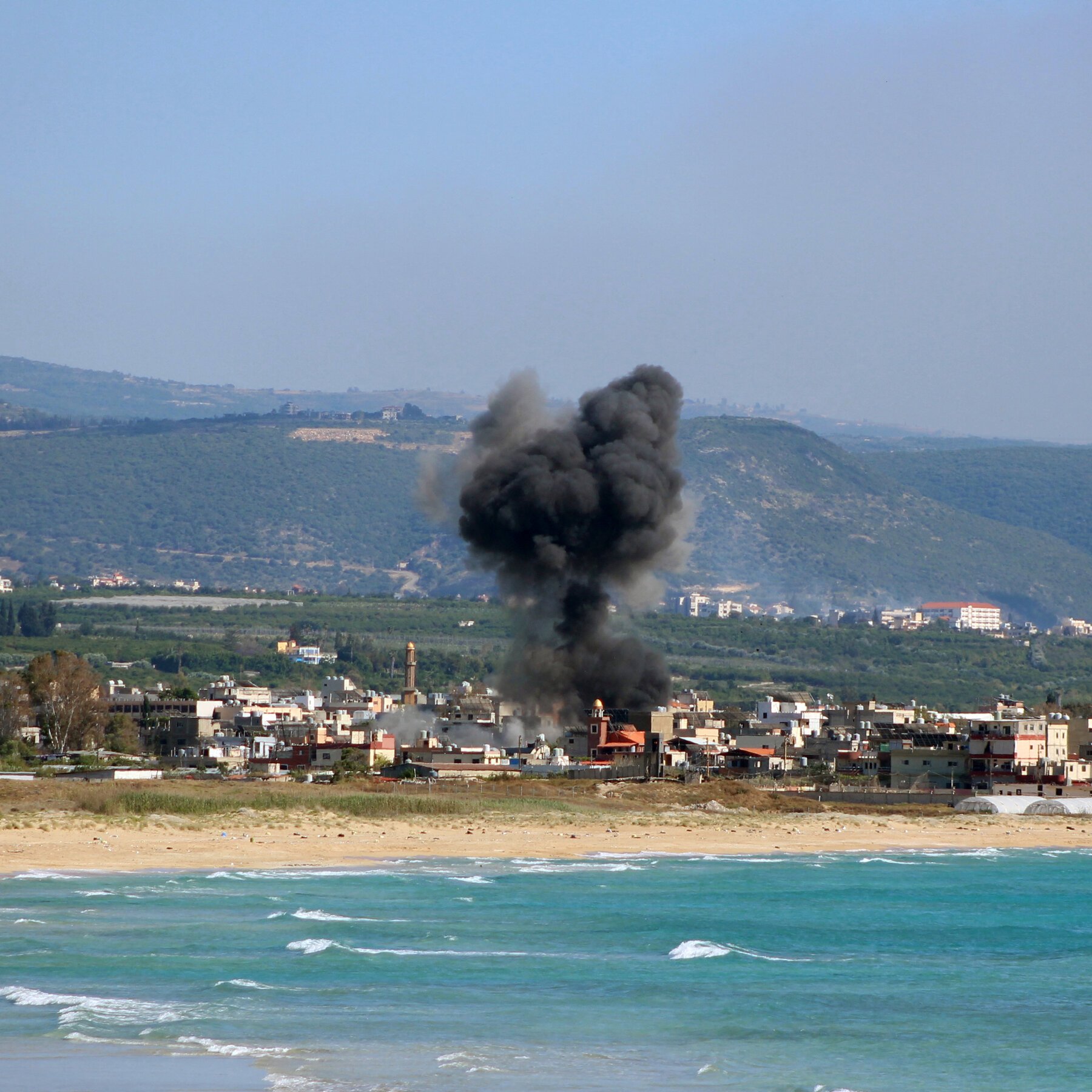
Hezbollah Secretary General Naim Kassem called on Saturday for the overthrow of Lebanon's elected government, escalating a confrontation with Beirut that has been building since the state moved to consolidate its monopoly over armed force. In a speech broadcast from an undisclosed location, Kassem directed his appeal primarily toward Hezbollah's own supporters, urging them to take to the streets and remove a government he said had failed to stand with its own people.
The intervention came amid heightened scrutiny of the November 2024 ceasefire agreement, which both sides acknowledge has failed to deliver a durable settlement. Fifteen months after the indirect diplomatic process that produced that framework, Kassem said Lebanese citizens had waited in vain for its implementation.
The immediate trigger is a decision by the Lebanese government to restrict weapons exclusively to state institutions — a move that, if enforced, would strip Hezbollah of the independent military capacity it has maintained since the group was founded in the early 1980s. Kassem demanded the government reverse that decision. "The Lebanese government should not stand in front of its people," he said, according to a translation of his remarks carried by Iranian state news agency Tasnim on 24 May 2026. He called on the government to reverse the weapons restriction so the state could "stand with its people."
That framing — casting the government as an obstacle to resistance rather than its guarantor — marks a significant rhetorical escalation. Hezbollah has a documented history of treating challenges to its armed status as existential threats. The speech signals that the group will not accept diplomatic normalisation that diminishes its military role quietly.
The Ceasefire That Never Arrived
The November 2024 agreement, brokered through indirect US-French-Iranian shuttle channels, established a framework for a phased Israeli withdrawal from southern Lebanon and called on Beirut to assume sole responsibility for security in the border area. The Lebanese Armed Forces were intended to deploy where Hezbollah had previously operated. That deployment has been partial and contested. Hezbollah contends the agreement's conditions were never met; the Lebanese government and its Western backers argue the group has continued activities inconsistent with the terms.
Kassem's speech made no direct reference to the ceasefire text but framed the present moment as a continuation of the resistance's original mandate. "The resistance is the product of the leadership of Sayyed Hassan Nasrallah," he said, invoking the assassinated secretary general by name. The invocation serves a dual purpose: it grounds current claims in the group's founding legitimacy and signals that the leadership transition to Kassem represents continuity, not a break with prior strategy.
Who Controls the Streets of Beirut
The call to bring down a sitting government through street demonstrations is, even by Lebanese standards, an extraordinary demand from an armed political movement. Lebanon has experienced sustained periods in which the formal state competed with armed factions for control of public space. The Cedar Revolution of 2005, the 2019 protests against economic collapse, and recurring episodes of militia-adjacent mobilisation all illustrate the volatility of mass action in a country where political identity and armed capacity are not easily separated.
Whether Kassem's appeal translates into street mobilisation is far from certain. Hezbollah retains a substantial base of loyalists and a network of municipal and social institutions that can organise demonstrations. But the Lebanese economy remains fragile, the refugee population from the 2023–2024 conflict has not been fully resettled, and large segments of the urban middle class have shown limited appetite for renewed mobilisation on behalf of any faction. The sources do not indicate the scale of any protests that may have materialised as of publication.
The government's capacity to respond is also constrained. Lebanon's state institutions have long operated within the shadow of factional power. The armed forces, while formally under state command, have navigated a delicate relationship with Hezbollah since the 2008 Doha Agreement that ended a brief period of street confrontation between the group and rival factions.
The Regional Dimension
Hezbollah's statements must also be read against the broader regional context. Israeli military operations in southern Lebanon have continued at a reduced tempo since the November 2024 ceasefire, and IDF spokesperson briefings have characterised ongoing surveillance and occasional strikes as enforcement of the agreement's terms. From Hezbollah's perspective, the agreement's failure to produce a full Israeli withdrawal validates continued armed presence. From Israel's perspective, continued Hezbollah activity in the south constitutes a violation.
Kassem's assertion that "what is happening today in southern Lebanon is the beginning of Israel's demise" reflects a rhetorical posture the group has maintained since October 2023, when cross-border exchanges escalated into sustained combat. Whether that framing reflects operational reality or political messaging is a question the available sources do not resolve. The casualties sustained by Hezbollah — including the killing of Nasrallah and much of his senior command in the 2024 Israeli campaign — represent a significant attrition of institutional capacity, even if the group retains reserve forces and ordnance stocks.
Iranian state media, including Tasnim News and Jahan Tasnim, have carried Kassem's statements prominently. That amplification is consistent with Tehran's long-standing pattern of backing Hezbollah as a central instrument of regional influence. It does not, however, clarify whether Iran has directed or endorsed the specific escalation against the Lebanese government, a distinction that matters for assessing how far the crisis might travel.
What Comes Next
The Lebanese government faces a dilemma it has navigated before: how to assert state authority without triggering a confrontation that the state's security apparatus cannot win. The November 2024 agreement was supposed to resolve that tension by giving Beirut international backing to enforce the state's monopoly on force. If Hezbollah refuses to comply and calls for the government's removal, the diplomatic architecture that underpinned the ceasefire may be reaching its limit.
Western diplomatic sources, speaking through wire outlets, have consistently backed the Lebanese state's right to exercise exclusive control over armed groups operating within its territory. Whether that backing translates into material support — financial assistance, diplomatic cover, or security cooperation — will shape Beirut's room to manoeuvre. The sources reviewed for this article do not include statements from the Lebanese government or from the US, French, or Saudi diplomatic offices that have been involved in the process.
What is clear is that the calm produced by the November 2024 agreement has frayed. A government that sought to consolidate state authority has been met not with negotiation but with an ultimatum from one of the country's most powerful armed factions. The streets of Beirut, and the patience of a war-weary population, will determine what follows.
This publication's coverage of Hezbollah's statements foregrounds the Iranian state-media framing alongside the implicit Lebanese government position, given the limited availability of direct Beirut-sourced statements in the material reviewed. A fuller account of the government's response was not available at time of publication.
Wire provenance
This editorial synthesis draws on the following public wire/social posts:
- https://t.me/JahanTasnim/89456
- https://t.me/tasnimnews_en/28912
- https://t.me/wfwitness/10892
- https://t.me/abualiexpress/4471
- https://t.me/wfwitness/10891
- https://t.me/osintlive/66710