Hezbollah Reports Commander Killed in Southern Lebanon Strike
Lebanese Hezbollah reported on 24 May 2026 that one of its operations in southern Lebanon killed an Israeli military commander, a claim Israeli media has acknowledged without independent verification from Western or IDF sources.
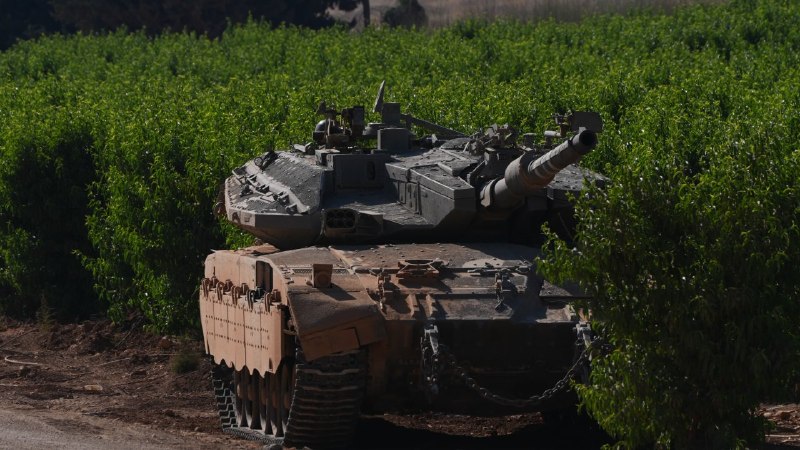
Lebanese Hezbollah announced on 24 May 2026 that one of its operations along the border with Israel had resulted in the death of an Israeli military commander, a claim subsequently acknowledged by Israeli media outlets without further independent corroboration from IDF spokesperson channels or Western wire services.
The operation, described by Hezbollah-affiliated sources as a drone strike targeting a military vehicle in southern Lebanon, reportedly killed the commander and at least two Israeli soldiers. Israeli media confirmed soldier casualties in the exchange but did not independently verify the commander's death in statements available to this publication as of filing.
The engagement sits within a sustained pattern of cross-border exchanges that have escalated steadily since October 2023. Hezbollah has maintained near-daily operations against Israeli military positions in northern Israel, while the IDF has conducted airstrikes and artillery strikes inside Lebanese territory. Both sides have struck military vehicles, forward positions, and in some cases, personnel. The border region between Naqoura on the Lebanese side and Israeli positions in the Upper Galilee has been the primary axis of contact.
What the sources do not specify is the identity or rank of the commander claimed killed, the exact coordinates of the strike, or whether the individual was a career officer or a reservist called up during the ongoing mobilization. The Iranian state-linked channels that first reported the claim used the Arabic term "muqawama" framing throughout, consistent with their editorial posture. Israeli military communications, typically routed through IDF Spokesperson channels and picked up by wire services, had not issued a formal casualty statement as of the publication window on 24 May.
The counter-narrative is structural: Hezbollah has an established interest in projecting battlefield success to a domestic and diasporic audience, particularly at moments when Israeli operations have caused significant civilian harm inside Lebanon. The 24 May operation, according to the same Telegram-sourced dispatches, followed Israeli strikes in southern Lebanon that Hezbollah did not explicitly link to the commander strike in its public communiqués. Whether the timing was coincidental or staged for messaging purposes cannot be determined from the available record.
Israeli media acknowledged the soldier casualties, which is the factual floor of the exchange. That acknowledgment does not confirm the Hezbollah commander's death claim, but it does establish that a firefight occurred and that Israeli personnel were harmed. The gap between what Hezbollah asserts and what Israeli sources confirm is a recurring feature of cross-border reporting in this conflict — both sides have incentive structures that reward aggressive claim-making and penalize transparency about losses.
The structural context is the ceasefire negotiation logjam. Since US-brokered talks stalled in early 2026, both Hezbollah and Israel have maintained hostilities while publicly reserving the right to resume diplomacy. The killing of a field commander — if confirmed — would increase pressure on the Israeli political leadership to respond, which in turn would complicate backchannel messaging. Hezbollah's leadership has signalled it will not negotiate under fire; Israeli officials have insisted on a credible enforcement mechanism for any future ceasefire. A commander-level casualty, whether accurately reported or not, deepens the distrust on both sides.
The stakes are immediate and tactical. A confirmed commander's death removes experience from a specific unit operating in a high-exposure sector of the border. Hezbollah gains a propaganda asset it can deploy regionally. Israeli leadership faces the choice between an escalatory response that could restart full-scale hostilities or a measured response that risks appearing weak ahead of domestic political calculations. The sources reviewed for this article do not indicate which path Israeli decision-makers are leaning toward.
What remains genuinely unclear is the commander's identity, the operational details of the drone approach, and whether Israeli intelligence had anticipated the strike or was caught off-guard in a sector it believed it had contained. Those details typically emerge days after such incidents, through casualty notification procedures, funeral announcements, or unit commemorations. The record as it stands on 24 May 2026 is incomplete.
Hezbollah-linked Telegram channels provided the initial reporting window on this story. Israeli media acknowledgement of soldier casualties was reported through the same Telegram-sourced channels without independent IDF verification. Monexus is monitoring for follow-up reporting from IDF Spokesperson, Reuters, and AP on this engagement.
Wire provenance
This editorial synthesis draws on the following public wire/social posts:
- https://t.me/JahanTasnim/9876
- https://t.me/tasnimnews_en/6543
- https://t.me/JahanTasnim/9874
- https://t.me/JahanTasnim/9875
- https://t.me/tasnimnews_en/6544