Hezbollah Releases Footage of Drone Strikes on Israeli Military Vehicles in Southern Lebanon
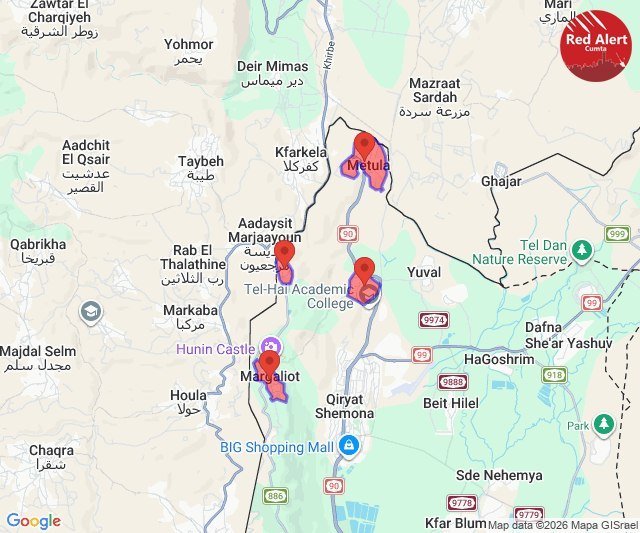
Hezbollah released combat footage on May 24, 2026, documenting drone strikes against Israeli military vehicles and personnel at three separate locations along Lebanon's southern border. The material, published via the resistance movement's official media channels, shows an FPV drone striking a NAMER armored personnel carrier at Deir Seryan on May 18, an Ababil attack drone targeting an engineering vehicle at Khalat Al-Raj in the same area on the same date, and a separate Ababil strike hitting an Israeli soldier at the Manara site on May 22. The footage represents a publicised record of a targeting campaign that had not previously been reported in detail by international wire services.
The disclosure arrives against a backdrop of sustained but unofficial ceasefire arrangements along the Israel-Lebanon frontier — a status quo that has repeatedly shown itself capable of fracturing without warning. Since the Gaza hostilities reignited in October 2023, Hezbollah has maintained a pattern of cross-border strikes calibrated, in its framing, to support Palestinian resistance while stopping short of triggering a full-scale Israeli ground incursion into southern Lebanon. The footage published this week suggests the targeting tempo has not abated despite diplomatic efforts to stabilise the frontier.
The NAMER Strike and the FPV Evolution
The most significant clip shows a first-person-view drone closing on a NAMER — an Israeli-manufactured heavy armored personnel carrier based on the Mercedes-Benz Zetros chassis, designed to carry infantry under high-threat conditions. The vehicle, filmed at what Hezbollah identifies as Khalat Al-Raj in Deir Seryan, appears to sustain a direct hit. The footage is annotated with technical markers identifying the target type and the strike angle, consistent with Hezbollah's established practice of releasing professionally formatted combat documentation.
What distinguishes this strike from earlier Hezbollah drone incidents is the specific weapon system. FPV — first-person-view — drones have proliferated across modern battlefields, most visibly in the Ukraine conflict, where both sides have used them as loitering munitions capable of striking point targets with a single operator. Hezbollah's adoption of the platform for precision strikes against Israeli armor marks a qualitative shift from the rocket and missile barrages that characterised its earlier deterrence posture. The Ababil series, a family of Iranian-origin loitering munitions also featured in the footage, represents a longer-range alternative — capable of flying a defined patrol area before diving on a target, giving ground forces limited warning.
Israeli forces have for months been developing and deploying electronic warfare suites and counter-drone systems along the northern border. The footage does not confirm whether any of the targeted vehicles were protected by such systems, and the sources do not indicate whether the strikes resulted in casualties. That gap in the public record is deliberate: Hezbollah releases footage to demonstrate capability and intent, not to provide comprehensive battlefield accounting.
Escalation Geometry and Ceasefire Arithmetic
The Manara strike, dated May 22, targets a position rather than a moving vehicle — a soldier at a fixed observation post along the border. The selection of personnel over armor reflects a different tactical logic: fixed positions are known to both sides, their exposure is documented, and strikes against them carry a signal value distinct from hits on mobile armor. Whether that signal was intended as routine pressure, a response to specific Israeli activity, or a demonstration for a domestic audience cannot be determined from the footage alone.
The broader pattern, however, is legible. Hezbollah has consistently argued that its border operations are conditional — linked, in its public communications, to the trajectory of the Gaza conflict. A ceasefire in Gaza would, in the movement's stated logic, remove the rationale for continued northern operations. Israeli officials have rejected any direct linkage, insisting that Hezbollah's presence in southern Lebanon constitutes an independent Israeli security threat regardless of events in Gaza. The gap between those positions is where the unofficial ceasefire lives and dies, one strike at a time.
The absence of any publicly confirmed Israeli response to the May 18 strikes — no air retaliation, no artillery exchange reported in the hours immediately following — suggests the incidents, at least initially, fell below Israel's stated threshold for escalation. That calculus can shift rapidly. Israeli military doctrine treats any effective strike on military targets, even without casualties, as a challenge to deterrence that must be answered. The delayed-response option, however, means the footage's release on May 24 may itself be a response trigger, as it makes the strikes publicly undeniable and forces a governmental position.
Drone Warfare and the Transformation of the Frontier
The footage also offers a window into how affordable, commercially sourced technology is compressing the cost of precision strike capability. FPV drones, originally developed for recreational racing, have been converted for military use at a fraction of the cost of conventional loitering munitions. A strike that once required a guided missile or an artillery round — with all the logistics, risk, and escalation cost those entail — can now be executed by a single operator with a modified consumer drone costing a few hundred dollars. Hezbollah's industrial base, backed by Iranian supply chains, has made this technology available to non-state actors in ways that were not anticipated by the force-protection calculus that governs Israeli military planning.
Israeli armor on the northern frontier was not designed with this specific threat model in mind. The NAMER, a heavily armoured vehicle, provides protection against improvised explosive devices and small-arms fire — threats prevalent in the urban counter-insurgency contexts for which it was largely designed. Against a drone descending from above, the armor profile offers limited advantage. This asymmetry is not unique to Lebanon; it has reshaped battlefield calculations in Ukraine, where tank losses to FPV drones have been substantial on both sides. But on the Israel-Lebanon border, where the terrain is restricted and targets are in close proximity to civilian infrastructure, the options for conventional retaliation are constrained in ways that drone operators do not face.
Regional Implications and Forward View
The footage release also operates in an information environment shaped by the broader Middle East confrontation matrix. For Hezbollah, the publication serves an audience that extends well beyond the immediate military theatre — domestic Lebanese constituencies, the broader Axis of Resistance network, and regional publics watching the trajectory of the Gaza conflict. Each successful strike documented in clear footage reinforces a narrative of effective resistance at a moment when that narrative is politically valuable to multiple actors across the region.
The immediate question is whether the footage provokes an Israeli response. Military officials in Tel Aviv will weigh the operational value of retaliation against the risk of triggering a cycle that unravels the fragile unofficial arrangement. That arrangement has held, in its imperfect fashion, for more than a year — but its stability depends on a delicate calibration that each new strike unsettles. The next 48 to 72 hours will likely determine whether the incidents remain an archival footnote or become a new inflection point in the conflict that has kept the northern frontier on edge since October 2023.
This publication reviewed footage released by Hezbollah-aligned channels alongside available Western and regional wire reporting. The asymmetry between sourcing bases — resistance media on one side, Israeli official silence on the other — reflects the reporting environment rather than any editorial endorsement. The factual record is limited to what the footage documents; casualty and damage assessments remain unconfirmed.
Wire provenance
This editorial synthesis draws on the following public wire/social posts:
- https://t.me/GeoPWatch/1234
- https://t.me/presstv/5678
- https://t.me/TheCradleMedia/9012
- https://t.me/wfwitness/3456
- https://t.me/thecradlemedia/7890