The Hezbollah Position Is Clear. The Question Is What Comes Next.
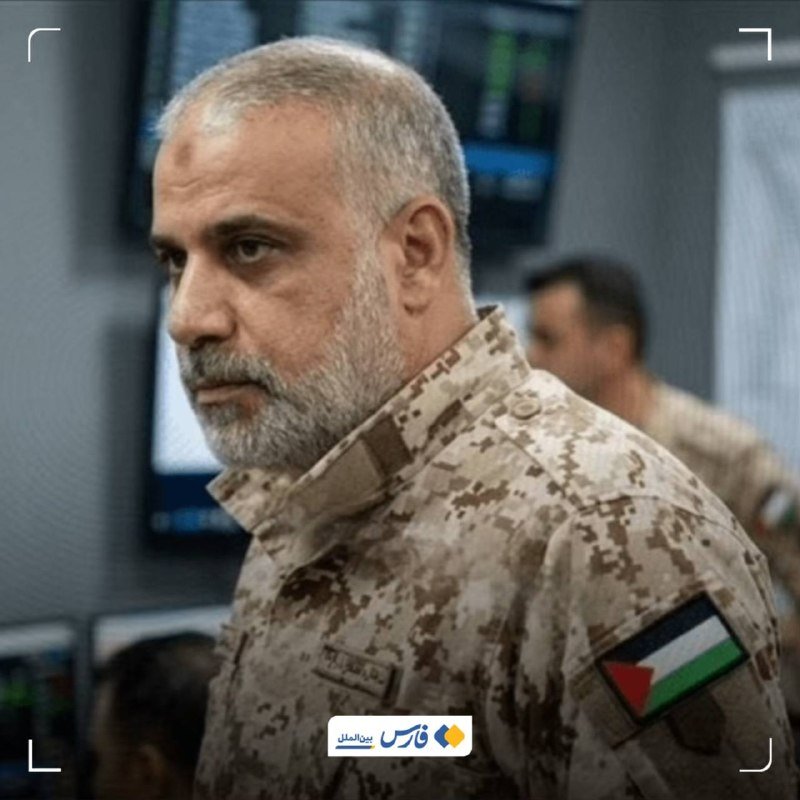
Hezbollah's secretary-general put it plainly on 24 May 2026: direct negotiations with Israel are off the table, and the resistance will not be disarmed. Sheikh Naim Qasim's statements — carried by Iranian state media — are not new in substance. They are a restatement of a position the group has held since its founding. What makes them significant now is the timing. Fifteen months have passed since the November 2024 indirect agreement that was supposed to produce a durable ceasefire. That arrangement unravelled by early 2026. The current moment is not a negotiation in progress — it is a negotiation that has been declared over by one of the parties that matters most on the ground.
The framing from Beirut is consistent. The Lebanese government, according to Qasim, should not position itself against its own people. The resistance belongs to the Lebanese people; it is not an external imposition. And the memory of former secretary-general Hassan Nasrallah — killed in an Israeli strike in late 2024 — is invoked not as nostalgia but as a legitimising anchor. Qasim has described the resistance as the product of Nasrallah's leadership. That framing is political, but it is also durably present in how Hezbollah communicates with its base and with the wider Lebanese electorate.
The Negotiating Impasse
The fundamental problem has not changed in years. Israel will not negotiate directly with a non-state armed group it classifies as a terrorist organisation. The United States has reinforced that position consistently. The international framework — such as it is — has held that Beirut must be the sovereign interlocutor. But Hezbollah is not a faction within Lebanese politics. It is a state within the state, with its own military infrastructure, its own communications network, and its own foreign relationships. Any agreement that excludes Hezbollah's buy-in is an agreement that can be broken by Hezbollah. Any agreement that requires Hezbollah's buy-in is an agreement that must come with terms the group finds politically survivable.
Qasim's rejection of direct talks does not mean the channel is entirely closed. Indirect arrangements, brokered through third parties, remain possible — and have worked before. But an explicit statement that direct negotiations are "completely rejected" narrows the diplomatic road map considerably. It tells Washington, Brussels, and the Lebanese government that whatever is on the table must be processed through intermediaries, not face to face.
The Disarmament Fault Line
The disarmament question is the sharpest edge of the whole dispute. Qasim said Hezbollah will "never accept" disarmament of the resistance. That is not a negotiating position — it is a red line drawn in concrete. For Hezbollah, the armed resistance is not a temporary instrument that can be folded away once a ceasefire holds. It is the group's identity. Without it, Hezbollah becomes a political party. For Israel, an armed non-state actor on its northern border is not a political problem — it is a security one. The gap between those two positions has not narrowed in forty years.
The November 2024 agreement was supposed to create a framework where Hezbollah's southern deployment would be restricted in exchange for a cessation of Israeli strikes. That framework held for a period — roughly six months — before it fractured. Sources tracking the timeline confirm the indirect agreement was struck in late November 2024 and began to break down in the months that followed. The drone attack on a Zionist commander reported by Tasnim on 24 May 2026 is consistent with the pattern: low-level kinetic activity, below the threshold of full re-escalation, but sufficient to signal that Hezbollah retains offensive capability and the intent to use it.
The Nasrallah Memory
Every statement from Sheikh Naim Qasim invokes Nasrallah. The resistance is "the product of Martyr Nasrallah's leadership." Those who participated are "partners in the resistance." This is not accidental. Nasrallah's killing created a martyr narrative that Hezbollah leadership is actively cultivating. The effect is twofold. Internally, it binds the current secretary-general to a legacy that demands continuity. Externally, it signals to the Lebanese public and to regional audiences that the movement has not been decapitated — it has been canonised. The political utility of that framing is considerable. It positions the current leadership as faithful executors of a sacred mandate rather than as replacements navigating a new reality.
What the Options Actually Are
The honest assessment is this: there is no current pathway to a fully negotiated resolution that satisfies both sides. Israel will not accept a Hezbollah that retains its military capacity and refuses to engage directly. Hezbollah will not accept a settlement that requires it to surrender that capacity. The United States, which has applied sustained pressure on Beirut to extend state authority over Hezbollah's areas of operation, finds itself with limited leverage when the Lebanese army cannot match Hezbollah militarily and when the Lebanese government is itself internally divided on how hard to push.
The international community has a set of blunt instruments: sanctions, aid conditionality, diplomatic isolation. Those tools can pressure Hezbollah's economic footprint and can constrain its external supply chains. They have not, historically, produced disarmament. The European Union and the United States have designated Hezbollah in its entirety as a terrorist organisation; the practical effect of that designation on the ground in Lebanon has been limited. Hezbollah operates in a political environment where it has genuine popular support — not universal, but substantial — and where it has positioned itself as the effective defender of Lebanese sovereignty against Israeli incursion.
The question for regional actors and for Washington is whether the goal is a functional ceasefire or a political settlement. A functional ceasefire requires only that neither side calculates that the gains from escalation outweigh the costs. That is achievable, at least temporarily. A political settlement requires Hezbollah to become something other than what it is. Qasim's statement suggests the group has no intention of making that transition. The ceasefire may hold. The conflict, in any meaningful political sense, is not heading toward resolution.
Monexus covered this story through the Tasnim wire on 24 May, presenting Sheikh Qasim's statements as the primary source material. Western wires carried the drone attack report without commentary on the negotiating implications. This piece treats the Tasnim reporting as factually accurate while noting that Iranian state media framing of Hezbollah statements should be read in the context of Tehran's own regional positioning.
Wire provenance
This editorial synthesis draws on the following public wire/social posts:
- https://t.me/tasnimnews_en/37892
- https://t.me/tasnimnews_en/37890
- https://t.me/tasnimnews_en/37885
- https://t.me/tasnimnews_en/37893
- https://t.me/JahanTasnim/28741