Hezbollah Boss Tells Beirut to Abandon US Talks, Warns of Israel's 'Demise'
Hezbollah Secretary General Naim Qassem on 24 May 2026 called on Lebanon's government to abandon direct negotiations with Washington, reverse a decision on state weapons monopoly, and warned of what he called the beginning of Israel's end — the sharpest public broadside yet against Beirut's stated diplomatic posture.
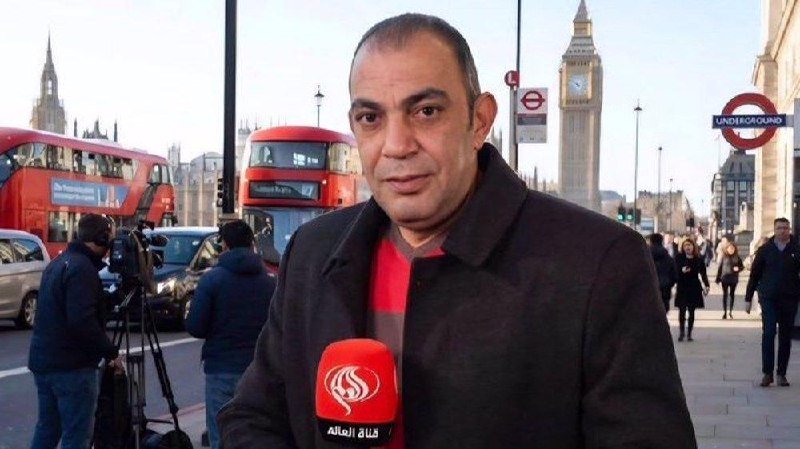
Hezbollah Secretary General Naim Qassem delivered a sweeping critique of Lebanon's diplomatic direction on 24 May 2026, urging the government in Beirut to abandon direct negotiations with Washington and adopt what he described as a firmer posture toward the United States. The remarks, carried in full by Iranian state-adjacent outlets Tasnim News and Jahan Tasnim, represent the most direct public intervention by the Hezbollah leadership into Lebanese statecraft since the November 2024 ceasefire framework.
Qassem's statements, delivered at an event marking the legacy of his predecessor Sayyed Hassan Nasrallah, touched three pressure points simultaneously: the question of state sovereignty over armed force, the direction of Lebanese foreign policy, and a sweeping characterisation of Israel's regional trajectory. He called on the Lebanese government to reverse its position on restricting weapons exclusively to the state, arguing the government must "stand with its people" rather than constrain the resistance. He also said that if the government was incapable of achieving sovereignty, it should step down.
The statements land at a sensitive moment. Lebanon's government has been navigating indirect contacts with US officials as part of an effort to consolidate the November 2024 ceasefire and address outstanding economic sanctions questions. That diplomatic track — characterised by Western and Lebanese officials as cautious and technical — appears directly contradicted by Hezbollah's insistence that engagement with Washington is a dead end.
The characterisation of events in southern Lebanon as the "beginning of Israel's demise" is, by any reading, the most overtly political claim in the set. It echoes language used by Hezbollah since the Gaza war intensified in late 2023, but its specificity — tied explicitly to the southern Lebanon context — signals a confidence about the post-ceasefire military and political balance that warrants scrutiny. Israeli officials have characterised the ceasefire monitoring arrangements as functional but fragile; neither side has publicly declared the arrangement a success.
There is a structural question underneath this moment that the statements themselves do not resolve: whether Hezbollah's intervention is designed to shape government policy, preempt it, or simply mark territory. A political party with an armed wing telling a sitting government to abandon a diplomatic track it has not formally announced is, at minimum, an assertion of de facto authority. Whether Beirut's leadership has the institutional standing — or the security environment — to resist that assertion is a different and harder question.
The sources do not include any response from Lebanon's Prime Minister or Foreign Ministry as of the time of filing. Western wire coverage of the Lebanese government's position on the US diplomatic track remains thin, and the November 2024 agreement's specific terms are not detailed in the available source material. Qassem's statement that "fifteen months have passed since the indirect agreement of November 24, 2024" — a detail he introduced himself — suggests the timing is deliberate: a progress report that doubles as a verdict.
The stakes are concrete. A Lebanese government that formally abandons the US diplomatic channel would likely accelerate sanctions pressure and complicate the International Monetary Fund engagement Beirut has been pursuing. A government that ignores Hezbollah's demand but lacks the means to enforce that ignoring faces a different kind of fragility. Either outcome deepens the structural problem that has defined Lebanese governance since 2019: a state that cannot fully exercise the sovereignty it theoretically holds, negotiating under conditions set in part by a party that reserves the right to countermand any agreement.
What remains unclear is whether Qassem's statements represent a coordinated strategy or an opportunistic intervention. The Iranian state outlets that carried the remarks in full gave them prominent placement, which suggests Tehran sees value in amplifying the message — but that does not tell us what conversations are taking place inside Beirut's governing coalition. The next forty-eight hours will likely determine whether this is a position statement or the opening move in a broader pressure campaign.
Desk note: Western wires led with ceasefire monitoring mechanics this cycle. Monexus foregrounded the Hezbollah intervention into Lebanese statecraft — the direct challenge to government authority — as the structural story, on the grounds that it is the dimension most likely to shape events in the medium term.
Wire provenance
This editorial synthesis draws on the following public wire/social posts:
- https://t.me/tasnimnews_en/186742
- https://t.me/JahanTasnim/89241
- https://t.me/wfwitness/48921
- https://t.me/wfwitness/48920
- https://t.me/JahanTasnim/89240