Hezbollah's Qassem Set to Address Nation on Resistance Day as Lebanon Fragile Stakes Rise
Hezbollah's secretary-general is scheduled to deliver a major address on Sunday evening, marking a date that carries both historical weight and present-day political gravity for a movement still rebuilding its capabilities after fourteen months of conflict with Israel.
Sheikh Naim Qassem, the secretary-general of Hezbollah, was scheduled to deliver a televised address on Sunday evening, May 24, 2026, at 6:30 PM Beirut time, according to multiple Iranian state-adjacent media outlets including Al Alam and Tasnim News. The occasion was listed as Resistance and Liberation Day, the annual commemoration of Israel's unilateral withdrawal from southern Lebanon in 2000 — a date Hezbollah has long treated as proof of concept for its armed resistance doctrine.
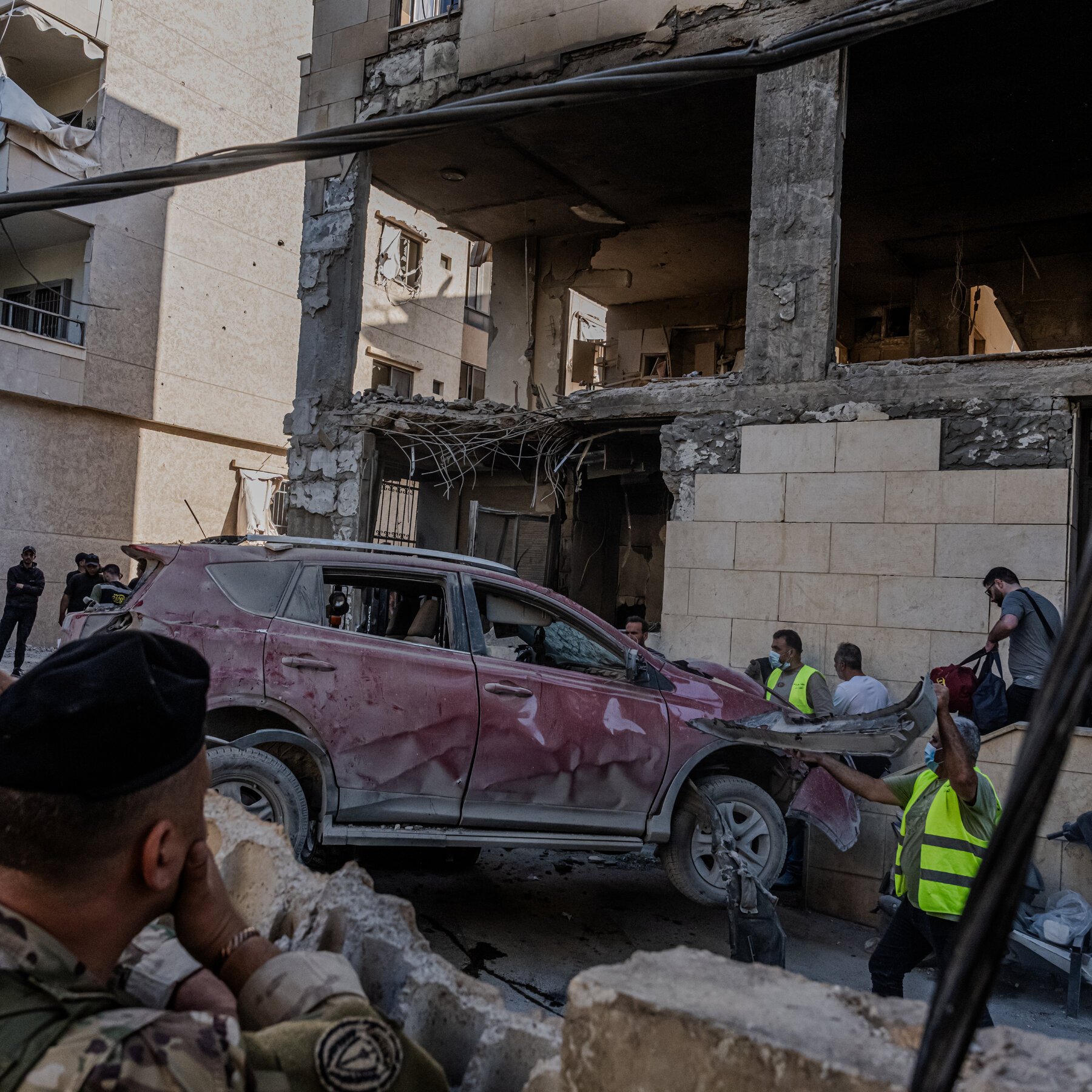
The speech arrives at a moment of acute fragility for both Hezbollah and the Lebanese state. Since the ceasefire brokered in November 2024 brought an end to direct large-scale hostilities between Hezbollah and Israel, the movement has operated under significant constraints. Israeli forces maintain a presence in several border villages, and Lebanese authorities have struggled to assert state authority in the south, where Hezbollah's military infrastructure remains largely intact despite the destruction of much of its surface-level arsenal during the preceding fourteen months of conflict.
A Movement at an Inflection Point
Qassem assumed the secretary-general role in October 2024, following the assassination of his predecessor Hassan Nasrallah in an Israeli airstrike. His leadership has been defined, in the first instance, by continuity — maintaining the movement's institutional coherence through the loss of its most recognisable figure and much of its senior command structure. But continuity is not the same as stasis, and Qassem has faced the more complex task of repositioning a movement whose founding rationale is under direct question.
Lebanon's political class, backed by Washington and parts of the Gulf, has pressed for state monopolisation of force along the country's southern border. The Lebanese Armed Forces, supported by American and French assistance, have moved incrementally southward, but their presence remains layered over — rather than replacing — Hezbollah's militia infrastructure. The gap between the formal architecture of state sovereignty and the material reality of armed control has defined Lebanese politics since the 1990s, and the current ceasefire arrangement has not closed it.
Qassem's speech, therefore, was expected to address more than commemoration. Lebanese analysts tracking the movement had flagged the address as an opportunity for the secretary-general to define Hezbollah's posture heading into summer, when seasonal pressures — economic strain, refugee returns, border incidents — typically sharpen political temperatures. Whether he would articulate a formal de-escalation framework, reaffirm the movement's right to armed presence, or offer a calibrated mix of both signals was not clear from the pre-event reporting.
The Date's Multiple Registers
Resistance and Liberation Day carries distinct meanings for different audiences. For Hezbollah's core constituency, it validates the movement's strategic choice to build and deploy military force as the primary instrument of territorial negotiation. The 2000 withdrawal was, in this reading, not a peace agreement or a diplomatic outcome but a victory produced by resistance — an outcome the movement's leadership has argued should serve as a template for all outstanding questions, including the disputed Shebaa Farms territory and the broader normalisation of Lebanon's legal situation with Syria.
For the Lebanese state and its Western backers, the date represents a more complicated inheritance. The 2000 withdrawal was indeed a strategic defeat for Israel, but it was also, in structural terms, an outcome that elevated a non-state armed actor at the direct expense of state institutions. Every Lebanese government since 2000 has had to contend with the reality that sovereignty in the south was exercised through a parallel chain of command. The current caretaker government in Beirut has made no public statements suggesting it views that arrangement as reversible on its own terms.
For Israel's current government, the commemoration is largely beside the point. Tel Aviv has been clear that the ceasefire is conditional on Lebanese state enforcement of disarmament obligations — an enforcement record that Israeli officials have repeatedly described as inadequate. The IDF's continued operations in several border villages, conducted under the ceasefire's disputed provisions allowing for "operational freedom" against imminent threats, have provided a near-constant friction point that neither side has been willing to escalate but neither has been willing to resolve.
What Remains Unknown
The sourcing picture entering the speech was, by necessity, limited. All confirmed reports of the address came from Iranian state-adjacent media — Al Alam in Persian and Arabic, and Tasnim News in English. These outlets are aligned with Tehran's political architecture and function as the movement's primary external communications channel. Their reporting of Hezbollah activity is accurate in basic logistics — times, locations, announced events — but frames those events through an explicitly political lens.
What Qassem actually said on Sunday evening was not available to Monexus at the time of publication. The substance of the speech — its specific policy commitments, its assessment of the ceasefire, its treatment of internal Lebanese politics — will determine whether the address represents a substantive recalibration or a ritual affirmation of existing positions. Both are possible, and the difference matters.
International wire services including Reuters and AFP were expected to carry coverage of the speech within hours of its conclusion. Monexus will update this report as further reporting becomes available.
The Structural Stakes
The broader context that frames Qassem's address is not unique to Lebanon. Across the eastern Mediterranean, the architecture of armed non-state proxies — backed by Iran, supported by Russia, in some cases drawing on Gulf funding — operates as a structural feature of regional balance-of-power politics rather than an aberration. Hezbollah's position in southern Lebanon is legible only within this wider pattern: a movement that is simultaneously a Lebanese political actor, a client of a foreign state, a military formation with its own institutional logic, and an expression of a particular Shia political identity rooted in Lebanon's confessional power-sharing system.
Western policy has long sought to disaggregate these functions — to separate Hezbollah's political wing from its military wing, to engage Lebanese state institutions while delegitimising armed alternatives. That strategy has had mixed results at best. The ceasefire framework reflects a pragmatic acceptance that disaggregation has not succeeded, combined with a preference for managed ambiguity over an open-ended commitment to Lebanese state-building.
What Qassem says on Sunday will be parsed, in Washington, in Tehran, in Beirut, and in Jerusalem, for signals about which version of Hezbollah is ascendant: the institution-building movement preparing for a long political horizon, or the resistance movement maintaining armed readiness for the next confrontation. Both exist within the same organisation. The speech was expected to indicate, however obliquely, which tendency currently holds the upper hand.
Hezbollah's secretary-general is expected to speak at 6:30 PM Beirut time on May 24, 2026. Monexus will publish further reporting as verified details emerge.
Wire provenance
This editorial synthesis draws on the following public wire/social posts:
- https://t.me/alalamfa/184321
- https://t.me/alalamarabic/918234
- https://t.me/tasnimnews_en/2847191