The Strait of Hormuz Crisis Is a Stress Test for Every Country That Depends on Gulf Oil
Poland's foreign minister joins a growing chorus demanding the reopening of the Strait of Hormuz. The blockade has sent shockwaves through global energy markets, exposing the fragility of a system that Western policymakers spent decades assuming was resilient by default.
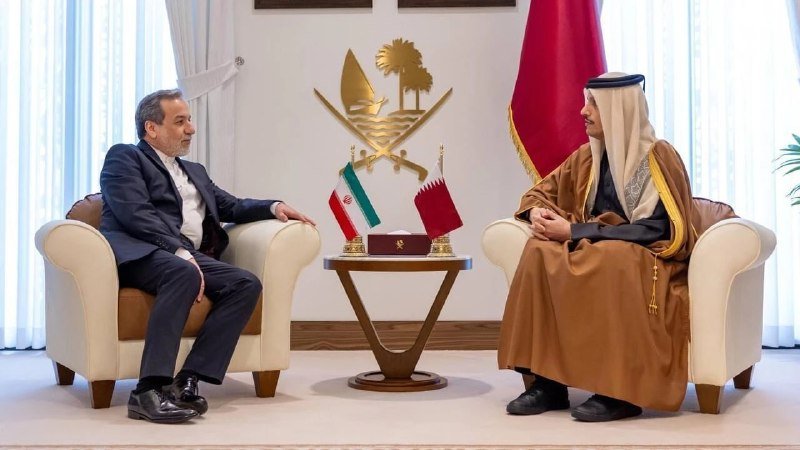
Poland's foreign minister said it plainly on 24 May 2026: his country is suffering. Not in the abstract, not as a rhetorical device, but as a direct consequence of the ongoing blockade of the Strait of Hormuz. "Many countries suffered from the closure of the Strait of Hormuz," the minister stated, adding that Warsaw demands the freedom of gas tankers to sail through the waterway. The statement landed in wire reports without the fanfare reserved for summits or sanctions announcements. It deserved more attention.
The Hormuz blockade — whatever its geopolitical origins and however one characterises the parties responsible — has exposed a structural vulnerability that Western energy policy spent decades papering over. That vulnerability is not Poland's alone. It belongs to every country that normalised the assumption that oil flows freely from the Persian Gulf to global markets, regardless of the political temperature in the region.
A European Country Speaking for the Global South
It is worth noting what Poland is doing here. A European NATO member, structurally aligned with the transatlantic security architecture, is making the same complaint that Gulf states, South Asian importers, and East African economies have been making for months. The blockade does not discriminate by latitude. Countries with no stake in whatever dispute triggered the closure find themselves absorbing identical shocks: higher pump prices, industrial energy cost inflation, and the political fallout that follows.
Poland's foreign minister did not frame his country's predicament as charity or burden-sharing. He framed it as interest — the same vocabulary Washington uses when justifying its own military presence in the Gulf. That alignment is revealing. It suggests that the coalition of countries harmed by the closure is broader and less ideologically coherent than the framing used by either side of the original dispute would have you believe. The blockade has, in effect, created an unlikely common-interest coalition stretching from Warsaw to Jakarta.
The USA TODAY reported on the same day that American drivers could see gasoline prices jump to $4.80 per gallon if the strait remains closed. That figure is not speculative in the abstract — it reflects a supply-side calculation that analysts have been running since the blockade began. What is notable is the specificity: $4.80 is not a crisis threshold for most American consumers, but it is a politically sensitive one, arriving in an election cycle where energy costs are already a touchstone issue. The economic pain is real but asymmetrically distributed. Americans pay more at the pump; Europeans pay more at the pump and face a colder, more energy-intensive winter ahead.
The Fragility Assumption
The deeper problem this crisis has exposed is one of assumption rather than policy. For roughly three decades, starting from the end of the Cold War, Western energy strategy operated on the implicit premise that the Gulf's oil infrastructure was essentially permanent — that the Strait of Hormuz was a geographic fact, not a political one. States invested in diversification rhetoric, signed LNG contracts, and funded renewable research programmes. But the underlying artery remained unobstructed, which meant the urgency was always theoretical.
The blockade has made it real. What was a risk-management exercise is now a balance-of-payments crisis for import-dependent economies. Poland, which has worked aggressively to reduce its reliance on Russian pipeline gas since 2022, still lacks the domestic production capacity to substitute for Gulf LNG shipments that now cannot reach it through Hormuz. The lesson is not that diversification failed. It is that diversification without redundancy is just a different kind of monoculture.
There is also a structural point here about media attention. When a pipeline through Ukraine is disrupted, the wire services maintain dedicated teams, and NATO capitals hold emergency consultations. When the same economic consequence arrives via a maritime chokepoint in the Gulf, the response machinery is slower, the language more hedged, and the urgency more diffuse. Part of this reflects institutional habit — Europe knows how to respond to Russian supply shocks because it has been doing so in various forms since 2014. Gulf chokepoint risk has been treated as a military problem (solved by American naval presence) rather than a diplomatic one.
The Diplomacy Gap
The question of what actually opens the strait remains unanswered in the available record. Poland's foreign minister expressed hope that the waterway would be reopened and demanded freedom of navigation for gas tankers. That is a position, not a pathway. It reflects the interest of harmed parties but says nothing about what concessions, guarantees, or leverage might bring the blockade to an end.
This is where the international architecture shows its seams. The Strait of Hormuz sits at the intersection of at least three distinct security logics — the regional rivalry between Iran and the Gulf states, the nuclear diplomacy framework between Tehran and Western capitals, and the broader US-China competition for influence over energy transit corridors. No single bilateral negotiation resolves all three simultaneously. Yet the pressure on every affected government is to find a solution, any solution, before the economic costs compound into political ones.
The United States, which maintains the largest naval presence in the Gulf and has made freedom of navigation a stated policy priority, has not publicly outlined a concrete diplomatic off-ramp. European efforts, channelled partly through Brussels, have focused on maritime insurance and sanctions escalation — tools that may increase pressure on the blockading party but do not themselves reopen the waterway. The gap between stated policy and practical instrument is significant.
For Warsaw, which currently holds the EU's rotating presidency and has positioned itself as a leader in eastern European security diplomacy, this is an uncomfortable position. Poland's foreign minister can articulate the problem with clarity. Translating that articulation into a negotiating position that brings Gulf LNG back to central European storage facilities is a different order of task.
What remains clear is that the blockade has clarified a dependency that analysts had warned about and policymakers had chosen to underfund. The Strait of Hormuz carries roughly 20 percent of the world's oil and a comparable share of global LNG shipments. When it closes, the pain is not proportional to anyone's stake in the original dispute. It is proportional to how dependent your economy is on that particular transit route — and that dependency turns out to be very high for a surprisingly large number of countries that assumed they had insulated themselves from exactly this kind of systemic risk.
The question is not whether the strait will eventually reopen. It almost certainly will, as all historical precedents suggest. The question is what the countries now suffering from its closure will do with the interval between now and that reopening — and whether the policy changes that interval demands will survive the return of normalcy.
Wire provenance
This editorial synthesis draws on the following public wire/social posts:
- https://t.me/alalamarabic
- https://t.me/alalamarabic