Hormuz at the Crossroads: Oil, Leverage, and the Anatomy of a US-Iran Deal
The proposed US-Iran ceasefire agreement has surfaced a fundamental fault line over the Strait of Hormuz — not just as a shipping corridor, but as the fulcrum on which global oil markets, Iranian state revenue, and American regional leverage all balance.
The proposed US-Iran ceasefire agreement has surfaced a fundamental fault line over the Strait of Hormuz — not just as a shipping corridor, but as the fulcrum on which global oil markets, Iranian state revenue, and American regional leverage all balance. President Trump said on 24 May 2026 that a deal was "largely negotiated" and would reopen the strait. Iran's state-linked Fars news agency, affiliated with the Islamic Revolutionary Guard Corps, responded within hours: the strait would remain under Iranian control regardless of any agreement. The gap between those two positions defines the central problem of the talks — and the stakes extend well beyond a single diplomatic transaction.
The core of the proposal, as Polymarket markets flagged from the evening of 23 May, involves a 60-day ceasefire extension during which Iran would clear naval mines from the strait, in exchange for sanctions relief sufficient to unlock oil revenue currently frozen under the maximum-pressure campaign. That framing puts the strait itself — not enrichment levels, not the nuclear programme, not the IRGC designation — at the centre of the negotiation. It is a concession Iran has historically treated as non-negotiable: the right to control access to the Persian Gulf's only western exit.
A corridor no one can afford to close
The Strait of Hormuz handles roughly 20-25% of global oil trade on any given day. That is not an abstraction for energy markets: it translates directly into tanker availability, insurance premiums, and the pricing assumptions that underpin sovereign budgets from Riyadh to Delhi. When crude fell on 23 May following reports that Iran had sent a new proposal to end the conflict and reopen the strait, the market signal was clear — traders priced a 61% probability of crude dropping below $90 per barrel before the end of the month, a move that reflects not just relief at the prospect of unhindered transit but also the implicit assumption that increased Iranian oil supply would enter the market under the deal's terms.
This is the leverage Iran has cultivated deliberately. For decades, successive Iranian governments have signalled the strait's strategic centrality as a deterrent rationale — a guarantee that any attempt to strangulate Iranian oil exports would carry costs for everyone else. The current proposal does not abandon that logic; it restructures it. Tehran is not offering to give up control of the corridor. It is offering to clear mines and refrain from interference in exchange for sanctions relief that lets it sell oil through legitimate channels. The strait remains Iranian. The threat of closure remains latent.
Internal friction in Washington
The Polymarket thread from 24 May also reflects something less visible in the wire headlines: rising tension among US officials as the contours of a deal become concrete. Trump has framed the deal optimistically — "largely negotiated" — but that framing sits awkwardly with the objections surfacing inside the administration. US officials with access to the negotiating brief have raised concerns about what a sanctions-relief-for-transit-deal actually achieves beyond the immediate question of oil prices. The risk, as several factions within the administration appear to see it, is that Iran extracts the economic benefit of a reopened strait — relief for its oil sector, the resumption ofpetrodollar flows — without materially altering the structural threat posture that the maximum-pressure campaign was designed to address.
The market odds on specific deal components reinforce this picture of a negotiations process under pressure. Polymarket markets assigned roughly a 5% chance by late 23 May that Trump would agree to let Iran charge fees in the strait — a proposition that would codify a right Tehran has always asserted by default. That low probability reflects the political cost of such a concession inside Washington: it would amount to a toll being paid by the global economy to a state the US has spent years attempting to isolate. Yet the same odds also indicate that the question has been tabled — that Tehran has asked for it, and that the request sits on the table even if it is not expected to be granted.
The Hormuz question as diplomatic architecture
What is being negotiated in the Hormuz context is not simply a ceasefire extension. It is a structural question about what kind of rights Iran possesses in its own littoral waters. The Islamic Republic has long maintained that the strait is an international waterway, but one in which Iran retains sovereignty over its territorial seas and security jurisdiction over the approaches. That position is broadly consistent with the United Nations Convention on the Law of the Sea, which Iran has signed but not ratified. The complication is that practical control — minefields, fast-attack craft, anti-ship missiles positioned along the Iranian coastline — has always been the real determinant of what the strait means operationally.
Under the current proposal, Iran clears the mines. That is the verifiable concession. What it receives is sanctions relief — a category broad enough to encompass grey-area oil sales, access to frozen sovereign assets, and the restart of banking channels currently blocked by secondary sanctions. The question of who controls the strait as a legal matter does not arise in the publicly reported terms of the deal. Iran's Fars agency, in its rebuttal to Trump's claim, was pointing at precisely this gap: that an agreement to clear mines and allow transit does not constitute a transfer of control. The strait remains what it has always been — a chokepoint that Iran can open or close according to its calculation of interests.
What the deal does and does not resolve
The ceasefire framing places a 60-day window on the table. That is enough time to clear mines and restart tanker traffic; it is not enough time to resolve the underlying fissured relationship between Washington and Tehran. The nuclear question — uranium enrichment levels, monitoring access, the future of the JCPOA architecture — remains technically distinct from the Hormuz question but structurally inseparable from it. A deal that opens the strait while leaving Iran's enrichment programme at its current scale achieves the immediate goal of stabilising oil markets and removing the most visible threat of disruption. It does not address the longer-term concern inside the US intelligence community that Iran remains on a path to weapons-capable enrichment, and it does not alter the strategic calculus of Gulf states — Saudi Arabia, the UAE, Bahrain — who have watched Iran's regional posture expand over the past decade.
The deal also raises a question about enforcement architecture. Mines cleared in a 60-day window can be re-laid. Transit restored today can be interrupted again if the sanctions relief proves insufficient or if a future administration reverses the terms. Iran's negotiating team, drawing on decades of experience with sanctions-and-negotiate cycles, will understand that the durability of any agreement depends not on goodwill but on institutionalised verification and a credible mutual interest in maintaining the status quo. The 60-day ceasefire is not the endpoint of a process — it is the test period for whether both sides can construct enough mutual interest to keep the strait open beyond the immediate window.
The stakes for the global energy order
If the deal holds in its current form — ceasefire, mine clearance, sanctions relief in exchange for unhindered transit — the most immediate consequence is a structural increase in global oil supply and a corresponding downward pressure on crude prices. Markets have already priced a significant probability of that outcome. Less priced, however, is the longer-term question of what a US-Iran normalisation pathway does to the architecture of the petrodollar and the role of Gulf allies in American energy strategy. A deal that brings Iranian oil back into the legitimate market reduces the strategic incentive for Saudi Arabia and other Gulf states to maintain the kind of production discipline that has supported elevated price floors for the past several years. The beneficiary in the short term is the consumer — in Europe, in Asia, in the United States itself. The beneficiary over the longer term depends entirely on what Tehran does with the revenues that flow back.
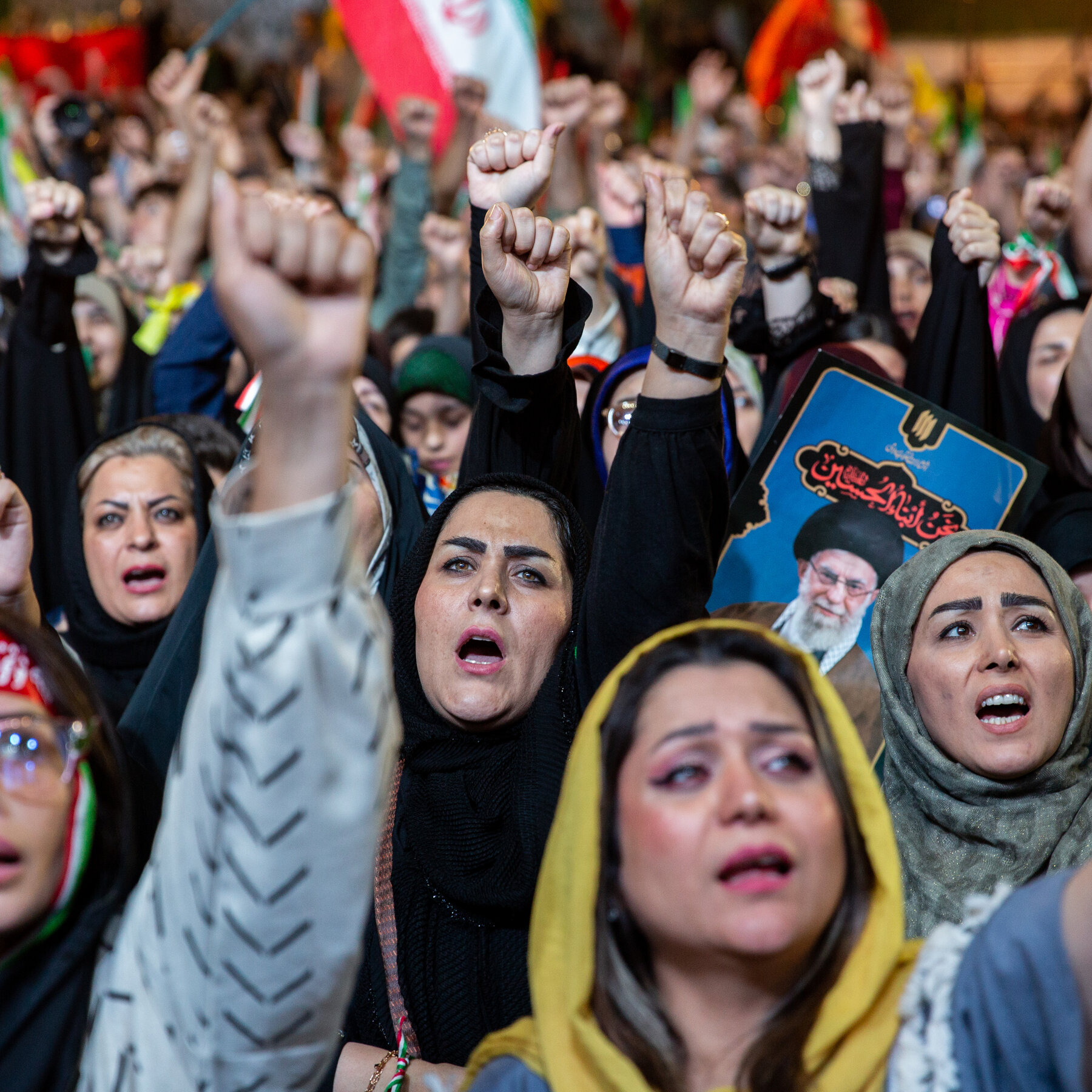
The Fars agency statement, in its bluntness, is also a signal about how Tehran views the deal's optics inside Iran. A concession on the strait's mines is a tangible, verifiable step. A concession on the principle of Iranian control — allowing fees, accepting a foreign security presence in the approaches, surrendering the implicit threat that has given Iran leverage for decades — is politically untenable. The IRGC-affiliated outlet's rebuttal was not a negotiation tactic. It was a domestic signal: the strait is Iranian, and any deal that suggests otherwise will face internal resistance. That resistance does not kill the deal, but it shapes its outer limits — and those limits, as the Polymarket odds suggest, are being negotiated under significant pressure from multiple directions simultaneously.
This publication framed the Strait of Hormuz story as a structural negotiation problem — who controls the corridor, who pays for access, and what a reopened waterway means for global oil supply — rather than as a straightforward diplomatic breakthrough. Wire coverage led with Trump's optimistic framing; Monexus noted the Iranian rebuttal within the same dispatch and foregrounded the market signals the story generated.
Wire provenance
This editorial synthesis draws on the following public wire/social posts:
- http://reut.rs/4dtRwNM
- https://nation.africa/kenya/news/world/trump-says-iran-deal-largely-negotiated-would-reopen-strait-of-hormuz-5471022