The Hormuz Gambit: How a Waterway Became the Fulcrum of US-Iran Diplomacy
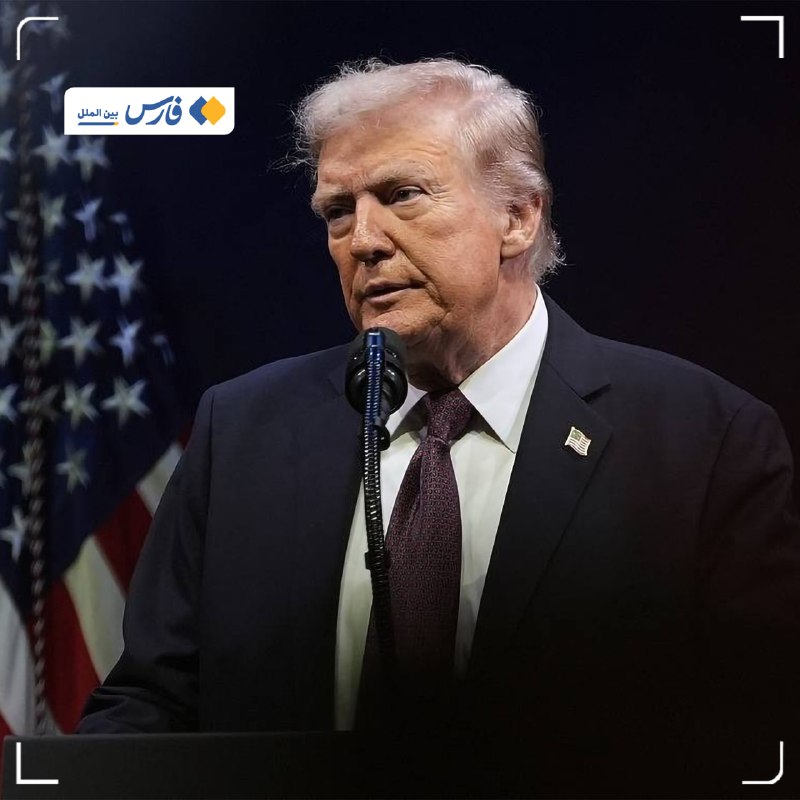
On 23 May 2026, Donald Trump announced that an agreement with Iran had been "largely negotiated." Forty-eight hours later, according to reporting by BBC News, the President told his own negotiating team to slow down. The apparent contradiction was not one: it reflected the compressed, multi-layered character of talks in which the Strait of Hormuz—through which roughly a fifth of the world's oil passes—has become simultaneously the leverage point, the concession being traded, and the prize whose control both sides are unwilling to fully relinquish.
By 24 May 2026, a US official confirmed to the New York Times that the two governments had agreed in principle to a framework under which Hormuz would reopen in exchange for a sixty-day ceasefire extension, with further negotiations to follow. The markets responded: Polymarket data showed traders pricing a sixty-one percent chance of crude falling below ninety dollars per barrel by month's end, as the threat of a prolonged shipping disruption receded. That probability figure, assembled from thousands of individual wagers rather than analyst commentary, offered a rare real-time window into how financial actors were weighting the deal's prospects.
The story is not simply about oil prices or shipping lanes. It is about how a geographic chokepoint has come to function as a proxy for thirty years of failed nuclear negotiations, sanctions architecture, and mutual mistrust—and whether a new framework can succeed where its predecessors, from the 2015 JCPOA to its 2018 unilateral abandonment by the United States, did not.
The Mechanics of the Proposed Deal
The structure reportedly on the table is more fragile than it appears. Under the framework described in US media reporting, Iran would receive a sixty-day ceasefire extension—meaning a pause in whatever kinetic activity had prompted the current standoff—during which Hormuz would be reopened to normal traffic. In exchange, the United States would defer some element of the sanctions pressure that has strangled Iran's oil exports since the maximum-pressure campaign began in 2018.
The Polymarket odds offer a useful calibration of where the deal's hard limits lie. As of 23 May, traders assigned only a five-to-ten percent probability to the United States agreeing to let Iran charge fees for Hormuz transit—a demand Tehran has periodically raised as a matter of sovereignty, arguing that since the strait is an international waterway, any fees should be modest and internationally regulated rather than nonexistent. The low odds suggest Washington views any fee-right as a red line it cannot cross without appearing to validate Iran's periodic threats to control the waterway as a negotiating chip.
What remains unclear from the available reporting is whether the sixty-day extension is a genuine pause in hostilities or simply a breathing space before resumed pressure. The sources do not specify what triggered the current standoff, what the ceasefire terms cover, or whether the sixty days is intended to produce a comprehensive nuclear agreement or merely to extend another round of talks.
The Counter-Narrative: Why Skepticism Is Warranted
The history of US-Iran negotiations offers ample grounds for caution. The JCPOA, signed in Vienna in 2015 after nearly two years of talks, was abandoned by the United States in May 2018 when the Trump administration withdrew and reimposed sanctions, calling the deal "defective at its core." Iran gradually exceeded the deal's enrichment limits in response, a process that accelerated after 2019 and reached weapons-adjacent levels by 2024. Each escalation provided its own justification: the United States cited Iranian violations; Iran cited the US withdrawal as the original breach.
There is a structural reason these negotiations recur without resolution. Both sides have an interest in the appearance of talks without the substance of final agreement. For Washington, negotiations signal resolve to allies in the Gulf—Saudi Arabia, the UAE, Israel—without committing to the concessions a final deal would require. For Tehran, talks demonstrate to domestic audiences that the Islamic Republic can extract economic relief through diplomacy rather than capitulation, while retaining the enrichment program as a non-negotiable core interest.
The Hormuz element adds a further complication. Iran has repeatedly threatened to close or restrict the strait during periods of heightened tension—a threat it made credible through military exercises and the deployment of minesweeper vessels and anti-ship missiles along its coast. Whether Tehran would actually close Hormuz, and whether it could sustain such a closure against US naval power, is a separate question from whether it can credibly threaten to do so. Negotiation literature on asymmetric leverage suggests that the threat need not be executable to be effective; it need only be plausible enough to raise the costs of dismissal.
The Structural Stakes: Energy Markets, Petrodollar Architecture, and Gulf Alliances
The Strait of Hormuz is not merely a shipping channel. It is a node in the global energy infrastructure whose disruption reverberates through oil futures markets, petrochemical supply chains, and the shipping insurance contracts that underpin international trade. When Iran threatened Hormuz in 2019, Brent crude spiked by nearly five percent in a single session. The Polymarket probability on crude falling below ninety dollars—priced at sixty-one percent after the deal was announced—reflects how sensitive the market remains to the possibility of closure.
This sensitivity is not accidental. The strategic importance of Hormuz to global energy markets is precisely why Iran has used threats against it as leverage, and why the United States has invested in alternative routes—pipelines through Saudi Arabia and the UAE, expanded Gulf coast terminals—that reduce but do not eliminate dependence on the strait. Neither side, therefore, has an incentive to actually close Hormuz: Iran would lose its leverage and invite military retaliation; the United States would face a global recession risk that makes Gulf allies nervous and complicates its broader China containment strategy, which depends on stable energy flows to Asian markets.
The deal's structure, if implemented, would therefore be valuable to both sides precisely because it manages rather than resolves the underlying tension. Tehran gets sanctions relief and a reopened waterway—albeit temporarily. Washington gets a pause in a standoff that was producing uncomfortable headlines and oil price volatility. Neither gets the comprehensive agreement that would eliminate the problem permanently, because neither is prepared to pay the price that comprehensive agreement would require.
Precedent: What the 2015 JCPOA Can and Cannot Tell Us
The JCPOA's trajectory remains the most useful historical reference. Signed with fanfare by the United States, the EU, Russia, China, and Iran, it provided for limits on Iran's enrichment in exchange for sanctions relief. International inspectors from the IAEA were granted access to declared nuclear sites. For approximately two years, from early 2016 to mid-2018, Iran complied. Oil exports recovered. Boeing and Airbus signed commercial deals. The architecture appeared to be working.
The unraveling, when it came, was rapid. The Trump administration's withdrawal was followed by the reimposition of secondary sanctions—penalties targeting non-US companies and governments that did business with Iran. European firms withdrew rather than lose access to US markets. Iran, watching its economic benefits evaporate despite continued compliance, began exceeding enrichment limits within a year and accelerated thereafter. By 2024, its enrichment level had reached sixty percent, a technical threshold that Western intelligence assessments described as weapons-adjacent.
The lesson most analysts draw is that the JCPOA failed because it was bilateralized: the United States treated its own withdrawal as a sovereign decision without consequence for international partners, and the deal's other signatories—France, Germany, the UK, Russia, China—were unwilling or unable to substitute for US market access as an incentive. Whether a new deal would be structured differently, or whether the same structural flaw would reappear when the next administration changes, remains the central uncertainty the current talks have not addressed.
What Happens Next
The Polymarket odds offer one way to track how markets are weighting the deal's durability. The five-to-ten percent probability assigned to Iran charging Hormuz fees suggests traders believe Washington will hold its line on the core issue of passage rights. The sixty-one percent probability on crude below ninety dollars reflects a base expectation that the strait will remain open, at least through the sixty-day window.
The longer-term question is whether this framework represents a restart of the JCPOA negotiation track or a separate bilateral track that sidesteps the other signatories. US media reporting on the current talks does not indicate whether France, Germany, or the United Kingdom are participants. If the deal proceeds as a bilateral US-Iran arrangement without European or Asian partners, it will carry the same structural vulnerability as the original JCPOA: a future administration can withdraw with less international constraint than if the agreement had been multilateral.
For the Gulf states—Saudi Arabia, the UAE, Bahrain, Qatar—the stakes are immediate and regional. A reopened Hormuz restores normal tanker traffic and supports the stable oil revenues these governments require for domestic subsidy programs and economic diversification plans. But a deal that merely pauses the standoff, rather than resolving the nuclear question, leaves in place the prospect of renewed escalation and renewed Hormuz threats within a year or two. Riyadh and Abu Dhabi have watched this cycle before. Their preference, as expressed in off-the-record Gulf diplomatic reporting over the past decade, is for a durable settlement—but their influence over the US negotiating position is limited.
For energy consumers in Europe and Asia, the immediate relief is tangible: a functioning Hormuz means stable gasoline prices and heating costs through the northern hemisphere summer. Whether that relief persists depends on whether the sixty-day pause becomes a genuine negotiation or merely a postponement of the next round of threats. The sources currently available do not specify which outcome the US and Iranian governments are engineering. That ambiguity is, in itself, the story.
The desk notes that this publication's coverage of US-Iranian nuclear diplomacy has consistently emphasized the structural incentives both governments have to maintain the appearance of talks without reaching final agreement. The Polymarket data, by translating trader expectations into probabilistic form, offers a market-derived check on the optimistic framing that typically accompanies announcement of preliminary deals. Readers tracking this story should monitor whether the sixty-day window produces substantive negotiating text or merely an extension of the current pause—and whether European or Asian partners are brought into the framework or excluded from it. Either design choice will signal which type of outcome Washington and Tehran are actually pursuing.
Wire provenance
This editorial synthesis draws on the following public wire/social posts:
- https://t.me/bbcworldoffl/1432