The Hormuz Gambit: Why Prediction Markets Are More Honest Than the Diplomatic Press Release
Polymarket's odds on a Hormuz reopening and a US-Iran deal tell a story that official statements from both Washington and Tehran refuse to narrate: neither side is confident the other can deliver.
The market doesn't care about the press release.
As of May 24, 2026, Polymarket — the decentralized prediction platform that has become the single most-watched honest signal in geopolitical risk — is pricing a 70 percent probability that the Trump administration lifts its blockade of Iran before the end of this month. The same platform puts a 34 percent probability on a full US-Iran nuclear deal being concluded by June 30. Crude oil fell on the day Iran reportedly submitted a new proposal to end the conflict and reopen the Hormuz Strait, with a 61 percent chance — again on Polymarket — that Brent crude closes the month below $90 per barrel.
That cluster of odds tells a story. The market is saying that a Hormuz reopening is the most likely near-term outcome. A durable nuclear settlement is considerably less certain. And the question of whether Iran can charge transit fees — which Tehran has reportedly demanded as part of any reopening arrangement — is priced at only 10 percent probability by the end of June.
The diplomatic press releases from both capitals are far less granular. Both sides are signalling flexibility while reserving the right to claim maximalist positions if the talks collapse. That is standard negotiation theatre. But prediction markets strip the theatre. They aggregate the private probabilities of thousands of participants who are betting real money on outcomes they have no power to announce.
What the Market Is Pricing That the Communiqués Are Not
The gap between a 70 percent Hormuz-lift probability and a 34 percent nuclear-deal probability is not a rounding error. It reflects a structural asymmetry in what each side can actually deliver.
The Trump administration can lift a blockade by executive action. The President can sign an order and the Navy adjusts its posture. That is within the operational reach of a single decision-maker. A nuclear deal, by contrast, requires Iranian Supreme Leader Ali Khamenei to accept verification mechanisms, enrichment limits, and a sanctions-removal sequence that his own hardliners will describe as capitulation — and requires the US Senate to treat any executive agreement as durable rather than the next administration's first undoing.
Put simply: one of these outcomes is administratively tractable. The other is politically fragile. The prediction markets are making that distinction explicit in a way that no joint statement from Geneva will.
The Hormuz Question Is About More Than Oil
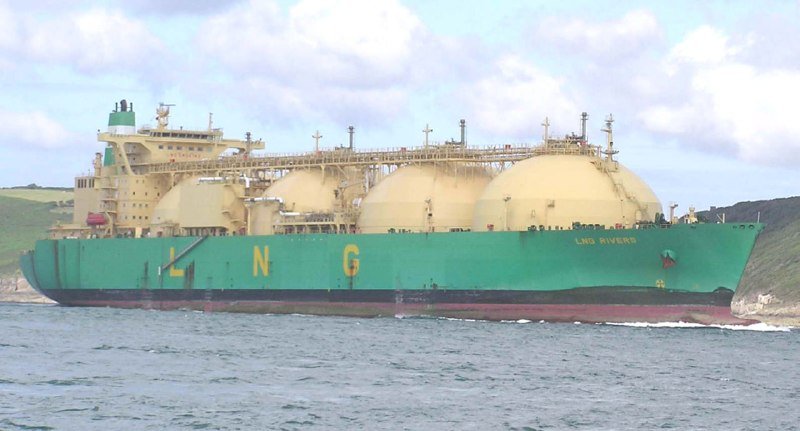
The Hormuz Strait handles roughly 20 percent of global oil throughput and 20 percent of liquefied natural gas exports. Any analyst covering the intersection of energy markets and geopolitics knows the chokepoint math. But the current standoff is not simply about tanker traffic — it is about the architecture of dollar-denominated energy trade.
The existing sanctions regime forces Iran to price its oil in non-dollar currencies or to accept barter arrangements. A reopened Hormuz under continued secondary sanctions does not restore the old contract structure. It restores volume without restoring the settlement mechanism that once made Iranian oil a fixture of petrodollar recycling.
Iran's reported demand to charge Hormuz transit fees — priced at only 5 to 10 percent probability on Polymarket — is an attempt to establish a new structural fact. If Tehran extracts a fee arrangement, even a modest one, it would mark the first time a non-Western-aligned state extracts a direct toll for passage through a globally critical waterway. That is not primarily an oil story. It is a sovereignty story with oil-market consequences.
The Trump administration's reluctance to allow even a 5 to 10 percent probability of agreeing to fee-charging reflects how quickly a precedent would travel. If Iran charges for Hormuz passage, the question of who controls the Malacca Strait, the Suez Canal, and the Bab-el-Mandeb becomes structurally different. The entire framework of Western-anchored maritime norms faces a stress test.
Why the 34 Percent Nuclear-Deal Probability Should Worry Both Sides
A 34 percent chance of a nuclear deal by June 30 means the market is giving it roughly a one-in-three shot. That is not a dismissal — one in three is meaningful in a domain where most outcomes are priced in the single digits. But it is a caution flag on the optimism coming out of both capitals.
The reason the probability is not higher is not hard to locate: the hardliners in Tehran who remember the 2015 JCPOA's unraveling — and the hardliners in the Republican conference who forced the US withdrawal from it — have not gone away. Khamenei's public posture has consistently emphasized that any deal must survive a change in US administrations. That is a structural demand, not a negotiating tactic. It implies either a treaty ratified by the Senate — which would require bipartisan consensus that does not currently exist — or a set of sanctions relief mechanisms so deeply embedded in US law that they cannot be unwound by executive order.
If the market's 34 percent is accurate, the most likely near-term outcome is a partial normalization: Hormuz reopened, some sanctions eased, but the nuclear file left in a box marked "later." That outcome resolves the immediate pressure without resolving the underlying competition. It is the kind of deal that both sides can announce as a success while both sides quietly understand that the structural questions remain open.
What This Publication Makes of the Odds
Monexus has watched the prediction-market-as-signal genre mature considerably over the past two years. Polymarket's role in flagging shifts in geopolitical risk before wire services have confirmed them is now well-documented. The platform is not infallible — liquidity constraints, demographic biases in its user base, and coordinated positioning can distort prices. But in a domain where official spokespeople are institutionally incentivized to overstate their side's position and understate the uncertainty, a market that rewards accuracy and punishes bluffing offers a different kind of evidence.
The odds on a Hormuz reopening are high enough to act on. The odds on a durable nuclear settlement are not. The gap between the two is the most honest thing either capital has said in months.
The geopolitical consensus is shifting toward a partial de-escalation. Whether it constitutes a genuine reset or merely a ceasefire dressed up as a diplomatic achievement will depend on what happens in the weeks after the blockade lifts — when the inspectors arrive, when the sanctions lists are reviewed, and when the hardliners in both places begin the familiar work of reconstituting the conflict they were forced to suspend.
The markets are watching. So is this publication.
Monexus covered the Hormuz standoff through the lens of energy-market stress and dollar-fragmentation risk, as the wire services largely framed it as a binary between war and peace. The prediction-market data gives the story its proper granularity — and suggests the outcome is neither.