The Hormuz Gambit: Why the US-Iran Deal Is a Strategic Mirage
Washington is treating the Strait of Hormuz as a negotiating chip. Tehran sees it as a permanent asset. That asymmetry is why any ceasefire built on shared assumptions about 'normalisation' is likely to collapse before the ink dries.
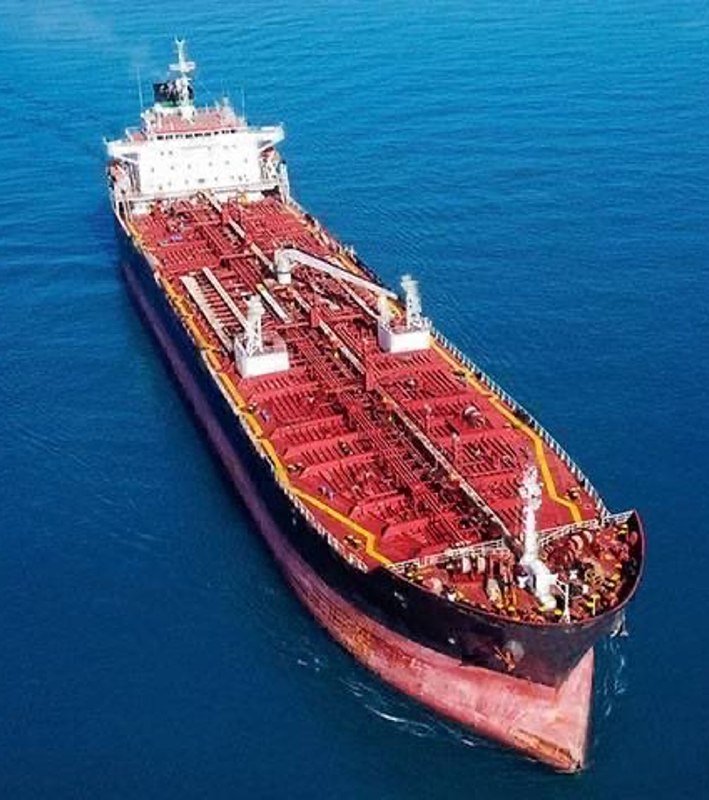
The gap between what Washington wants from its renewed Iran talks and what Tehran has actually signaled is widening into something dangerous. An Iranian official confirmed on 24 May 2026 that the Islamic Republic has not agreed to surrender its stockpile of highly enriched uranium — directly contradicting several major US media reports that had suggested a handover was part of the emerging framework. Meanwhile, Iranian state media published a categorical statement that the Strait of Hormuz "will not return" to its pre-war state. Senator Lindsey Graham, speaking from Capitol Hill the previous day, urged the Trump administration to abandon any deal that leaves Iran in a position to threaten Gulf oil infrastructure at will. The senator is not wrong. But the administration is not listening.
The core proposition under negotiation — reportedly including a sixty-day ceasefire extension, Iranian mine-clearing operations in the Strait, and a phased reopening of the waterway — treats Hormuz as a variable, a piece on the board that can be moved back and forth between positions. The United States wants it open, permanently, as the price of sanctions relief. Iran appears to view it differently: not as a negotiating concession to be traded, but as a structural asset already in hand, the utility of which can be modulated but never fully surrendered. Those are not compatible starting points. And the gap between them will not be closed by a ceasefire that expires in sixty days.
The Hormone Assumption
The phrase "will not return to its pre-war state" is doing significant work in Iranian state media, and observers in the Gulf should be paying close attention to its implications. It is not a threat to close the Strait outright — that would be self-destructive and has always been understood as such by Iranian military planners. It is something more subtle and more durable: a declaration that the leverage Iran has built around the waterway is now a permanent feature of the regional architecture. Before the escalation, Iran had spent years studying how to operate in and around the Strait — its naval doctrine, its mining capability, its anti-ship missile placement — and the war has validated and extended that capability. Whatever deal emerges, Tehran has no intention of functionally disarming that capability. It may pause its use. It will not relinquish the option.
This is a fundamentally different calculus from what Washington appears to be operating on. The ceasefire framework being reported — Iran clears mines, the Strait reopens, the US pauses sanctions pressure — assumes a return to something recognisable as pre-war normalcy. That assumption is false. The Strait that reopens in the coming weeks will be a Strait that Iran has spent months demonstrating it can shut at will. That is not the same thing as the Strait that operated before the escalation. A reopened shipping lane that a party has demonstrated the capacity to close is not a reopened lane — it is a lane operating under duress, with all the premium that implies for insurance, freight, and ultimately the price of oil flowing through the Gulf.
The Senator and the Signal
Lindsey Graham's intervention on 23 May 2026 is notable less for its substance — it amounts to a familiar hawks-within-the-GOP position that any deal which preserves Iranian Hormuz capability is a bad deal — and more for what it reveals about the political arithmetic inside the Trump administration. Graham is not a marginal voice. His public opposition suggests that the emerging framework faces non-trivial resistance within Republican foreign policy circles, and that the administration is navigating genuine internal disagreement about whether a partial deal with Iran is better than no deal at all. That navigation is not helped by the fact that the baseline assumption inside the administration appears to be that Hormuz can be secured as part of a diplomatic package, rather than understood as a permanent source of leverage Iran has no intention of releasing.
The Iranian denial about the uranium handover is the most recent signal of the gap between the two governments' reading of the situation. If the US media framing — suggesting Iran had agreed to surrender the material — was derived from administration leaks, it reflects either a misunderstanding of Tehran's position or a deliberate attempt to shape public expectations in favour of a deal that Iran had not in fact agreed to. Either reading is troubling. Either reading suggests the diplomatic process is operating on a fundamentally different set of facts than the one Iran is actually inhabiting.
The Structural Stakes
It is worth being precise about what the Hormuz gambit means at scale. The Strait carries roughly twenty to thirty percent of global oil trade on any given day — a share that rises sharply when disruptions in alternative routes reduce available supply. Any period of uncertainty about its status — whether in the form of closed lanes, contested navigation, or the broader insurance and freight premiums that follow from demonstrated vulnerability — feeds directly into global energy pricing. That pricing, in turn, affects inflation, central bank decision-making, and the political room available to governments in importing nations. The sixty-day ceasefire, if it holds, will provide temporary relief to commodity markets. But a ceasefire that merely pauses the underlying capability rather than resolving the strategic logic that produced it is a ceasefire that will fail, and the failure will occur at a moment of maximum disruption to markets that have already priced in substantial geopolitical risk.
The deeper stake is this: the US-Iranian relationship has operated for decades on a principle of mutual, deliberate ambiguity about the red lines. Neither side has wanted full war; both have wanted to retain the capacity to signal escalation. The Hormuz capability was the mechanism by which Iran preserved its deterrent. The war, from Iran's perspective, has vindicated that capability and given it new operational reality. Any deal that asks Iran to relinquish the practical fruits of that vindication — without offering structural guarantees that the US will not simply rebuild its leverage once sanctions are lifted — is asking Iran to unilaterally disarm a capability that took decades to develop and that has proven tactically effective in the current conflict.
The window for a sustainable deal remains open. But sustainability requires honesty about what both sides are actually agreeing to. A ceasefire built on one side treating Hormuz as a tradeable variable and the other treating it as a permanent asset will not survive contact with the region it is meant to stabilise. The六十 days — and whatever comes after — will tell whether Washington has understood the asset it is trying to negotiate around, or whether it is simply negotiating against a fiction it confused for a negotiating position.
Monexus is covering the emerging US-Iran framework with reporting from both Tehran-adjacent and Western wire sources. The Iranian denial about the uranium handover and the Hormuz statement were not prominently foregrounded in initial US wire coverage of the talks.
Wire provenance
This editorial synthesis draws on the following public wire/social posts:
- https://t.me/bricsnews/11852
- https://t.me/bricsnews/11851
- https://x.com/Polymarket/status/1923412671984566273
- https://x.com/Polymarket/status/1923051474829529489