Iran's Asset Line in the Sand Tests Trump's Diplomacy
Iran has rejected conditioning the release of its frozen overseas assets on limits to its enriched nuclear programme, complicating efforts to secure a negotiated settlement and raising the spectre of renewed military confrontation.
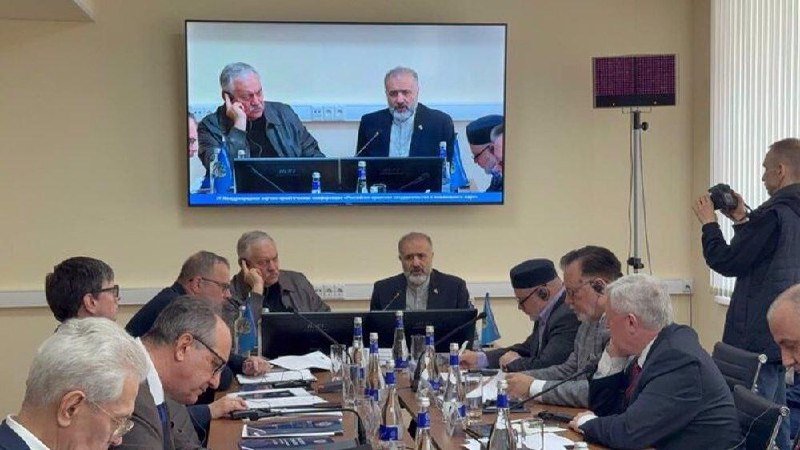
On Saturday, 24 May 2026, Iranian officials rejected any proposal linking the unfreezing of Tehran's overseas assets — frozen under successive waves of American sanctions — to caps on its enriched uranium programme. The position, conveyed in a post by the BRICS-aligned news aggregator @BRICSNews, hardens a line that Iranian negotiators have held since talks began in earnest in late April: Tehran wants its money returned as a precondition, not an outcome.
The timing is significant. American officials have spent weeks signal-testing a deal that President Donald Trump has repeatedly described as imminent. On the same day as Iran's statement, Trump pushed back at critics of the ongoing negotiations, telling a gathering reported by OANN that "nobody has seen" the deal — a phrasing designed to frame opposition as premature rather than substantive. The implicit message: trust the process.
Yet the structural logic of the talks points in a different direction. Iran holds assets estimated in the tens of billions of dollars across European, Gulf, and Asian custodians — capital that represents real purchasing power and leverage. American negotiators, by insisting on nuclear restraints as the price of thaw, are asking Tehran to give up the very instruments that make it a negotiating partner rather than a supplicant. Iran, having rebuilt its enrichment capacity under years of sanctions pressure, has no obvious incentive to surrender that position first. The result is a negotiation that may be structurally unresolvable on the terms currently available.
The gap between the two sides has been visible for weeks. Saeed Marandi, Iran's ambassador to the United Nations, told an interviewer in a clip shared to his X account on 24 May that a deal had appeared close but that Trump had ultimately deferred to what Marandi described as pressure from domestic critics and regional partners. "He seemed to bow to pressure," Marandi said, adding that a renewed conflict was now a real possibility. The framing — from a diplomat who has sat across from American counterparts in Vienna, Geneva, and New York — is not the rhetoric of a regime seeking confrontation. It is the language of a party that believes it was made an offer and then watched that offer be withdrawn.
The domestic calculus on the American side is not neutral either. International security analyst Harlan Ullman wrote in an Al Jazeera column on 24 May that Trump "needs a deal, no matter how bad it is" — that mounting pressure at home, from a Congress increasingly impatient with open-ended Middle Eastern exposure and an electorate fatigued by indefinitely sustained threat premia in energy markets, is pushing the administration toward accommodation. Whether that accommodation produces a durable agreement or simply a transitional pause depends almost entirely on whether Tehran's asset demands can be disaggregated from the enrichment question without triggering a backlash from Gulf allies and Capitol Hill.
Tehran's position also reflects a broader realignment in how states in the Global South approach negotiations with Washington. Where previous Iranian governments might have been willing to accept staged relief in exchange for verified nuclear rollbacks, the current hardliner-influenced foreign policy apparatus treats financial sovereignty as non-negotiable. Frozen assets are not, in this framing, a reward for compliance — they are sovereign property being held as leverage, and their release is a matter of international law, not diplomatic goodwill. That position resonates with audiences in BRICS-aligned capitals who have watched dollar-denominated sanctions deployed as a foreign policy instrument against states from Russia to Venezuela, and who view the Iranian case as an inflection point in the broader contest over the weaponisation of the Western financial architecture.
What remains unclear is whether there is a fallback. American officials have not publicly detailed contingency plans should the current round of talks collapse, and the military option — repeatedly gestured at by the Trump administration as recently as earlier this year — carries risks that few inside the administration appear eager to calculate in earnest. Strikes on enrichment facilities would likely accelerate Iran's progress rather than reverse it; Iranian scientists operating distributed, partially concealed infrastructure have historically proved resilient to targeted operations, and a military campaign could trigger the very regional escalation that Gulf partners have spent years attempting to prevent.
The more probable near-term trajectory is a negotiated pause: a temporary suspension of the most punitive sanctions measures, perhaps in exchange for a voluntary slowdown in enrichment activity that falls short of formal cap-and-snap-back mechanisms. Such an arrangement would allow both sides to claim progress, would relieve energy market pressure heading into the 2026 midterm cycle, and would give Iran partial access to its funds without resolving the underlying structural tension. Whether that counts as a deal — or merely as the management of a crisis that both parties know will eventually require a more fundamental reckoning — depends on what the two sides are prepared to call acceptable.
This publication framed the Iran negotiations through the lens of asset sovereignty and the structural asymmetry between what Washington is willing to offer and what Tehran is willing to accept. The dominant wire framing focused on the administration's political incentives and the characterisation of the talks as likely to succeed; this piece examined the underlying legal and financial architecture of the dispute as a more durable explanation for why a breakthrough has remained elusive.
Wire provenance
This editorial synthesis draws on the following public wire/social posts:
- https://t.me/bricsnews
- https://t.me/OANNTV