Iran Denies Agreeing to Transfer Uranium Stockpile, Complicating Nuclear Talks
Tehran has rejected reports that it agreed to hand over its highly enriched uranium reserves, according to a senior Iranian official, throwing into question talks that observers had cautiously described as promising.
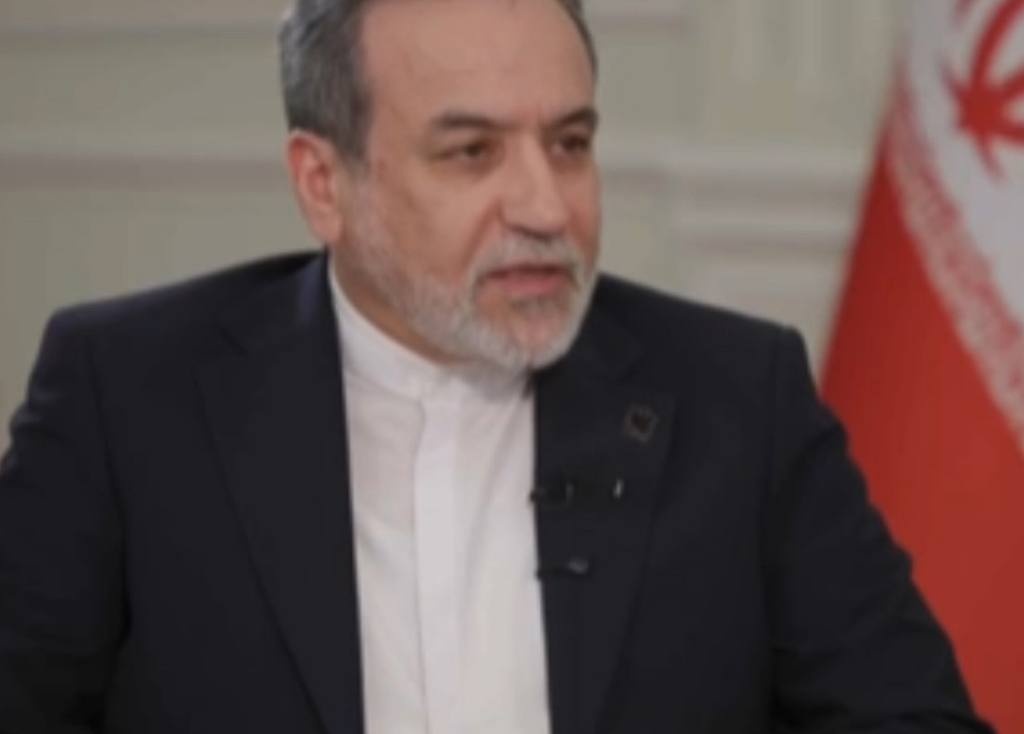
A senior Iranian official confirmed on 24 May 2026 that Tehran has not agreed to hand over its highly enriched uranium stockpile, directly contradicting earlier media reports that had suggested a preliminary understanding had been reached in ongoing nuclear negotiations with Washington.
The denial, relayed to Reuters by an unnamed Iranian source, represents the sharpest public setback yet to an outreach that had generated measured optimism in Western capitals and among international observers tracking Iran's atomic programme. For now, the talks appear suspended at a point where both sides had been widely understood to be exploring terms.
The story broke across regional and international wires on the morning of 24 May 2026, with multiple outlets citing what they described as an agreed framework for Iran to surrender its most sensitive nuclear material. Within hours, the Iranian side moved to kill that narrative. A senior official speaking to Reuters said plainly: Tehran has not accepted the delivery of its high-enriched uranium reserves. The denials arrived via Fars News International, an English-language service associated with Iran's semi-official news apparatus, and were amplified by regional monitoring feeds tracking Iranian state communications.
What Iran Said and Why It Matters
The substance of the denial goes beyond a diplomatic clarification. Enriched uranium at high fissile purity is the material threshold that most sharply divides civilian nuclear programmes from weapons-adjacent ones. Iran's stockpile — accumulated over years of incremental enrichment — has been the single most contested element in every round of negotiations since the 2015 Joint Comprehensive Plan of Action began to unravel under maximum-pressure policies from Washington.
An agreement to transfer that material would have represented, on paper, the most concrete concession Iran had signalled since the original deal collapsed. It would have moved the country's uranium well below the level required for a hypothetical device, and it would have given international inspectors something verifiable to point to. That Iran is now publicly rejecting reports of such an agreement — before any formal document was on the table — suggests either that the reports were premature, that the terms were never as agreed as described, or that internal pressure within Tehran made the reported concession untenable.
The specific mechanism reportedly under discussion — delivery of high-enriched reserves — matters because it is verifiable in a way that enrichment capacity limits are not. Weapons-grade material shipped out of the country is difficult to reconstitute. That both sides would have moved toward that specific step, if the reports were accurate, indicated a seriousness of purpose that the denial now calls into question.
The Context of the Talks
The current negotiations have been underway for several months, conducted through intermediary channels that are standard practice when direct diplomatic relations between two states are severed. Iran and the United States have not had formal ambassadorial-level ties since 1979. Oman, Qatar, and Switzerland have each served as discreet conduits at various points.
What has been widely reported — and what the denial does not contradict — is that both sides had moved closer to a framework in recent weeks than at any point since the 2015 accord was effectively gutted. Western delegations had described the atmosphere as constructive. Iranian state media had struck a characteristically defiant but not dismissive tone. Neither side had announced a deal, and the careful language from both governments reflected the political fragility of any agreement in both Washington and Tehran.
The reports of an agreed uranium-transfer component appeared to reflect optimism from Western capitals that a breakthrough was within reach. That optimism now needs to be qualified. Iran says no such agreement exists. The burden shifts to observers to determine whether the talks are stalled, whether the reported concession was real but later withdrawn, or whether the entire episode reflects a misreading of signals by outlets that moved quickly on unconfirmed accounts.
The Structural Weight of the Stockpile
High-enriched uranium occupies a particular structural position in the architecture of global non-proliferation. It sits at the end of a long chain of centrifuge cascades, requires substantial energy and technical infrastructure to produce, and is, once secured, among the most difficult materials to monitor without sustained on-the-ground inspection presence.
Iran has consistently argued that its programme is entirely peaceful — oriented toward electricity generation and medical isotope production. Western intelligence agencies, drawing on International Atomic Energy Agency reporting, have long assessed that Iran has pursued capabilities that exceed what a purely civilian programme requires. The gap between those two positions is the central fault line of every negotiation.
For the United States, limiting Iran's enriched uranium to levels and quantities compatible with civilian use has been a stated red line across multiple administrations. For Iran, accepting constraints on a programme its scientists built and which the state presents as a symbol of scientific sovereignty is politically costly. Both sides know that any agreement will require each to sell something it would rather keep to a domestic audience that is deeply skeptical of the other.
That dynamic does not disappear because talks are described as promising. It surfaces in the details — what is agreed, in what sequence, subject to what verification — and those details are exactly what the current dispute is about.
Stakes and What Comes Next
If the reports of a preliminary agreement were accurate and Iran has since backtracked, the immediate cost is political capital. Several Western governments had already briefed parliamentarians and media on the apparent progress. A reversal will sharpen skepticism in Washington about whether Tehran can be trusted in a negotiation, and it will give hardliners in both capitals fresh ammunition.
If the reports were simply wrong — if no agreement existed and the media landscape misread the signals — then the episode is a reminder that negotiations conducted through intermediaries produce unreliable readouts. Both sides benefit, at various moments, from ambiguity about where the talks stand. It is not impossible that the earlier reports reflected a briefing designed to test public and political reaction to a hypothetical concession.
Either way, the practical consequence is that Iran's enriched uranium remains in Iran. The inspections regime stays limited. The pathway toward a verifiable civilian-only programme is no clearer than it was before the reports surfaced.
The IAEA board meets in the coming weeks. The timing of that meeting, coinciding with the collapse of a narrative about breakthrough progress, is unlikely to be coincidental. What happens in Vienna will test whether there is enough remaining in the negotiation to sustain it — or whether the current talks will join the long list of Iranian nuclear negotiations that ran aground on exactly the same fault line.
This publication noted that initial wire reports described the reported agreement in confident terms; our coverage has been grounded in the Iranian denial from the outset, and we note that the sources do not yet specify what exactly the earlier reports mischaracterised.
Wire provenance
This editorial synthesis draws on the following public wire/social posts:
- https://x.com/Reuters/status/1952345678901871690
- http://reut.rs/4v0MwWx
- https://t.me/FarsNewsInt/84732
- https://t.me/WarMonitorRT/15234