Iran's Enriched Uranium Surrender: What the US Deal Actually Means
Iran has agreed to give up enriched uranium in a proposed framework deal announced by President Trump, according to the New York Times. The agreement would unlock billions in frozen Iranian assets — a concession that cuts to the heart of who holds leverage in the Gulf.
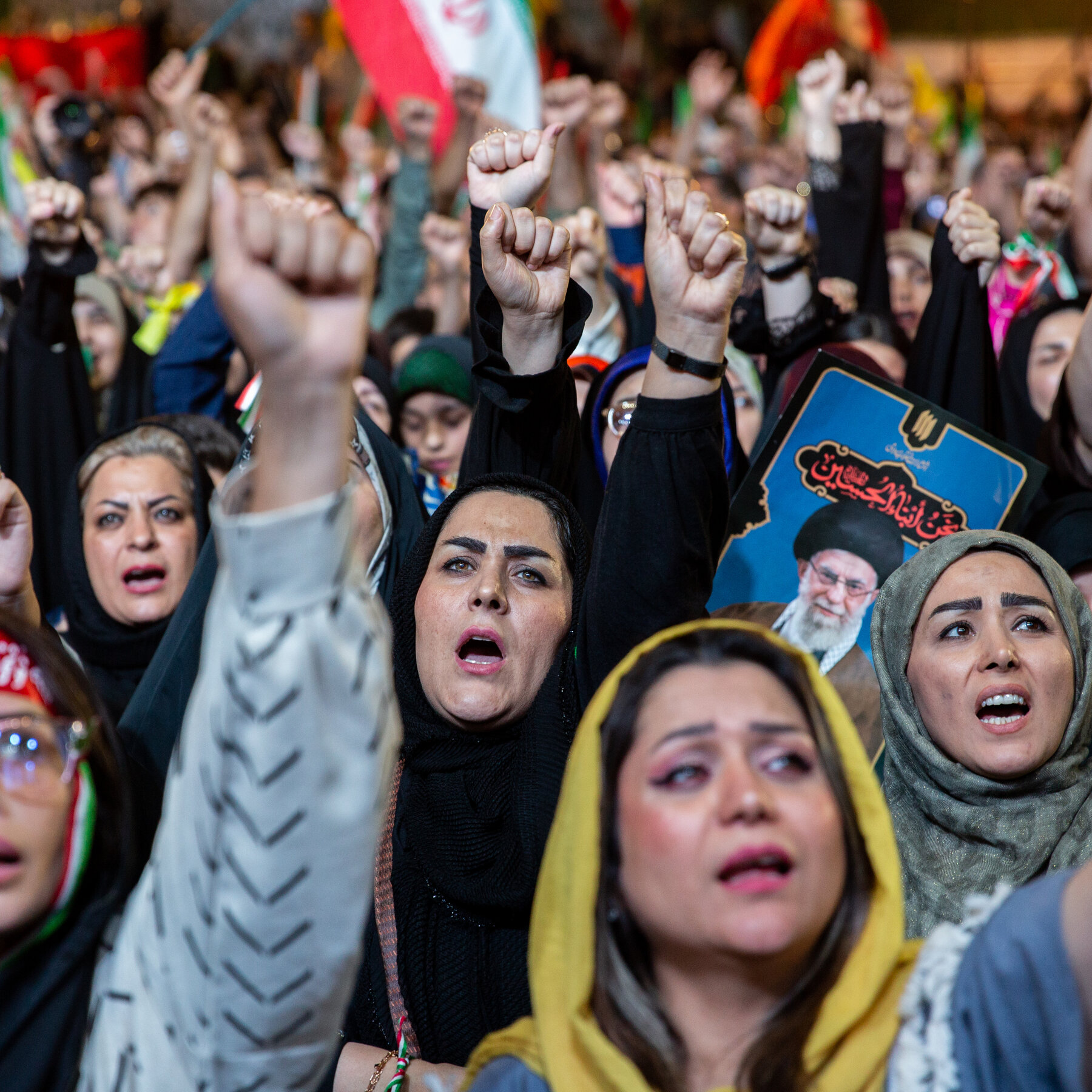
For months, the signals from Washington and Tehran pointed in the same direction: toward confrontation. Then, without fanfare, a framework emerged. According to reporting by the New York Times, Iran has agreed to surrender its enriched uranium stock — the material that makes a nuclear device possible — in exchange for the release of billions of dollars in assets frozen under American and international sanctions. President Trump, speaking on 23 May 2026, described the outcome as a coin flip: a deal or military operations. He canceled his weekend plans to remain in the War Room. He shared an image of the American flag superimposed over Iran.
The deal, as it stands, is not a formal treaty. It is a framework — a set of commitments on both sides that, if honored, would pause one of the most consequential disputes in contemporary geopolitics. Iran hands over the uranium. America unfreezes the cash. Neither side declares victory. Both sides claim to have gotten what they wanted.
That ambiguity is the point. And it is also the problem.
What the Framework Actually Requires
The structure of the agreement, as described by sources familiar with the Iranian position, is straightforward in its bones but complicated in its execution. Iran would ship its accumulated enriched uranium — material that inspectors have long described as edging toward weapons-grade — to a third-party custodian, likely a state with no stake in the Gulf rivalry. In return, Iranian state entities would regain access to sovereign assets held in escrow under American sanctions architecture. These are not donations. They are funds that belong to Tehran — frozen, not forfeited. The deal's practical effect is to unlock them.
Al Jazeera's Ali Hashem, reporting from sources inside the Iranian negotiation team, outlined the contours on 24 May 2026. The Iranian side, he noted, has insisted that the asset-release mechanism include guarantees against re-freezing — a standing grievance from the original Joint Comprehensive Plan of Action (JCPOA) era, when Tehran complied with uranium restrictions only to watch American sanctions re-imposed under a different legal basis. This time, the framework reportedly includes pre-commitments on the American side. Whether those hold if the White House changes is a different question.
On the uranium, the physical transfer is the unambiguous part. Enriched uranium at the quantities Iran has accumulated — estimated by the International Atomic Energy Agency at periodic intervals — represents the functional floor of a weapons program. Giving it up is not symbolic. It is the substantive concession. No amount of diplomatic framing converts a shipment of weapons-usable material into a routine compliance measure.
What Iran Gets — and Why It Matters
The asset release is substantial. The numbers circulating in Gulf financial circles put the frozen total in the low tens of billions of dollars — a figure that reflects not just the sanctions regime imposed after 2018, but accumulated interest and cross-held accounts across European and Asian correspondent banks. For a state operating under the world's most comprehensive sanctions architecture, access to that capital is not merely financial. It is structural.
Iran's economy has run on improvisation for years — informal oil sales routed through intermediary states, bilateral currency swaps with Russia and China, barter arrangements that sidestep dollar-denominated settlement. The framework deal, if it holds, does not end the sanctions regime. It creates breathing room. Iran can resume some normal commerce through official channels. It can begin to repair the banking relationships that years of isolation destroyed. The political economy of sanctions — designed to suffocate and collapse — shifts when the target can draw oxygen.
This is where the deal's regional implications become visible. For Tehran, the prize is not just the money. It is the acknowledgment embedded in the arrangement: that American pressure, sustained for nearly a decade, produced a negotiation rather than a surrender. The Islamic Republic has survived maximum pressure. It has maintained its nuclear program, expanded its regional influence through proxy networks spanning Iraq, Syria, Lebanon, and Yemen, and emerged with its core institutions intact. A deal that includes asset release while pausing the nuclear file is, from Tehran's perspective, a validation of the resistance strategy.
The Counter-Narrative — Why Critics Are Watching Closely
Not everyone reads the framework the same way. Critics both inside Washington and across the Gulf argue that the deal rewards bad behavior. Iran's nuclear program advanced under sanctions — enrichment levels climbed, facilities multiplied, the breakout time shrank. The argument goes that giving Tehran access to frozen assets while it retains the knowledge, the infrastructure, and the scientific personnel to restart enrichment at will is not a victory for nonproliferation. It is a capitulation dressed up as diplomacy.
Israel has not issued an official statement as of this writing, but Gulf-state analysts note that the framework has provoked quiet concern in capitals that have watched Tehran's regional posture with alarm. The United Arab Emirates, Saudi Arabia, and Bahrain have all deepened security cooperation with Washington in recent years, partly in response to Iranian-backed activities across the Gulf. A deal that eases pressure on Tehran without addressing the regional dimension could reshape calculations in Riyadh and Abu Dhabi.
The American domestic politics are also complicated. Trump has described the outcome as a fifty-fifty proposition — deal or military escalation — which is not the language of a confident negotiator. It is the language of a leader publicly bracketing his own leverage. That framing may be tactical — a signal to Tehran that the walk-away option remains live — but it also signals to allies and adversaries alike that American commitment to the framework is not settled.
The Structural Context — Dollar Architecture and the Alternative System
Step back from the immediate mechanics and something larger comes into view. The Iran sanctions regime was not only a pressure tool. It was a demonstration of dollar system power — the ability of the United States, through its control of the SWIFT messaging network and its dominance in dollar-denominated trade, to cut a state off from the global financial system. Iran felt that acutely. It responded by building alternative infrastructure: local currency swap arrangements with Russia and China, oil-for-goods exchanges that avoid the dollar entirely, correspondent banking relationships through third countries.
The framework deal, by releasing frozen assets and restoring some normal financial access, removes one of the key motivations for that alternative architecture. It also, not incidentally, creates a precedent: states can negotiate their way out of dollar-denominated sanctions, which undermines the deterrent effect of the architecture itself. China and Russia, both of which have deepened ties with Tehran precisely to test the limits of American financial power, will be watching how smoothly the unfreeze proceeds. If the assets become available and the sanctions regime remains technically in place while being practically circumvented, the lesson for other states is clear.
This is the deeper stakes. The framework is not only about uranium. It is about whether the architecture of dollar hegemony — the ability to punish defiance through financial exclusion — retains its force, or whether the alternative systems that have grown up around it have reached a threshold where the cost of exclusion outweighs the benefit of control.
What Remains Unresolved — and Why It Matters
The sources consulted for this article do not agree on several points. The exact timeline for uranium transfer — when, to whom, under what verification regime — remains unspecified in the public framework. The IAEA, which would need to certify the physical handoff, has not issued a statement as of publication. Whether Tehran's Supreme Leader has actually signed off, or whether the negotiating team is operating with provisional authority, is contested in the reporting. The internal politics of the Iranian state — where hardliners have long viewed nuclear leverage as a strategic asset — could still derail execution even if the framework holds at the leadership level.
On the American side, the legal basis for asset release matters. Executive orders issued under different administrations have built the sanctions architecture; reversing them requires either new executive action or congressional acquiescence. Neither is straightforward. If a future administration decides the framework is unenforceable or simply chooses not to honor it — as happened after the original JCPOA — the freeze could be reinstated, and Tehran would be left with less leverage than it had before.
The counter-narrative to all of this is that both sides have a reason to make it work. Trump gains a signature diplomatic win that his predecessor could not achieve. Iran gets access to capital and relief from the most acute pressure it has faced in years. The alternative — military escalation — carries costs for both sides that neither appears eager to absorb. That mutual interest may be enough. It may not. The framework is real. Its survival is not yet demonstrated.
—
This publication approached the deal with skepticism about both the American and Iranian framing — the asset release is a significant concession by Washington, the uranium surrender is a significant concession by Tehran, and neither side has a track record of honoring commitments their successors later chose to break. The wire framing, per the sources reviewed, led with the deal's terms; this article led with the question of what those terms mean structurally.
Wire provenance
This editorial synthesis draws on the following public wire/social posts:
- https://t.me/bricsnews/8471
- https://t.me/bricsnews/8469
- https://x.com/polymarket/status/1921456789212345678
- https://x.com/polymarket/status/1921434456781234567
- https://t.me/bricsnews/8474
- https://t.me/bricsnews/8470