The Hidden Ayatollah: How Iran's Supreme Leader is Redrawing the Nuclear Negotiations From the Shadows
U.S. intelligence believes Supreme Leader Ayatollah Khamenei is operating from an undisclosed location with limited communication, while President Trump claims a deal is largely negotiated — a tension that raises fundamental questions about who, exactly, is being negotiated with.
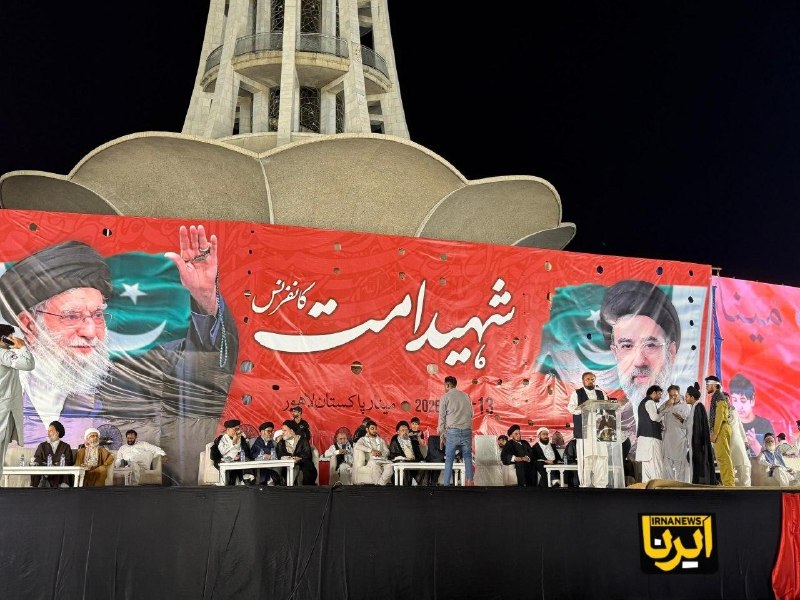
The last confirmed public appearance of Iran's Supreme Leader Ayatollah Ali Khamenei was on 17 March 2026. Since then, according to U.S. intelligence assessments reported by CBS News on 24 May 2026, Khamenei has been operating from an undisclosed location, reached primarily through a network of couriers rather than through normal channels of communication. The timing of that intelligence assessment is not coincidental: it arrives as President Donald Trump publicly claims that a nuclear agreement with Iran has been "largely negotiated."
The conjunction of those two facts — a leader in the shadows, and an American president insisting a deal is near — poses a question the White House has not answered: which version of Iran is negotiating?
A Leader in the Shadows
CBS News reported on 24 May 2026 that U.S. intelligence believes Khamenei has limited access to outside communication and is primarily reached through couriers. The report did not specify where Khamenei is located, nor did it detail what triggered the intelligence community's assessment that he had departed from his routine arrangements in Tehran. No further detail was provided in the wire report about whether this represents a change in security posture, a diplomatic signal, or a genuine operational concern about the Supreme Leader's safety.
What the reporting does establish is that the U.S. government has made a judgment about Khamenei's location and communication patterns — and that judgment has not been publicly confirmed or denied by Iranian officials. Tehran has not issued a denial of the CBS report as of publication time. This matters because the Supreme Leader's whereabouts are not merely a logistical detail: under Iran's political architecture, Khamenei holds ultimate authority over nuclear decisions. Any deal struck with the United States requires his explicit approval. A Supreme Leader who cannot be reached directly is a negotiating counterpart whose authority is, at minimum, ambiguous.
The American Timeline
Trump announced on 23 May 2026 that a nuclear agreement with Iran has been "largely negotiated." The statement, posted to his social media platform, was not accompanied by a detailed framework, a signed document, or a clear specification of what terms had been agreed. It was, characteristically, a declarative shorthand for a process that outside observers cannot fully verify.
The uncertainty around Trump's claim is reflected in prediction markets. Polymarket data published on 23 May 2026 assigned a 10 percent probability to the scenario in which Trump allows Iran to charge fees for transiting the Strait of Hormuz by 30 June 2026. A separate market, tracking whether Trump agrees to let Iran charge fees in Hormuz by 31 May 2026, placed the probability at just 5 percent. Those are not the odds of an agreement that is, as Trump put it, largely done. They reflect deep market skepticism about the substance and viability of whatever framework is being described.
The Hormuz fee question is a proxy for the larger negotiation. Iran has repeatedly signaled that any normalization of relations with the United States — including the removal of sanctions — must include some form of assurance regarding its ability to export oil through the Persian Gulf. The Strait of Hormuz carries roughly 20 percent of global oil shipments. The question of whether Tehran can extract revenue from that geography in the form of fees or preferential transit arrangements is, in the view of most analysts, a red line for Iran and anathema to U.S. Gulf allies, particularly Saudi Arabia and the UAE, who have long resisted any arrangement that gives Tehran leverage over the waterway.
The Structural Problem
There is a long history of Western negotiators assuming that the person sitting across the table from them holds the authority their title implies. The 2015 Joint Comprehensive Plan of Action — the nuclear deal that Trump withdrew from in 2018 — was negotiated with Iran's foreign ministry and confirmed by a Khamenei-approved parliament. It was then dismantled by Khamenei's decision, not by the foreign ministry's. The lesson from that experience is not that Iranian negotiators lack authority, but that authority in Tehran is layered, and the outermost layer — the Supreme Leader — can always retract what subordinates have agreed to.
What makes the current situation structurally distinct is that the outer layer may be physically inaccessible. If U.S. intelligence is correct that Khamenei is in an undisclosed location with limited communication, then the negotiating apparatus in Tehran and Vienna is, at some level, operating without a functioning link to the final decision-maker. That does not mean a deal is impossible — Iranian officials have indicated willingness to continue discussions in Khamenei's absence — but it does mean that any agreement reached would carry a specific kind of risk: that the man whose approval makes it binding cannot be consulted in real time.
This is not without precedent in Tehran. Khamenei has, on multiple occasions, remained out of public view for extended periods. In 2014, he was absent from public appearances for several months following knee surgery. In 2020, his public appearances thinned considerably during the COVID-19 pandemic. On each occasion, the Iranian state apparatus continued to function. But negotiations with a nuclear threshold state are a different category of activity, and the absence of a confirmed, accessible Supreme Leader changes the risk calculus for any American administration contemplating concessions.
What the Market Is Saying
Prediction markets are not opinion polls. They aggregate the views of participants with financial skin in the game, and that structure tends to discipline optimism in ways that media commentary does not. The 5-to-10-percent range for Hormuz fee concessions is instructive precisely because it is low. It tells us that the market — which has historically been more accurate than consensus commentary on geopolitical outcomes — assigns significant probability to one of three scenarios: the talks collapse; the deal that emerges does not include Hormuz concessions; or Trump is describing a negotiating process that does not translate into a signed agreement.
The second Polymarket market, tracking a 31 May deadline, has already resolved or is resolving at very low probability. The June 30 market remains open. What both data points collectively suggest is that the market does not believe the visible negotiating process — the statements, the reported framework discussions, the back-channel communications — has produced anything approaching a binding commitment on either side.
The Stakes and the Uncertainty
If Trump secures a nuclear agreement that constrains Iran's enrichment program in exchange for sanctions relief, the geopolitical consequences ripple outward in multiple directions. Saudi Arabia and Israel — both of which have the most to lose from a legitimized Iranian nuclear program — would need to recalculate their security postures. The Gulf states, who have invested heavily in American security guarantees, would watch to see whether the United States treats a nuclear deal as the foundation for a broader regional accommodation with Tehran, or as a discrete transaction that leaves the adversarial architecture intact.
China, which has maintained a consistent interest in Iranian energy supplies and has expanded its diplomatic engagement with Tehran over the past decade, would likely view a U.S.-Iranian deal as a structural shift in the region — one that changes the calculus for Beijing's own relationships with both the Gulf states and Iran.
On the other side of the ledger: an Iran that remains outside any framework, with a functioning enrichment program and the full weight of American secondary sanctions, faces continued economic pressure. Khamenei's survival calculus — keeping the Revolutionary Guard and the nuclear program intact while weathering maximum pressure — has a diminishing returns profile. The question for Tehran is not whether it wants a deal, but whether it can accept the terms the Trump administration is prepared to offer.
What remains most uncertain is whether the intelligence about Khamenei's location reflects a temporary security arrangement — perhaps tied to concerns about Israeli or American military action — or whether it signals something deeper: a leader who has made a political calculation to insulate himself from the consequences of a negotiating process he may not fully control. The sources do not provide enough evidence to determine which interpretation holds. What they do provide is a clear signal that the version of Iran being negotiated with may not be the version that appears in the official photographs.
This publication's reporting on the Iran nuclear negotiations has centered on the gap between public statements and institutional realities — a gap that, in this particular case, may be the most consequential fact in the room.
Wire provenance
This editorial synthesis draws on the following public wire/social posts:
- https://x.com/unusual_whales/status/192354521435