Iran's Pezeshkian Draws Equivalence Between Khorramshahr and Strategic Gulf Chokepoints
Iranian President Pezeshkian invoked the 1980s defense of Khorramshahr in remarks casting the port city as synonymous with the Strait of Hormuz — a framing analysts read as both domestic nationalist signal and implicit reminder of Tehran's leverage over global energy transit.
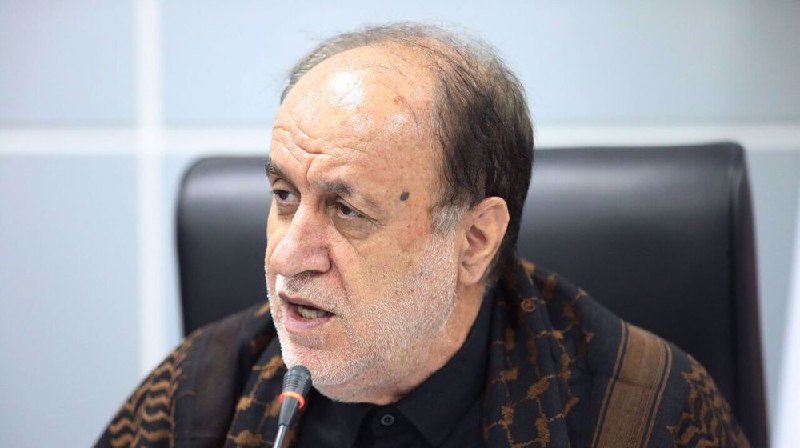
Iranian President Masoud Pezeshkian used the anniversary of the 1980s defense of Khorramshahr on May 24 to deliver remarks casting the port city as a direct stand-in for Iran's strategic maritime geography — the Persian Gulf and the Strait of Hormuz. According to reports from Iranian state media, Pezeshkian stated that "Khorramshahr today is Iran, the Persian Gulf, and the Strait of Hormuz," a formulation that invokes the eight-year Iran-Iraq war's most emblematic urban defense as a metaphor for Tehran's continued insistence on controlling or at minimum shaping the conditions of Gulf transit.
The statement follows months of elevated tensions over Iran's nuclear programme and concurrent pressure from Western capitals seeking a renewed diplomatic path. It also arrives against a backdrop of ongoing maritime posturing in the Gulf, where Iran's Revolutionary Guard Corps has periodically disrupted or inspected commercial shipping in waters it claims are subject to its security jurisdiction. Analysts who track Gulf security dynamics say the rhetorical move is consistent with a pattern of embedding territorial claims inside historical memory — turning a geographic fact into a question of national identity.
The Khorramshahr Frame and Its Domestic Logic
Khorramshahr sits at the confluence of the Arvand Rud river and the Persian Gulf in Khuzestan province, close to the Iraqi border. During the Iran-Iraq war, it was the site of one of the conflict's longest and most destructive sieges; Iraqi forces seized the city in October 1980 and held it for nearly two years before Iranian forces recaptured it in a costly operation in May 1982. The city's defense — famously characterised by the slogan "Khorramshahr is the city of mosques" in the face of bombardment — became a pillar of Iranian revolutionary-martyr mythology.
By invoking that mythology directly, Pezeshkian is speaking to multiple audiences simultaneously. For a domestic base that prizes revolutionary endurance and sees Western pressure as an extension of historical enmity, the framing reframes any diplomatic compromise as a test analogous to the Khorramshahr defense. For regional audiences, the equivalence between the city and the Strait of Hormuz underscores a message Iran has delivered through multiple channels: that any effort to marginalise Tehran from Gulf security architecture faces a state that has historically proven willing to absorb substantial cost in defence of its maritime interests.
The statements were reported across multiple Iranian state outlets on May 24, 2026, including Tasnim News, Mehr News, and the Arabic-language service of Al Alam. The consistency of the reporting suggests the framing was deliberate and coordinated rather than an off-the-cuff remark.
Hormuz as Leverage: What the Claim Actually Means Strategically
The Strait of Hormuz is the world's most critical oil transit chokepoint, carrying roughly 20-25 percent of global oil trade by some estimates. Any significant disruption to traffic through the strait would have immediate and severe consequences for global energy markets. Iran has long understood this geography as a source of strategic depth: not necessarily because Tehran wants to close the strait, but because the possibility of disruption gives it a seat at any table where Gulf security is discussed.
Pezeshkian's equivalence statement does not amount to a new threat. It does, however, reinforce the operational reality that Iran controls significant maritime territory and capabilities in the northern Gulf. The Revolutionary Guard Navy operates fast-attack craft, minesweeping and mines-laying capacity, and anti-ship missile systems positioned along the Iranian coast that could, in a scenario of acute conflict, threaten or disrupt shipping. Whether or not the Iranian leadership would actually exercise that option — which would carry devastating economic and military consequences for Iran itself — the capability exists and has been exercised in limited ways during previous periods of heightened tension.
Western military analysts have noted Iran's investment in asymmetric naval capabilities designed precisely to raise the cost of any potential blockade or strike operation against Iranian facilities. The Khorramshahr framing, in that context, is partly a reminder that Iran sees its Gulf presence as existential rather than negotiable.
Regional and International Context
Gulf Arab states have watched Iran's nuclear programme and regional posture with sustained concern, though the degree of alarm varies between capitals. Oman, which shares the Hormuz strait's southern shore, has historically positioned itself as a discreet intermediary. The United Arab Emirates and Saudi Arabia have in recent years pursued selective diplomatic engagement with Tehran even as they deepen security ties with the United States.
Washington has maintained its "maximum pressure" framework on Iran while also periodically signalling openness to diplomatic off-ramps. The current window — with nuclear talks stalled and a new round of sanctions designations reportedly under consideration — provides the context in which Iranian officials may feel pressure to signal resolve rather than flexibility. The Khorramshahr equivalence fits that posture: it projects unity and defiance, not concession.
The sources reviewed do not include statements from Western or Arab government officials responding to Pezeshkian's remarks, and the degree of official reaction, if any, had not been reported at the time of publication.
What Remains Uncertain
Several elements of the moment cannot be determined from the available sourcing. It is unclear whether Pezeshkian's remarks reflect a new internal consensus on Gulf strategy or represent a speech crafted for domestic consumption with limited operational implications. The relationship between the president's rhetoric and the actual decision-making authority of the Revolutionary Guards and Supreme Leader Ayatollah Ali Khamenei on security matters is a structural question that routinely complicates analysis of Iranian state communications. Whether the statement is a prelude to a more concrete action — a naval exercise, a disruption of shipping, a new missile test — or simply a rhetorical marker ahead of a domestic political moment cannot be established from the current source material.
The invocation of Khorramshahr is, on its face, a statement about identity and memory. What Iran chooses to do with the geography it has claimed equivalence with remains the open question.
This article relied on reports from Iranian state media outlets including Tasnim, Mehr News, and Al Alam. The framing and sourcing reflect the available wire record for May 24, 2026.
Wire provenance
This editorial synthesis draws on the following public wire/social posts:
- https://t.me/Tasnimnews_EN/7891
- https://t.me/alalam/245678
- https://t.me/mehrnews/412345
- https://t.me/alalamarabic/98765
- https://t.me/presstv/456789