Iran's Revolutionary Patience: How the Strait of Hormuz Became America's Deadlock
Tehran's framing of American generals as trapped inside a strategic corridor they cannot open exposes the central paradox of maximum-pressure diplomacy: economic strangulation that never quite delivers regime collapse leaves both parties locked in a logic none of them chose.
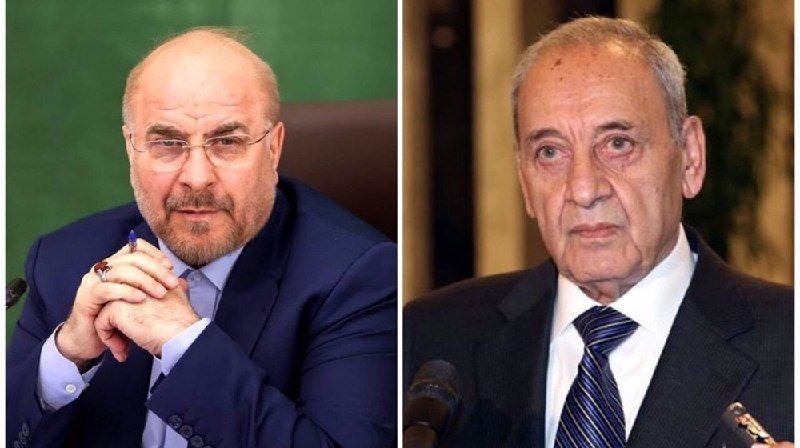
There is a particular rhetorical move that authoritarian states perfected long before social media taught democracies to mimic it: take whatever your adversary did to constrain you, reframe it as their own trap, and present yourself as the patient architect of their inevitable frustration. On 24 May 2026, Tehran performed this maneuver with unusual precision. The statements issued through Mehr News and Tasnim, attributed to Major General Yadollah Javani, the IRGC's deputy for political affairs, amounted to a structured argument that the Trump administration has maneuvered itself into a strategic dead end — one it cannot exit through either war or diplomacy without absorbing significant cost.
The core claim was straightforward enough: American military commanders, according to Javani's framing, have internalized that "opening the Strait of Hormuz is a dark corridor." Behind Iran's vaunted strategic patience, he said, lies "the nation's revolutionary anger." Trump and the American army are in "a complete deadlock." The escalation of possible conflict dimensions, he argued, brought the adversary to the negotiation table — and that table, by implication, is where Iran prefers to meet them. Continue threatening, he warned, and the Islamic Republic will walk out of the Non-Proliferation Treaty entirely.
The first thing to establish is what these statements are and are not. They are Iranian state-media outputs, processed through Tasnim and Mehr News, both of which operate within the Islamic Republic's information ecosystem. They are not independent reporting; they are a official voice speaking through channels designed to amplify it. That does not make them worthless. It makes them a data point about how Tehran wants the current moment to be understood — and understanding that is inseparable from understanding the moment itself.
The Strait as Weapon and Symbol
The Strait of Hormuz is the world's most critical chokepoint for oil shipments, carrying roughly 20-25 percent of global oil trade on any given day. That figure is not new; energy analysts have cited it for decades. What changes is the context in which the threat of obstruction becomes thinkable — and that context is now shaped by a peculiar confluence of American domestic politics, Iranian economic deterioration under sanctions, and a broader realignment of trade and energy routes away from dollar-denominated markets.
Javani's framing that American generals have understood the corridor to be "dark" is a statement about their calculations, not necessarily about theirs alone. It suggests that Washington has run its own internal models and found that a military move to reopen Hormuz by force — should Iran make good on obstruction threats — carries unacceptable escalation risks. Those risks include not only Iranian anti-ship capabilities and drone swarms, but the cascading effect on global energy prices during a US election cycle and the political exposure of American soldiers dying to defend oil lanes that ultimately benefit Asian consumers more than American ones.
This is not Tehran's propaganda speaking; it is the structural logic of the chokepoint. Whoever controls the narrowing controls the price of the wideness. Iran has understood this arithmetic for forty years. What Javani's statements suggest is that the current US administration understands it too — and that this mutual understanding is, paradoxically, the closest thing to stability the Persian Gulf has had in years. Mutually acknowledged vulnerability, properly signaled, can function as a substitute for trust.
Revolutionary Anger and Strategic Patience
The phrase "strategic patience" has a specific genealogy in Iranian state discourse. It was associated most prominently with Ali Akbar Hashemi Rafsanjani during the Iran-Iraq war years — the argument that a smaller, poorer state could outlast a larger, wealthier aggressor if it simply refused to be goaded into mistakes. The current framing repositions the same concept inside a revolutionary vocabulary, substituting Rafsanjani's dry pragmatism with something more explicitly ideological: revolutionary anger held in check, not because Iran cannot act, but because acting prematurely would squander the structural advantage that time is delivering.
The implication is worth spelling out. If the deadlock is real — if America truly cannot escalate without cost and cannot retreat without losing face — then the patient party is the one that benefits from the status quo. That is Tehran's position: sanctions are biting, yes, but they have not produced capitulation; they have produced adaptation. Trade rerouted through third countries, oil sold at discounts that still generate revenue, and a diplomatic posture that has, notably, brought Washington back to the table three times in six years when maximum pressure was supposed to make talking unnecessary.
The weakness in this argument is not rhetorical. It is material. Iran's economy has contracted substantially; its currency has lost purchasing power; its population is younger and more connected than the revolutionary generation that endured the sanctions of the 1980s and remained loyal to the Islamic Republic out of national survival instinct. Revolutionary anger that is also economic desperation is a volatile mixture. The gap between what Javani describes as patience and what a significant portion of Iran's population experiences as decline is one that state media does not acknowledge — and that absence is itself informative.
The NPT Card and Escalation Geometry
The threat to withdraw from the Nuclear Non-Proliferation Treaty, delivered through the same Tasnim dispatch, sits at the edge of the escalatory ladder Tehran has been constructing. The NPT is the legal architecture that gives Iran the international cover to maintain a civilian nuclear program while the world monitors its non-military dimensions. Walking out would remove that cover — and while it would not, by itself, mean a bomb, it would mean the end of the International Atomic Energy Agency inspections regime and the beginning of an unambiguous sprint toward one.
Javani presents this as a rational response to continued American threats. "Continuation of threats," he said, "will take Iran out of NPT." The conditional structure matters: if X, then Y. This is a deterrent signal, calibrated for an audience that includes not just Washington but also European capitals that have been pushing for diplomatic re-engagement, and Beijing and Moscow, which have been watching the Iran file for signs of how far American pressure can extend before it breaks the existing arms-control architecture entirely.
Whether Tehran would actually follow through is a separate question from whether the threat is credible in the current moment. The Islamic Republic has used NPT-adjacent language before as a bargaining chip. The difference now is the depth of the sanctions pressure, the collapse of the JCPOA as a diplomatic framework, and a US administration that has shown less interest in arms-control architecture than in transactional dealmaking. Under those conditions, a threat that previously functioned as negotiating leverage carries more weight — because the assumption that norms will hold both sides back is weaker than it was.
The real risk is not that Iran exits the NPT tomorrow. It is that a threat which once seemed unthinkable becomes, through repetition and through genuine deterioration of the strategic environment, something that policymakers begin to price in. Once a state begins treating nuclear latency as an actual policy option rather than a shadow capability, the geometry of Middle Eastern security shifts in ways that are very difficult to reverse.
What the Deadlock Actually Means
The language of deadlock — Javani's own word — is more revealing than perhaps he intended. A deadlock implies a contest where neither side can win on its own terms, where the moves available to each are constrained by the moves the other has already made, and where the logic of the situation has outrun the intentions of the players. That is an accurate description of where the Islamic Republic and the United States find themselves in mid-2026.
America cannot bomb Iran into submission without引爆ing a regional war, destroying oil markets, and handing Beijing and Moscow a strategic gift. Iran cannot sanctions-proof its economy without abandoning the regional posture that sanctions were designed to punish. Both sides know this. The question is not whether the deadlock is real but what it produces — whether it creates the conditions for a deal both can sell domestically, or whether it simply festers until some incident in the Gulf provides the trigger neither side planned to pull.
Javani's statements, read carefully, are less a threat than a claim to leverage. They are the voice of a state that has survived maximum pressure and wants credit for surviving it. They are also, not coincidentally, a signal to domestic audiences that the IRGC remains the architect of national resilience rather than the cause of national isolation. Revolutionary patience, in this framing, is vindicated — and the people who practiced it are owed the political premium that vindication confers.
That narrative is politically useful inside Iran. Whether it survives contact with the economic reality on the ground is a different question, and one that these dispatches do not answer — because they are not designed to.
This publication's wire coverage emphasized the IRGC framing of Hormuz as a strategic trap. Western wire services led with the NPT withdrawal threat. The structural dimension — what the deadlock means for global energy architecture as Gulf states accelerate diversification away from the Strait — received less attention from both frames than the story warrants.