Iran Sets Hormuz Red Line in US Peace Talks Despite Trump Deal Optimism
Iranian officials have pushed back directly against President Trump's claim that a peace deal would open the Strait of Hormuz, setting a clear red line on the waterway that carries roughly a fifth of global oil shipments.
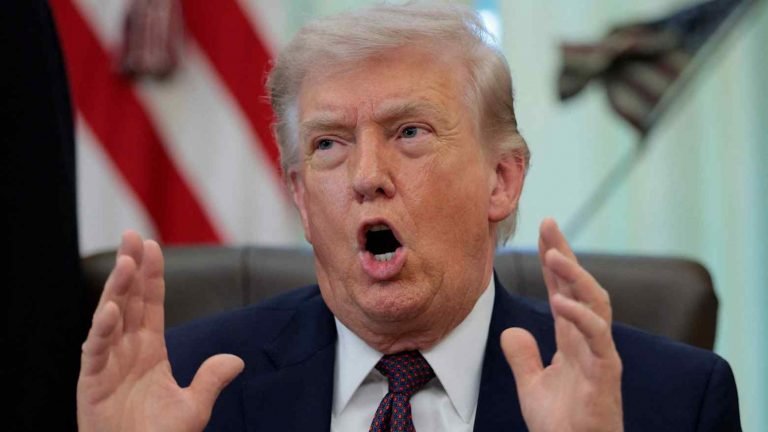
On 24 May 2026, Iranian officials delivered a blunt rebuttal to President Trump's announcement that a peace agreement between Washington and Tehran was close. Speaking through state-linked media, they rejected the premise that any deal would guarantee unfettered access to the Strait of Hormuz — the narrow oceanic corridor that separates Iranian territory from Oman and carries roughly a fifth of the world's daily oil shipments.
The exchange exposed the distance between the two sides on a question that is inseparable from the broader negotiations. Trump framed Hormuz access as a likely component of any final agreement. Tehran's position is categorical: operational control over the waterway is not for sale, regardless of what concessions an accord might contain elsewhere.
The Core Disagreement
The dispute erupted after Trump told reporters on 23 May that he expected the Hormuz question to be resolved as part of a comprehensive deal, suggesting the waterway would return to normal transit conditions. Iranian state media moved quickly to kill that framing. According to multiple outlets, including reporting carried by Euronews, Iranian officials stated that even in the event of a negotiated settlement, the Strait of Hormuz would remain under Iranian control.
That phrasing is deliberate. Tehran is not merely insisting on its geographic proximity to the strait — it is asserting ongoing authority over the waterway's operational status. The distinction matters: agreeing to "open" the strait as a one-time diplomatic gesture differs substantially from ceding the capacity to manage or occasionally restrict it in the future. Iranian media went further, noting that the strait would not return to what they described as its "pre-war state," a formulation that implies Tehran intends to retain leverage even if tensions ease.
The New York Times reported that Iranian officials had not formally responded to Trump's announcement as of 24 May. Whether Tehran issues a formal reply in the coming days — and whether that reply addresses the Hormuz question directly — will be the first concrete signal of whether the two governments are operating from a shared understanding of what a deal would actually entail.
Why Hormuz Cannot Be Isolated From the Broader Negotiations
The Strait of Hormuz is among the most strategically significant waterways on the planet. Separating Iran from the UAE and Oman, it is the chokepoint through which tankers carry oil produced by Saudi Arabia, Iraq, Kuwait, Iran, and the UAE to markets in Asia, Europe, and North America. Closure or disruption does not require military action — the strait's narrowest point is barely 21 nautical miles wide, and shipping insurance markets react to political signals as readily as to physical blockages. The economics are stark: anything that raises uncertainty about transit directly inflates insurance premiums and freight rates, transmitting price shocks across global energy markets within days.
This is Tehran's structural leverage, and it is not incidental. A negotiating party that controls a critical global chokepoint operates differently from one that does not. The value of that control does not disappear when diplomatic relations improve. If anything, it becomes more valuable precisely because the stakes of disruption are higher in a world where oil revenues fund reconstruction, investment, and domestic stability.
The United States, for its part, has a standing interest in freedom of navigation — an interest that multiple presidential administrations have treated as non-negotiable in principle. For the Trump administration to accept any arrangement in which Iran retains operational authority over the strait would represent a concession that goes beyond the specific terms of any nuclear or sanctions relief agreement. That tension is at the heart of the current impasse.
What a Resolution Would Actually Require
Neither side has published the text of any proposed agreement, and the sources reviewed do not indicate whether the administration has presented Tehran with legally binding transit guarantees or merely a political commitment to respect commercial shipping. These are not equivalent. A binding international agreement — whether bilateral or embedded in a multilateral framework — would constrain Iran's future options in a way that a diplomatic gentlemen's understanding would not. Tehran's resistance to the latter is predictable; accepting the former would require a level of institutional trust that does not currently exist between the two governments.
The sources also do not indicate whether Trump and his negotiators have discussed the Hormuz question with the regional states most exposed to its disruption — Saudi Arabia, the UAE, Kuwait, and Oman. Those governments have their own calculations. They have spent years diversifying export routes and energy infrastructure partly in response to the 2018-2022 period of maximum pressure, when the risk of Hormuz disruption was elevated and persistent. They may prefer an agreement that entrenches their own hedging investments rather than one that restores the pre-2018 status quo wholesale.
This matters because it suggests the negotiating space may be narrower than the binary of total Iranian control versus total American guarantees implies. A middle arrangement — involving transparent transit protocols, third-party monitoring, and pre-agreed escalation procedures — may be more achievable than either side's opening position suggests. Whether either government is willing to publicly accept that middle ground is a separate question.
Stakes and What Comes Next
The immediate stakes are economic and political. Global oil markets have already priced in elevated geopolitical risk associated with US-Iran tensions; a sustained diplomatic channel reduces that premium and can lower pump prices in importing economies. For Trump, whose administration has framed economic performance as a central metric, that outcome has domestic political value. For Tehran, which has operated under severe sanctions pressure for years, a credible negotiation process — even a slow one — signals to foreign investors and trading partners that the isolation may eventually lift.
The Hormuz question is both the obstacle and the prize. Resolving it requires either that Iran formally cedes operational authority — which is politically implausible — or that Washington accepts a structure in which Iran retains theoretical control but agrees to transparent and verifiable constraints on its exercise. Neither side has publicly moved toward the latter position, and the sources do not indicate that private discussions have progressed further.
The next meaningful signal will come from Tehran's formal response, if one is issued. Until then, the gap between Trump's stated optimism and Iran's categorical red line defines the negotiating landscape.
This desk covered the Hormuz dispute primarily through Iranian state-adjacent reporting and the New York Times wire account, giving significant weight to Tehran's stated position before noting the administration's framing. Western wire services have led with the administration's deal optimism; this piece led with the contradiction.
Wire provenance
This editorial synthesis draws on the following public wire/social posts:
- https://t.me/euronews/28567
- https://t.me/bricsnews/44812