Israeli Military Acknowledges Soldier Killed, Two Wounded in Hezbollah Drone Strike
The Israeli military confirmed on 24 May 2026 that one of its soldiers was killed and two others wounded during a drone attack claimed by Hezbollah. The acknowledgment came through official military channels, a disclosure that carries particular significance given the broader pattern of casualty management that has characterised the northern front since October 2023. The identities of the deceased and wounded soldiers were not immediately available in the sources reviewed; this publication will update as official confirmation becomes available.
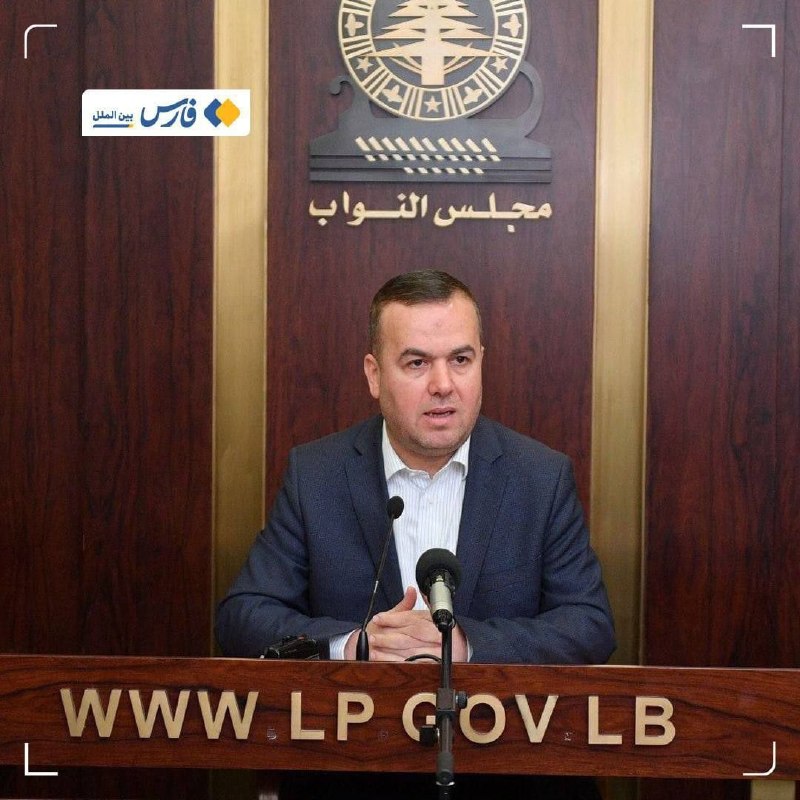
The admission is notable for what it reveals about the Israeli military's approach to information control along the Lebanon border. When casualties occur in engagements with Hezbollah — whether from drone strikes, anti-tank missiles, or direct fire — the default position of the Israel Defense Forces has typically been to minimise public disclosure until forced otherwise. The acknowledgment on 24 May, delivered through army radio and subsequently reported by Iranian state-adjacent outlets including Tasnim News and Fars News International, follows a pattern this publication has tracked across multiple cycles of the northern conflict: initial combat reports from Hezbollah, followed by Israeli confirmation that arrives with a delay and partial detail.
The Acknowledgment Itself as an Event
Military institutions manage casualty information as a form of operational communication. The decision to confirm a death — and to specify the number of dead and wounded — is rarely a neutral act of transparency. In the Israeli context, it serves multiple functions simultaneously: it satisfies a legal obligation to notify next of kin before public disclosure, it signals to adversaries that the strike landed, and it calibrates domestic public expectation before unofficial figures circulate on social media. That the acknowledgment came through military radio rather than a written IDF spokesperson statement suggests a rapid internal notification process was activated, which is standard procedure when a death is confirmed.
The two wounded soldiers were described in initial reports as having sustained injuries during the same engagement. Their condition was not specified in the sources reviewed, and the IDF had not published a full operational statement at the time of this reporting. The absence of condition grading —轻度, moderate, severe — is typical in early-stage casualty reporting and does not indicate the severity of injuries.
The Drone Attack in Context
Hezbollah has deployed drone capability against Israeli military positions along the Lebanon border with increasing frequency since the ceasefire negotiations stalled in late 2025. The drones used are of a type that can carry explosive payloads and navigate terrain features to strike fixed positions; IDF air defence systems have intercepted some but not all of the incoming craft. The attack on 24 May appears to have been one of the more successful incursions in recent weeks, reaching a position where ground troops were present and sustaining casualties.
This publication has reported consistently on the escalation dynamics along the northern border, where the absence of a formal ceasefire agreement has produced a low-grade but continuous war of position. Drone strikes, tunnel infiltrations, anti-tank volleys, and Israeli retaliatory air sorties form the texture of that conflict. The casualties acknowledged on 24 May reflect that reality in its bluntest form: soldiers in fixed positions on hostile terrain, exposed to a delivery mechanism that air defence has not fully neutralised.
What the Pattern of Disclosure Reveals
The Israeli military's casualty disclosure practices on the northern front differ meaningfully from those applied during major ground operations in Gaza. During the early phases of the Gaza campaign, IDF statements provided regular, detailed casualty updates including names, ranks, and units. On the Lebanon border, the updates are less systematic, arriving days or weeks after engagements, or in some cases not at all unless journalists or international monitors surface the information independently.
The discrepancy reflects different political calculations. The Gaza operation was framed domestically and internationally as a defined campaign with a defined endpoint; casualty disclosure served narrative coherence. The northern front has no such framing — it is a holding action, a buffer zone management conflict without a clear terminus. Casualties there are politically inconvenient in a different way: they suggest an open-ended commitment without a corresponding achievement that can be cited as justification.
Hezbollah, for its part, has incentive to publicise every successful strike precisely because the Israeli acknowledgment is incomplete or delayed. When the IDF confirms a death, Hezbollah's media apparatus treats it as validation of its targeting programme. Iranian state-adjacent outlets amplified the 24 May acknowledgment within hours, presenting it as evidence of Hezbollah's continuing capacity to inflict losses on Israeli forces regardless of Israeli air superiority.
The Human Weight Beyond the Numbers
Behind the acknowledgment and the strategic framing sits the reality of military loss. One name — not yet confirmed in the sources reviewed — was added on 24 May to the rolls of soldiers killed in the conflict that began with Hamas's 7 October 2023 assault and has since expanded to encompass the Lebanon border, Yemen, and periodic exchanges with Iranian-linked forces in Iraq and Syria. Two other soldiers will carry injuries, the nature of which will shape their service and, in some cases, their lives long after the immediate news cycle has moved on.
The IDF stated on 24 May that next of kin had been notified in accordance with military protocol. The broader disclosure — to the public, to the press, to the record — came after that notification was complete. This sequence is invariable; it is also the moment at which the state formally acknowledges loss on behalf of the nation.
This publication will continue to monitor IDF statements for the identities of the deceased and wounded. The sources reviewed at time of publication did not include official Israeli casualty confirmation in sufficient detail to name the individual. The acknowledgment stands on its own terms as a disclosure that, in the context of this conflict, is never routine.
This publication's coverage of northern front casualties differs from the wire framing by foregrounding the institutional disclosure practices themselves as analytically significant — not merely reporting the numbers, but examining what the timing and method of confirmation reveal about the political management of military loss.
Wire provenance
This editorial synthesis draws on the following public wire/social posts:
- https://t.me/JahanTasnim/34521
- https://t.me/FarsNewsInt/28943