Russia Launches Wave of Strikes on Kyiv, Killing at Least One and Injuring 21
At least one person was killed and 21 others were injured, including a 15-year-old boy, after Russia launched a fresh wave of drone and missile strikes targeting Kyiv overnight on 23 into 24 May 2026.
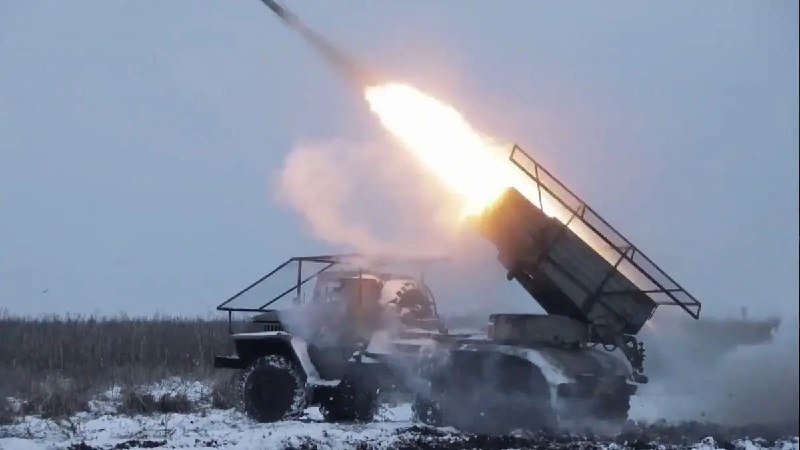
At dawn on 24 May 2026, Kyiv woke to destruction. Drone and missile strikes targeted every administrative district of the Ukrainian capital, killing at least one person and injuring 21 others, including a 15-year-old boy, according to emergency services and wire reports. footage circulating on Ukrainian news channels and verified by local residents showed fires blazing across multiple city districts, with rescue workers pulling survivors from collapsed residential buildings well into the morning hours.
The attack marks the third major strike on Kyiv in as many weeks, and itunderscores a pattern of sustained pressure on the capital as Russia attempts to erode Ukrainian civilian morale and energy infrastructure ahead of an uncertain summer military campaign. Emergency crews responded to incidents across the city's left and right bank districts, with the State Emergency Service reporting casualties in at least six neighbourhoods. The mayor's office confirmed that several buildings in the Solomianskyi, Pechersk, and Dniprovskyi districts suffered significant structural damage. Local residents described a night of repeated explosions as air defense systems engaged incoming drones overhead.
The Night's Toll
The initial casualty figures stabilised by mid-morning on 24 May showed one confirmed fatality in the broader Kyiv region, with local emergency services noting that two deaths had been reported in early dispatches but that one case remained under review pending identification. Among the 21 injured, the youngest victim was a 15-year-old boy treated at a city hospital for shrapnel wounds. Ukraine's State Emergency Service posted updated operational summaries to its official channels throughout the morning, reporting that search-and-rescue teams had been deployed to 11 locations across the capital. The Kyiv City Military Administration urged residents to remain in shelters and confirmed that air defense units had engaged the incoming salvoes but could not intercept every target.
Resident accounts collected by Ukrainian news outlets described a night of sustained terror. One woman in the Darnytskyi district told TSN that she had been awakened by a blast that shattered the windows of her apartment block. "We ran to the hallway and stayed there until around five in the morning," she said. "You could hear the drones going over constantly." Several residents in the Holosiivskyi district reported fires spreading to adjacent buildings before firefighters arrived, compounding the damage beyond the initial strike points.
The attack came less than 72 hours after Ukrainian President Volodymyr Zelenskyy addressed a European security summit in Brussels, where he renewed calls for expanded air defense capabilities and long-range strike authorisations. Western military analysts have noted that Russian planners appear to be timing waves of strikes to coincide with moments of heightened diplomatic activity, a pattern that has been observed throughout the current phase of the conflict.
Escalation or Intermission?
Western defence officials and military analysts have debated whether the current frequency of strikes on Ukrainian cities represents a genuine escalation or a calculated effort to maintain pressure without committing additional major resources. Russian aerospace forces have relied heavily on Shahed-type drones for these waves, supplemented by cruise missiles launched from aircraft operating in the Caspian and Black Sea theatres. The strikes consume Ukrainian ammunition for air defence systems that Kyiv's Western partners have not yet fully replenished. That dynamic — attritional pressure on defensive stockpiles — is what analysts who track the conflict regard as the primary strategic objective.
Russian-aligned military bloggers and state media framed the strikes as retaliatory actions following Ukrainian operations inside Russian territory in the preceding week. That framing obscures the chronology: Russian strikes on Kyiv predate the cross-border incidents by days, suggesting the campaign is continuous rather than reactive. Russian state news agency TASS cited defence ministry statements attributing the strikes to the destruction of Ukrainian energy infrastructure, a justification that Kyiv and its allies have rejected as disproportionate.
Ukraine's General Staff briefings, published on its official channels, described the night strikes as part of a broader pattern of deliberate targeting of civilian residential areas rather than strictly military infrastructure. International humanitarian law prohibits attacks whose primary purpose is to spread terror among the civilian population, and the United Nations has previously documented instances of Russian strikes meeting that threshold. The sources consulted for this article do not include a formal UN assessment of the 24 May strikes specifically, and the legal characterisation remains subject to future investigation.
What the Pattern Reveals
The strikes on Kyiv overnight are not an isolated event. They fit a rhythm established over the past several months of the conflict, in which Russia conducts wave attacks at intervals of roughly 10 to 14 days, varying the scale and composition of the assault to test Ukrainian responses and exhaust defensive capacity. The targeting of multiple city districts simultaneously — as confirmed by emergency services across Solomianskyi, Pechersk, Darnytskyi, Holosiivskyi, and Dniprovskyi — indicates coordination across separate launch groups rather than a single attack vector.
For Ukraine, each wave attack imposes a dual cost: the direct damage to urban infrastructure and the expenditure of scarce air defence interceptors. Western military aid packages have expanded significantly since early 2024, but the pace of deliveries for systems capable of engaging cruise missiles at altitude — particularly Patriot batteries — has not kept pace with Russian production of strike assets. The shortfall is not absolute, but it is consequential at the margins where decisions about which assets to protect get made each night.
For Russian planners, the calculus is different. Drone and missile production has scaled substantially, and the unit cost per strike has fallen as domestic manufacturing has ramped up. The political cost of strikes on Ukrainian cities, while significant in Western capitals, has not translated into a change in the strategic approach. That asymmetry — in willingness to absorb international condemnation versus the capacity to absorb material losses on the strike side — remains at the centre of the military problem as it stands.
The Days Ahead
Ukraine's air defence umbrella over Kyiv remains the most robust in the country, but it is not impenetrable. The overnight strike caused casualties despite the presence of multiple layered defensive systems, and that fact will intensify pressure on Kyiv's Western partners to accelerate deliveries of additional Patriot, IRIS-T, and NASAMS batteries. Whether those deliveries arrive before the next significant wave attack depends on procurement timelines and political decisions in donor capitals that remain, as of this writing, in flux.
For Kyiv's residents, the immediate concern is the damage: thousands without electricity, several residential buildings requiring structural assessment before residents can safely return, and a city that has now absorbed multiple major strikes within weeks. The psychological dimension is harder to quantify but no less real, and it shapes decisions about evacuation, economic activity, and the willingness of the population to absorb further disruption.
The attack on 24 May 2026 has not, according to available reporting, altered the fundamental military balance. But in a conflict increasingly defined by attrition — of equipment, morale, and international attention — each successive strike on the capital chips away at something harder to replenish than ammunition.
This desk covered the Kyiv strikes using Ukrainian emergency services reporting and resident accounts from TSN and other local outlets. Western wire services carried the casualty figures within hours, but several details — including the precise number of fatalities and the full inventory of damaged buildings — continued to emerge throughout the morning.
Wire provenance
This editorial synthesis draws on the following public wire/social posts:
- https://t.me/TSN_ua/12447
- https://t.me/TSN_ua/12444
- https://t.me/TSN_ua/12451
- https://t.me/Tsaplienko/2847