Kyiv Under Fire Again: On Language, Framing, and the Coverage of Urban Strikes
Overnight drone strikes on Kyiv on 24 May 2026 prompt a question that goes beyond the immediate military facts: why does the same act of violence invite such different language depending on who is describing it?
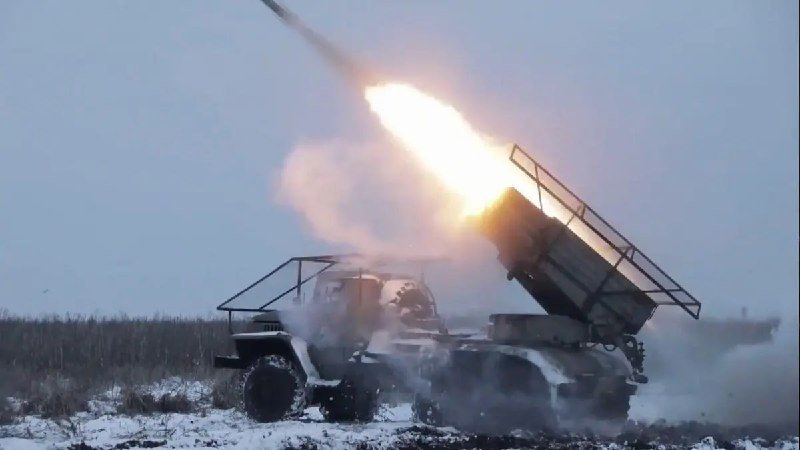
In the early hours of 24 May 2026, two drone strikes hit central Kyiv. Ukrainian Telegram channels operating in and around the capital confirmed the attacks by 04:43 UTC, reporting impacts in the Lukyanivka district. Air raid alarms were active across the city and several surrounding regions. A fire reported in the capital grew through the night; by 04:10 UTC, the operative ZSU channel described Kyiv as "recovering from a terrorist attack."
The language is deliberate. It is also not universal.
Every iteration of this conflict has produced a recurring editorial puzzle: the same act of violence, landing on the same city, described by different actors with different vocabularies. Kyiv's official channels reach for the word "terrorist." Western wire services tend toward "drone strike" or "air attack." Russian state-adjacent outlets, when they acknowledge civilian-adjacent effects at all, speak of "precision strikes on military infrastructure." Each framing is internally coherent. Each framing also does distinct political work.
The Word That Changes Everything
"Terrorist attack" is not a neutral descriptor. It is a legal and moral classification. Under international law, acts of terrorism carry particular stigma — they imply targeting civilians as a matter of policy, which in turn triggers specific obligations from the international community. Ukraine's decision to deploy that specific term, even informally via Telegram channels rather than official government statements, is a rhetorical act with consequences: it nudges the event toward one legal and political register rather than another.
Compare that with how the same category of event — an urban drone strike causing civilian-adjacent harm — is described when it occurs in other theatres. The word "terrorism" is applied selectively and with remarkable consistency across the media landscape. Strikes on Kyiv by Russian drones almost universally attract the "attack" or "strike" framing from Western outlets, with "terrorist" appearing primarily in Ukrainian official communications rather than in wire headlines. Strikes on Israeli cities attract different framing again. The word choices are not random, but they are rarely made explicit to readers.
The result is a systematic asymmetry in how violence is categorised — one that tracks geopolitical alignment rather more closely than it tracks the legal facts on the ground. A strike is a strike. A fire is a fire. The language that wraps around those facts is a choice, and that choice communicates prior commitments before the reader has absorbed a single detail of what happened.
What the Night's Reporting Actually Shows
The Telegram logs from the early hours of 24 May are consistent on several points. There were drone incursions detected across multiple regions of Ukraine, not only the capital. The strikes targeted built-up areas — Lukyanivka is a residential district in central Kyiv. The fires that followed were significant enough to be visible and growing for several hours. There were no confirmed casualty figures in the initial reports from Ukrainian channels.
What those logs do not contain is enemy confirmation. Russian military bloggers, who often report strike outcomes faster than official channels, had not published detailed acknowledgements of the Kyiv strikes as of early morning UTC on 24 May. This is not unusual — the pattern of verification asymmetry is structural to the conflict, where Russian official communications frequently trail the Ukrainian wire by hours and sometimes days. Readers who rely on a single source stream at any given moment are effectively reading a partial picture with a known incompleteness.
The reporting also does not resolve a question that sits underneath every urban strike story: what was the target? Drone strikes on Kyiv in 2026 have included both military-adjacent infrastructure — energy facilities, military command points — and incidents that prima facie appear to target residential or civilian-adjacent areas. The Telegram channels confirmed impact and damage; they did not confirm target classification. That distinction matters enormously to the legal and moral framing of the event, and it is routinely the first piece of information to be withheld, contested, or simply unknown in the immediate aftermath.
The Structural Problem With Immediate Reporting
There is an inherent tension in covering breaking urban strikes in an active conflict. The information environment moves faster than verification. A strike occurs; the impacted country's channels report it; the aggressor's channels either confirm, deny, or go silent; wire services transmit both versions with varying degrees of caveat; social media amplifies the version that generates the most engagement; and the reader is left to reconstruct a coherent picture from fragments that were never assembled for their benefit.
The pattern is not unique to this conflict, but the stakes here are unusually high. Each reporting decision — which word to use, which source to foreground, which detail to lead with — has a compounding effect on how readers understand not just the night's events but the entire character of the conflict. "Terrorist attack" on Kyiv triggers a particular associative chain. "Drone strike" is more neutral in syntax but not in effect — it normalises the event, presents it as another data point in a known war, and subtly reduces its shock value. "Precision strike on military infrastructure," the formulation Russian state-adjacent sources tend toward, performs a different function entirely: it disclaims civilian harm before it is either confirmed or denied.
None of these framings is simply descriptive. All of them are arguments.
The Reader's Position
What does this mean for anyone reading the reports as they came in on 24 May?
It means the language in which an event arrives is not neutral information. It is the first frame through which the event is understood, and that first frame shapes everything that follows. A reader who first encountered the Kyiv strikes via the "terrorist attack" formulation brought a different set of questions to the subsequent reporting than a reader who first saw "drone strike on Kyiv." Both sets of questions are legitimate. Both frames probably understate something important.
The most useful epistemic position is probably the one that holds both framings simultaneously: a drone strike occurred on a city that has been under sustained attack for over two years; it caused significant material damage and an unconfirmed level of human harm; it is described by the attacked side as terrorism and by the attacker — to the extent it describes it at all — as something else. The gap between those two descriptions is not a semantic puzzle. It is the political substance of the war itself, expressed in language before it is expressed in action.
Kyiv is still recovering. The fires are being assessed. The word choices are still being made, by every outlet and every channel, for every reader watching from a distance.
Wire provenance
This editorial synthesis draws on the following public wire/social posts:
- https://t.me/operativnoZSU
- https://t.me/AMK_Mapping
- https://t.me/vanek_nikolaev
- https://t.me/war_monitor
- https://t.me/intelslava