McBurnie's Last-Gasp Winner Completes Middlesbrough's Historic Playoff Collapse
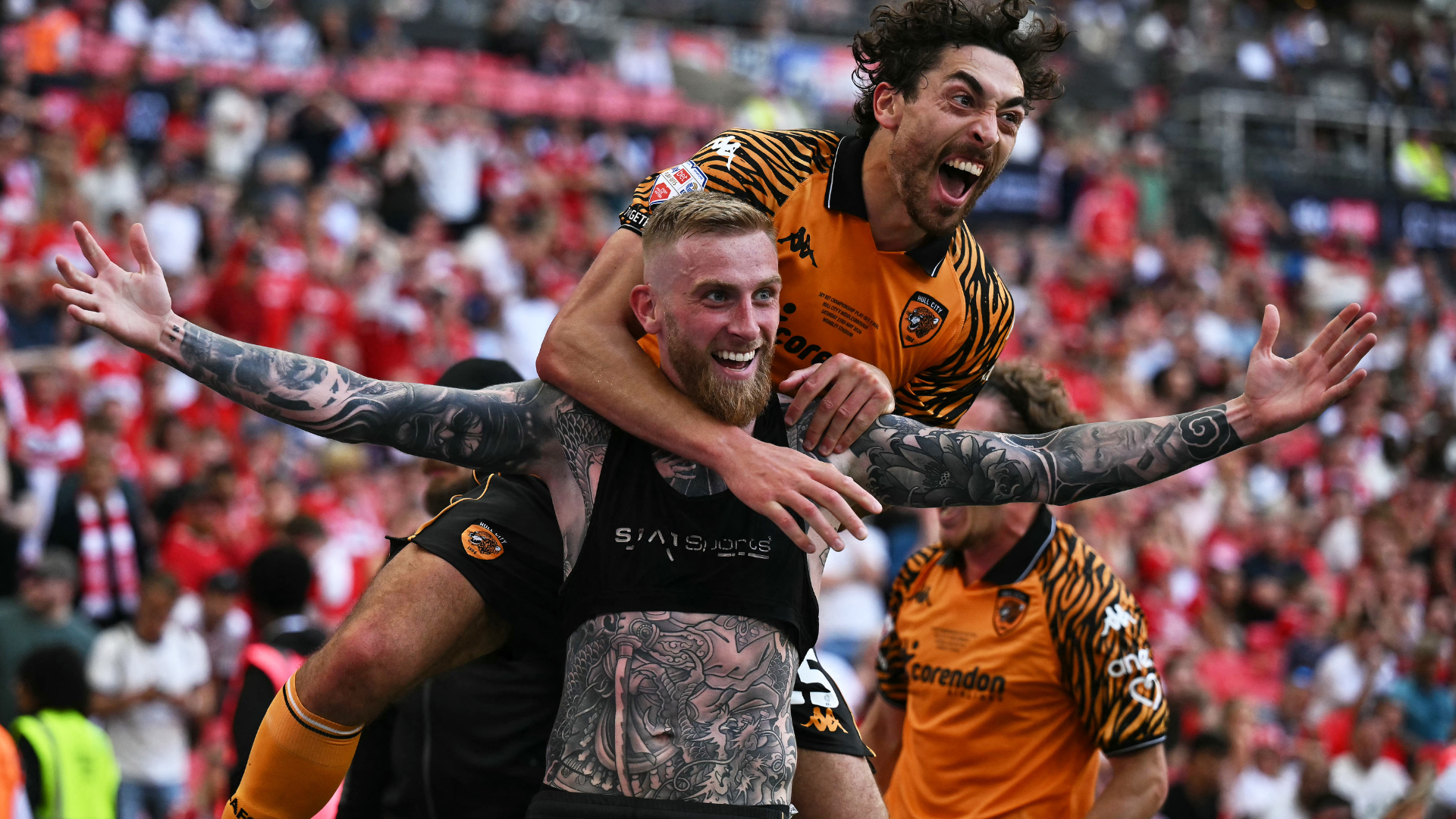
Josh McBurnie's stoppage-time header gave Hull City a 1-0 win over Middlesbrough at Wembley on 2026-05-23, sealing the Tigers' return to the Premier League and condemning Middlesbrough to an unwanted place in English football history. The goal, headed in from a corner in the 94th minute, meant Hull will play top-flight football next season while Middlesbrough — a club that has now failed to convert three separate promotion chances during the 2025-26 campaign — will spend a seventh consecutive season in the Championship.
The defeat completes a sequence of playoff failures that no club in English football had previously recorded in a single season. Middlesbrough, under Michael Carrick, had finished sixth in the Championship table and entered the playoffs as the form side. They were handed a semi-final tie against Bristol City after Southampton's shock disqualification from the playoff picture on administrative grounds — a decision that many observers viewed as Middlesbrough's lifeline. They overcame Bristol City across two legs. At Wembley, against a Hull side who had finished fourth, they arrived as narrow favourites.
The match itself was tight and ill-tempered. Middlesbrough had the better of the first half but could not translate possession into goals. Hull grew into the game after the interval. The decisive moment came from a set-piece — a corner swung into the six-yard box, McBurnie outmuscling his marker, the ball in the net. The Hull end erupted. Carrick stood motionless in his technical area.
The weight of three chances
What makes Middlesbrough's failure remarkable — and, for their supporters, acutely painful — is not a single collapse but the compounding nature of it. In the 2024-25 season, Middlesbrough missed out on the playoffs on the final day. The following campaign, they missed a penalty in a play-off semi-final. This season, they lost the final itself in stoppage time. Each failure arrived through a different mechanism; together they represent a structural underperformance at the highest-pressure moments the Championship offers.
The "richest game in football" label, widely applied to the Championship playoff final because of the broadcast revenue and commercial uplift that accompanies Premier League promotion, gives the fixture a financial gravity that sharpens rather than dulls the pain of defeat. The difference between the two leagues, in parachute payment structures, commercial revenue, and squad-building capacity, is measured in tens of millions of pounds per season. For a club of Middlesbrough's size and ambition, a seventh consecutive season outside the top flight is not merely a sporting setback — it is a compound financial and institutional problem.
Hull's measured ascent
Hull City, by contrast, arrive in the Premier League having rebuilt methodically since their own relegation from the top flight. Under a manager who has prioritised defensive solidity and set-piece efficiency, the Tigers secured the fourth seed in the playoffs and navigated two difficult semi-final legs against Coventry City before Saturday's final. The McBurnie signing, completed in the January transfer window, was widely questioned at the time; his winner at Wembley will redefine how that move is remembered.
The broader picture for Hull is one of institutional stability returning after several turbulent years. The club's ownership situation has stabilised, the training ground has been upgraded, and the academy has produced several players who featured in the promotion campaign. Whether that infrastructure is sufficient for Premier League survival will be the defining question of the 2026-27 season.
The structural question for Middlesbrough
The most uncomfortable question facing Middlesbrough is not tactical but institutional. Three playoff failures in as many seasons, across different managerial and playing personnel, point toward something deeper than bad luck or specific squad deficiencies. Clubs that repeatedly reach the edge of promotion without crossing it often develop what sports economists describe as a "promotion ceiling" — a pattern in which the financial and structural incentives of Championship survival paradoxically outweigh the rewards of promotion for owners and key decision-makers.
Whether that description fits Middlesbrough's situation is a question the club's hierarchy will need to answer. The parachute payments that follow relegation from the Premier League are substantial. The financial exposure of attempting to compete at that level with a squad built for Championship competitiveness is equally real. But for supporters who packed Wembley on Saturday — and for the players and staff who fell short again — such structural arguments offer cold comfort.
What comes next
Carrick's future will be the first matter to resolve. The former Manchester United midfielder has rebuilt Middlesbrough's squad twice over and has consistently produced teams that compete at the top of the Championship. The club's hierarchy have backed him in the transfer market. Whether he believes another campaign under the same pressures is worth accepting will determine whether this cycle of near-misses ends or continues.
For Hull City, the immediate task is recruitment. The jump from Championship to Premier League demands squad depth, medical infrastructure, and commercial capacity that not all promoted clubs possess. The club's ownership has signalled willingness to invest; whether the market delivers players capable of competing at that level will define their season before a ball is kicked.
At Wembley on Saturday, the two clubs departed in opposite directions. Hull's players climbed the steps to collect a trophy. Middlesbrough's walked back down, past the photographers, past the supporters who had made the journey, and back into another Championship season.
Monexus covered this story through BBC Sport and Reuters wires, with additional context from CBS Sports Headlines. The CBS framing, which led with the "richest game in football" label and focused on Middlesbrough's Southampton lifeline, positioned the story primarily as a Middlesbrough narrative with Hull as opposition. This article treats Hull's victory as the primary event and Middlesbrough's collapse as the context that gives the result its particular weight.
Wire provenance
This editorial synthesis draws on the following public wire/social posts:
- http://reut.rs/43c1AFf