Netanyahu Orders Cabinet Silence on Reported Iran-US Agreement
Israeli Prime Minister Benjamin Netanyahu has ordered cabinet ministers to refrain from public commentary on a reported agreement between Tehran and Washington, an unusually explicit attempt to control the political framing of a diplomatic development with profound regional consequences.
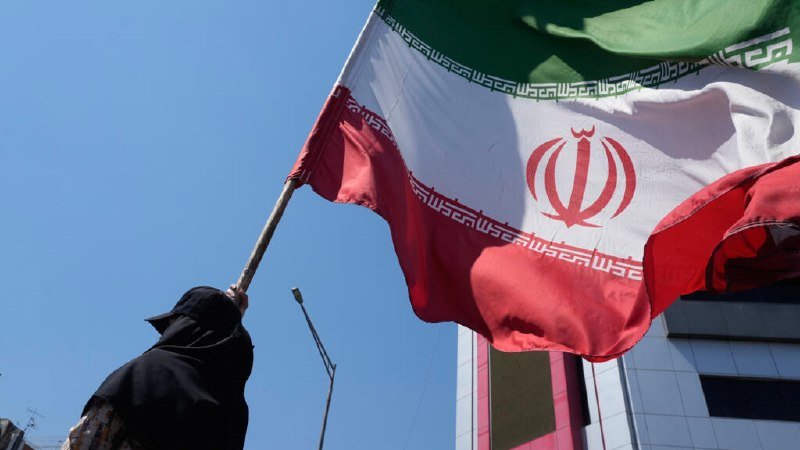
Israeli Prime Minister Benjamin Netanyahu has ordered his cabinet ministers to stop talking to the media about a possible agreement between Tehran and Washington, according to a report by Israeli Channel 14 published on 24 May 2026. The directive, described by the broadcaster as covering memoranda of understanding between the United States and Iran, represents an unusually direct attempt by the prime minister to control the political narrative around a diplomatic development that has generated significant unease within Israel's security establishment.
The order came as reports surfaced that the two sides had moved closer to an arrangement governing Iran's nuclear programme — a prospect Netanyahu has long characterised as an existential threat to Israel. Across three separate Telegram posts from Tasnim News, Fars News International, and the rnintel intelligence monitoring channel, the substance of Channel 14's reporting was carried forward: the prime minister had instructed ministers to say nothing publicly about the emerging deal.
The silencing order is itself a significant data point. It tells observers that something concrete is in motion — governments that are comfortable with the trajectory of a diplomatic process rarely feel the need to suppress ministerial commentary. What remains unclear is whether the order reflects confidence that a deal can be managed quietly, or anxiety that public discussion would expose fractures within the governing coalition over how Israel should respond.
What the Channel 14 Report Contains
Channel 14, an Israeli television outlet with generally pro-government editorial leanings, reported on 24 May 2026 that Netanyahu delivered a direct instruction to cabinet members: refrain from media appearances that address the memoranda of understanding reportedly being finalised between Iran and the United States. The directive was described as covering both the substance of the proposed agreement and its implications for regional security.
The report did not specify whether the order was issued in a formal cabinet meeting or through separate communications with individual ministers. It also did not name which ministers, if any, had already made public statements that prompted the directive. Israel has no formal comment on the record as of the time of this article's filing.
Israeli domestic politics provides a structural lens here. Netanyahu's governing coalition includes parties with sharply divergent positions on Iran policy — from those who support any framework that constrains Tehran's nuclear progress to those who view any accommodation with Iran as an irreconcilable concession. A public ministerial debate about the terms of an emerging agreement could expose those fissures at a politically inconvenient moment.
The Regional Context: A Deal in the Making
The order to remain silent comes against a backdrop of sustained diplomatic activity between the United States and Iran, which has seen the two sides engage in indirect negotiations mediated through third parties. The focus has been on Iran's nuclear programme — specifically the stockpile of enriched uranium, the scope of international monitoring inspections, and the sanctions architecture that has constrained Tehran's oil revenues and banking sector for years.
Several major Western news organisations, drawing on unnamed diplomatic sources, have reported over the preceding months that Washington and Tehran had moved beyond preliminary discussions into substantive negotiations on the specific contours of a nuclear framework. Israel has been publicly sceptical of this process, with Netanyahu's office maintaining that any deal must permanently dismantle Iran's enrichment capacity rather than merely pause it.
Israeli security officials have briefed parliamentarians on their assessment that a deal, if concluded on the terms reportedly under discussion, would leave Iran with a legitimised enrichment capability — a red line Israel has repeatedly stated it will not accept. The Channel 14 report suggests that the prime minister views public ministerial commentary on this divergence as itself a liability, either because it complicates back-channel communication with Washington or because it risks hardening positions that Israel would prefer to keep flexible.
The Structural Logic of a Silence Order
Governments suppress ministerial commentary for predictable reasons: to prevent contradictions that undermine negotiating leverage, to avoid prejudicing domestic political calculations, or to manage the information environment around an issue where public opinion is difficult to predict. In this case, all three motivations likely apply.
If a US-Iran agreement is genuinely close, Washington's interest in managing the announcement process is acute — and Israel has a direct stake in being consulted, or at minimum not being surprised. A cabinet minister who publicly attacked the terms of an emerging deal would complicate that relationship at the worst possible moment. The directive may therefore reflect not a desire to hide information from the Israeli public, but a calculation that the diplomatic management of the relationship with Washington requires a degree of silence that would be unusual in ordinary circumstances.
There is also the coalition dimension. The Israeli right-wing parties that form the backbone of Netanyahu's governing majority have constituencies that view any nuclear accommodation with Iran as capitulation. A public ministerial debate about whether the emerging deal is acceptable or catastrophic could destabilise the coalition itself — a risk that Netanyahu, facing ongoing criminal proceedings and political pressure from multiple directions, has strong incentives to avoid.
What the sources do not specify is whether the silence order is intended to be permanent or merely tactical — a pause while the deal's final shape becomes clear before ministers are permitted to comment. That ambiguity matters, because it determines whether Israel is positioning itself to accept and manage a deal, or to oppose and attempt to undermine it.
What Comes Next
The immediate question is whether the agreement reportedly under negotiation is announced before the Israeli cabinet is permitted to engage with it publicly. If the United States moves quickly — as administrations tend to when diplomatic processes reach a conclusion — Israel may find itself responding to a fait accompli rather than shaping the outcome.
Netanyahu's silence order could also be tested by leaks. Israeli political culture is not, historically, hospitable to directives that constrain ministers' public visibility, and the pressure to comment will grow as the deal's details become clearer. The directive may therefore be a short-term instrument that buys time but does not resolve the underlying political tension.
The broader stakes are significant. A US-Iran nuclear agreement, if it materialises, would represent the most consequential diplomatic restructuring in the Middle East since the original Joint Comprehensive Plan of Action was concluded in 2015 and subsequently abandoned by the Trump administration. It would reshape the regional security calculus for Israel, Saudi Arabia, the Gulf states, and the broader international sanctions architecture. The fact that Israel's prime minister has moved to suppress cabinet-level commentary on it tells observers that Tel Aviv regards the development as both real and consequential — even if ministers are not permitted to say so in public.
This article drew on reporting from Tasnim News, Fars News International, and the rnintel Telegram channels, all citing Israeli Channel 14's original report. Monexus has not yet received official confirmation or denial from the Israeli Prime Minister's Office.
Wire provenance
This editorial synthesis draws on the following public wire/social posts:
- https://t.me/tasnimnews_en/124651
- https://t.me/FarsNewsInt/89123
- https://t.me/rnintel/44512
- https://t.me/tasnimnews_en/124650
- https://t.me/FarsNewsInt/89122