Netanyahu Claims Trump Agreed Iran Nuclear Deal Must Require Full Enrichment Site Dismantlement
Israeli Prime Minister Benjamin Netanyahu said on 24 May 2026 that he and President Trump had agreed any final agreement with Iran must completely dismantle its nuclear enrichment infrastructure — a demand that would go significantly beyond the parameters discussed in previous diplomatic rounds.
Israeli Prime Minister Benjamin Netanyahu said on 24 May 2026 that he and United States President Donald Trump had agreed any final nuclear agreement with Iran must "eliminate the nuclear danger" — language that, if taken at face value, would require the complete dismantling of Iran's enrichment infrastructure and the removal of all enriched nuclear material from Iranian territory.
Netanyahu's office released the statement as the two leaders discussed what was described as a memorandum of understanding concerning the reopening of the Strait of Hormuz, the critical maritime chokepoint through which roughly a fifth of the world's oil flows. The Israeli Prime Minister's public framing positions the demand for full enrichment-site dismantlement as a shared position, rather than a unilateral Israeli preference. The White House has not issued a matching statement confirming the substance of the conversation.
The claim, if accurate, would represent a significant shift in the diplomatic baseline. Previous nuclear negotiations with Iran — including the 2015 Joint Comprehensive Plan of Action, which the Trump administration exited in 2018 — accepted limited enrichment under strict monitoring as the foundation for a deal. Netanyahu's stated position goes further, effectively requiring Iran to surrender its entire enrichment capacity as a precondition for any agreement.
The Public Claim and Its Limits
The Telegram-sourced statements from Israeli government-adjacent accounts on 24 May 2026 are specific in their wording: dismantling enrichment sites and removing enriched material are presented as non-negotiable components of any final agreement. The phrasing mirrors language Netanyahu has used consistently since before the 2015 deal was signed, when he argued that Iran should not be permitted to maintain any enrichment capability whatsoever.
What remains unclear from the available sources is whether this represents a new, concrete position agreed between Washington and Jerusalem, or whether Netanyahu is using a conversation with the President to cement a framing that serves his domestic political position ahead of ongoing legal proceedings in Israel. The White House press office had not published a readout of the call as of the sources reviewed by this publication.
The Strait of Hormuz reference is notable. Iran has previously used the strategic waterway as leverage during periods of heightened tension, including threatening closure in response to sanctions pressure. Linking the Hormuz discussion to nuclear negotiations suggests the talks may encompass a broader security architecture than a standalone atomic agreement — potentially involving regional actors and energy-market guarantees alongside the nuclear file.
Iran: From Deal to Maximum Pressure
Iran's nuclear programme has expanded significantly since the United States withdrew from the JCPOA in 2018. International Atomic Energy Agency inspectors have reported increasing quantities of enriched uranium, including material at levels approaching weapons-grade purity. The IAEA board has passed multiple resolutions criticising Iran's reduced cooperation with monitoring protocols.
Tehran's position has been that its programme is entirely peaceful and that it seeks only the right to enrichment for civilian energy purposes — a right recognised under the Nuclear Non-Proliferation Treaty for states that are parties to it. Iranian officials have consistently rejected preconditions for negotiations and have accused Israel and its allies of using the nuclear issue as cover for regime-change objectives.
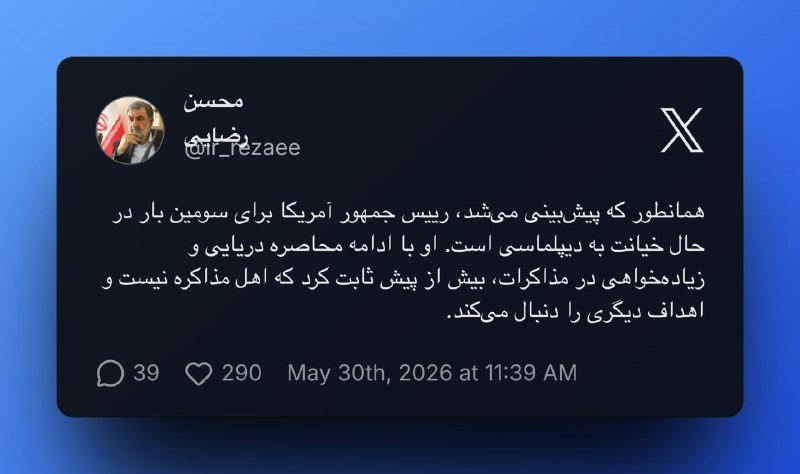
The available Iranian state media coverage framing this development — per The Cradle Media's reporting of the Israeli statement — positions the renewed US-Israel coordination as evidence of Western bad faith in any prospective talks. Iranian officials have previously stated that any acceptable deal must include the lifting of sanctions and guarantees of economic benefit, not merely constraints on their programme.
The Diplomatic Geometry
The timing of Netanyahu's statement comes as several Gulf states have been pursuing their own diplomatic channels with Tehran, and as European powers have been attempting to create space for renewed talks without the maximalist positions that collapsed the 2022 negotiations in Vienna. France, Germany, and the United Kingdom have each signalled that some limited enrichment capacity might be acceptable as part of a comprehensive agreement — a position that would be incompatible with the full dismantlement demand Netanyahu has articulated.
If Trump's administration is genuinely aligned with the Israeli position, it would isolate the United States from the European members of the P5+1 group that negotiated the original JCPOA. That isolation would complicate any scenario in which a broader multilateral agreement is achievable, and would effectively consign the nuclear file to a binary choice between a maximalist US-Israel demand and an Iranian rejection of any deal that requires surrender of enrichment capacity.
The alternative reading is that this represents the continuation of a long-standing pattern: Netanyahu publicly declaring maximalist positions in order to anchor any eventual negotiation closer to his preferred outcome. Under that scenario, the statement functions as a negotiating position, not a statement of agreed policy — and the White House's silence may reflect an intentional ambiguity about where the President actually stands.
What Comes Next
Whether or not Trump's administration formally endorses the dismantlement demand, the Israeli Prime Minister has effectively put it on the table as the marker for any talks. Iran's negotiating team will now have to decide whether to engage with the framework at all, knowing that the opening position requires the complete surrender of a capability they have spent eight years rebuilding.
The Strait of Hormuz dimension suggests the talks, if they proceed, may involve a broader set of regional security questions — including the naval presence of US forces in the Gulf, the status of Iranian-backed groups in Iraq and Yemen, and the future of the US military posture in the region. Nuclear negotiations have historically been easier to frame as a standalone issue than to operationalise as part of a comprehensive regional settlement.
The sources reviewed for this article do not indicate a timeline for resumed formal negotiations or a venue for any proposed talks. What they confirm is that the Israeli government intends to shape the parameters of any discussion — and that the gap between those parameters and Iran's stated position remains as wide as it has been at any point since the JCPOA's collapse.
This publication's coverage of the Israeli statement leads with the language of the Israeli government and US-aligned wire services. The framing in Western outlets has tended to present the dismantlement demand as a reasonable security concern. Regional and non-Western coverage — including outlets cited in this article — has more often framed the same demand as an negotiating impossibility designed to prevent any deal. The truth is probably closer to both: a genuine Israeli security conviction that also serves to limit the diplomatic space available.
Wire provenance
This editorial synthesis draws on the following public wire/social posts:
- https://t.me/osintlive/5842
- https://t.me/DDGeopolitics/12854
- https://t.me/DDGeopolitics/12855
- https://t.me/thecradlemedia/1248
- https://t.me/ClashReport/10437
- https://t.me/osintlive/5841