Netanyahu-Trump Call Spotlights Strait of Hormuz as Oil Markets Hover Near Crisis Threshold
A call between the Israeli Prime Minister and US President on 23 May 2026 put a memorandum of understanding on reopening the Strait of Hormuz on the formal agenda, amid warnings that global oil prices are nearing a level that risks triggering inflationary pressure across advanced economies.
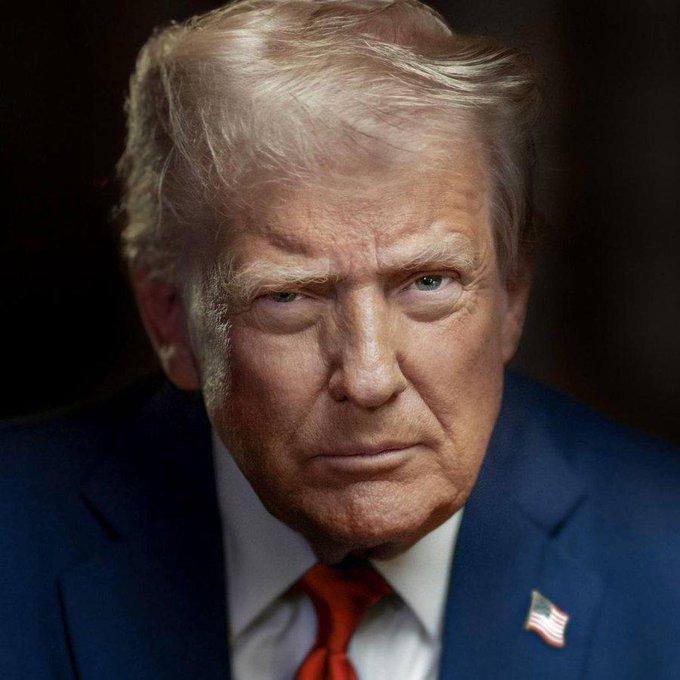
Israeli Prime Minister Benjamin Netanyahu spoke with United States President Donald Trump on the evening of 23 May 2026, discussing a memorandum of understanding that would address reopening the Strait of Hormuz to maritime traffic. The call, confirmed by both Israeli and US-adjacent sources, came as global oil markets are approaching what analysts describe as a structural danger zone — a price threshold that, if sustained, threatens to revive inflationary pressures that central banks across advanced economies have only recently managed to contain.
The Strait of Hormuz handles approximately one-fifth of the world's daily oil shipments, making it the single most consequential energy chokepoint in the global supply architecture. Any prolonged disruption to traffic through the waterway would immediately compress supply across Asia, Europe, and North America, with knock-on effects for manufacturing costs, transport pricing, and consumer goods inflation. The timing of the Netanyahu-Trump conversation is not coincidental: it reflects a convergent set of pressures — sanctions pressure on Iran, Israeli security concerns regarding regional maritime activity, and Washington-level anxiety about energy price inflation heading into a politically sensitive period.
Immediate Context: What the Call Produced
According to reporting by the GeoPWatch Telegram channel, Netanyahu confirmed the discussion centered on "a memorandum of understanding to reopen the Straits of Hormuz and the upcoming negotiations toward that end." The wfwitness Telegram channel, citing the same Israeli government readout, characterised the conversation as substantive and forward-leaning, though neither source provided detail on the specific terms under negotiation or the timeline for concluding an agreement.
The Trump administration has previously indicated openness to a broader US-Iran diplomatic track, a process that, if it advances, could address the underlying sanctions and maritime interdiction framework that has complicated Hormuz transit. Israeli officials have historically viewed any US-Iran rapprochement with suspicion, viewing it as potentially loosening constraints on Tehran's regional posture. The fact that Netanyahu and Trump spoke specifically about a memorandum focused on the strait — rather than about Iran policy broadly — suggests Tel Aviv and Washington may have found a narrow but workable convergence: a deal structured around maritime security guarantees, not a full normalisation of US-Iran relations.
Counter-Narrative: Scepticism About the Diplomatic Window
Not all observers accept that a Hormuz reopening memorandum is close to reality. Sceptics point to the gap between public statements and operational reality: sanctions relief, maritime insurance arrangements, and the presence of Iranian Revolutionary Guard Navy vessels in the Persian Gulf are not matters that can be resolved by a memorandum of understanding between Washington and Jerusalem. Any agreement would require Iranian participation, either directly or through intermediaries, and Tehran has historically demanded significant concessions before agreeing to ease maritime restrictions.
There is also the domestic political dimension. The Trump administration's appetite for a high-profile diplomatic deal with Iran remains contested within the Republican coalition, where critics view any sanctions relief as a reward for a regime that continues to enrich uranium and support regional proxy forces. For Netanyahu, a visible US-Iran deal — even a narrow one — carries political risk at home, where his governing coalition includes parties deeply hostile to any perceived accommodation with Tehran.
Structural Frame: Oil Markets, Inflation, and the Geopolitical Risk Premium
The broader context for this diplomatic activity is a global oil market that, as of mid-May 2026, is showing signs of sustained price stress. The Guardian's energy correspondent Heather Stewart described conditions as approaching "a tipping point that could trigger inflation, shortages and, over time, recession" — language that reflects growing concern inside finance ministries and central banks about the interconnection between geopolitical risk in the Gulf and domestic economic stability in consuming nations.
Oil price spikes carry a distinctive political toxicity because they operate on two tracks simultaneously: they raise input costs for manufacturers and transport operators, and they push retail fuel prices higher, which voters notice immediately at the pump. The 2022-2024 inflation cycle, triggered partly by energy prices following the Russia-Ukraine escalation, reshaped the political calculus around energy security across Western democracies. Governments that allow fuel inflation to erode real disposable income face electoral consequences that are well-documented and deeply felt.
The Strait of Hormuz's chokepoint status is not a technical curiosity — it is a structural vulnerability in the global energy system that has persisted since the 1970s and has never been fully resolved. When Iranian threats to close the strait have materialised in the past, even temporarily, the market reaction has been swift and severe. The current diplomatic activity reflects an acknowledgement in Washington and Tel Aviv that the window for a managed resolution may be narrow: waiting for a crisis to force action is a worse option than negotiating one now.
Stakes: Who Benefits, Who Loses, and Over What Horizon
The short-term beneficiaries of a Hormuz memorandum, if implemented, would be oil-importing nations across Asia — particularly Japan, South Korea, and India — and European economies still recovering from the 2022-2024 energy shock. Lower oil prices, if the deal eases supply constraints, would give central banks in the US and Europe room to continue their cautious rate-cutting cycles without fear of reigniting inflation. Airlines, shipping companies, and chemical manufacturers — industries with acute exposure to energy input costs — would see margin relief within a matter of months of a sustained reduction in crude prices.
The losers, in the near term, are Iranian hardliners who benefit from elevated oil prices and from the leverage that strait-related threats provide in negotiations with Western powers. A managed reopening that brings Iranian crude back to market at pre-negotiation volumes would reduce the price premium that has sustained portions of Tehran's fiscal position. US shale producers, whose profitability is closely tied to OPEC+ price management, would also face intensified competition if a deal顺畅地 added barrels to the global market.
The structural stakes extend beyond the immediate energy calculation. A successful memorandum — even a narrow one — would represent a rare instance of US-China-Gulf diplomatic coordination on a shared economic threat. The deal's architecture, if it materialises, will be watched closely in Beijing, Moscow, and Brussels as a template for whether the world's major energy consumers can coordinate around chokepoint security without converting it into a broader strategic confrontation.
What remains uncertain is whether the memorandum of understanding announced in the Netanyahu-Trump call represents a genuine diplomatic breakthrough or a public gesture designed to signal seriousness ahead of more difficult negotiations. The sources reviewed for this article do not confirm whether Iranian officials have been consulted, whether the US has offered sanctions concessions in exchange for Hormuz guarantees, or what specific security guarantees Israel would receive as part of any arrangement. Those details — the substance beneath the headline — will determine whether the call produces a durable deal or another entry in the long catalogue of Gulf diplomatic false starts.
This publication covered the Netanyahu-Trump memorandum call as a discrete diplomatic event, using Israeli and US-adjacent wire sources as the primary frame. Wire services largely treated the call as part of the broader US-Iran negotiation story; this article foregrounds the maritime security angle and the immediate oil market context as the more operationally significant dimension for consuming economies.
Wire provenance
This editorial synthesis draws on the following public wire/social posts:
- https://t.me/GeoPWatch/1892
- https://t.me/wfwitness/847