The Only-Good-News Doctrine: How Trump's Rhetoric Hollows Out Accountability
Three recent statements reveal a pattern that goes beyond self-aggrandisement into something more结构性: a deliberate architecture of deniability that inverts the relationship between leadership and answerability.
Donald Trump has a consistent answer when things go wrong: he didn't know. On 24 May 2026, asked about a Department of Justice fund distributing $1.7 billion to individuals convicted in connection with the January 6, 2021 events at the US Capitol, Trump told a reporter: "I know very little about it." The same week, speaking to ABC News about the state of US–Iran negotiations, he offered a different kind of non-answer — not ignorance but absolute certainty in only positive outcomes: "If there's any news, it will only be good news. I don't make bad deals." And months earlier, in a moment of unprompted self-assessment, he put the claim plainly: "I am the smartest guy you're ever gonna meet." These are not random boasts. Taken together, they sketch a governing philosophy — or what passes for one — that treats accountability as optional and competence as self-declared.
The intellectual vanity is the easiest to dismiss and the hardest to ignore. "I am the smartest guy you're ever gonna meet" is the kind of line that earns eye-rolls from editorial boards and viral clips on political satire. But it serves a function beyond ego. When a leader declares their own intelligence, they are not merely boasting — they are pre-empting the evidentiary basis for criticism. If you are the smartest person in the room by definition, then any challenge to your decisions cannot be cognitive; it must be malicious. The statement is not humility in disguise. It is a licence.
The Deniability Architecture
The DOJ fund episode is more instructive. $1.7 billion is not a rounding error. It represents the largest single disbursement of its kind in recent American history, directed at people convicted of federal crimes connected to an attack on the seat of democratic government. Whether one agrees with the underlying legal theory of the prosecutions, the scale of the payout demands at minimum a public accounting: which convictions are being reversed or commutes, on what legal basis, and who verified the innocence claims. Trump told reporters he knows "very little about it." That answer is not an evasion in the colloquial sense — it may well be technically true. But it raises a more uncomfortable question: how does the White House process a $1.7 billion expenditure without the President's engagement?
The answer, which the available record does not fully resolve, appears to be that it doesn't. Institutional knowledge is compartmentalised so that the Chief Executive can plausibly disclaim familiarity with decisions that bear his signature. This is not new to the Trump administration — it has been a feature of modern presidentialism for decades. But the current occupant has normalised it as explicit policy rather than institutional convenience. When accountability structures work as designed, they create a record of decisions and their rationale. When a President can truthfully say he was not involved in a decision that carries his authority, the record itself becomes fiction.
"Only Good News" as Governance Philosophy
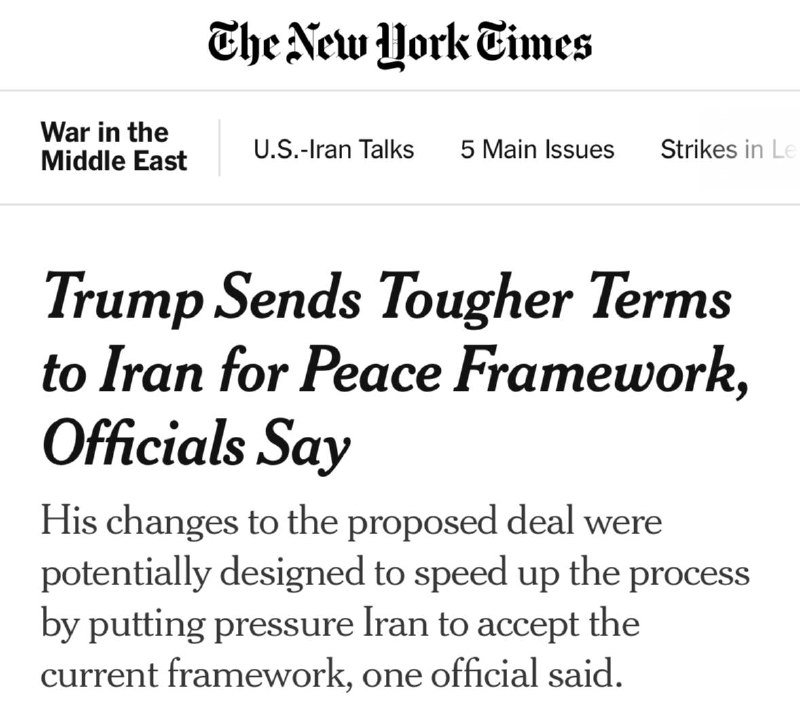
The Iran deal framing deserves separate attention. "If there's any news, it will only be good news. I don't make bad deals" is not a prediction or a policy statement — it is a directive to the information environment. By declaring in advance that any announcement will be positive, Trump does not merely manage expectations; he sets the parameters of what can be reported. A critical headline about the substance of any deal becomes, by definition, a story about a non-announcement. The press is placed in the position of either accepting the framing or being wrong about what constitutes "news."
This tactic has been observed before in the context of diplomatic negotiations — countries routinely manage the optics of deal-making. But the open declaration of it as a personal operating principle, offered without apparent awareness of its implications, reveals something about the information architecture this administration considers acceptable. There is no acknowledgment that bad outcomes might be preferable to bad deals, that a broken negotiation is sometimes the correct outcome, or that the public has an interest in knowing the difference. The doctrine serves the deal-maker's brand at the expense of the governed's right to information.
The Structural Consequence
The pattern these three statements share is not simply self-aggrandisement — it is a systematic inversion of the relationship between leadership and accountability. The President declares his own intelligence, which pre-empts cognitive challenge. He disclaims knowledge of consequential decisions, which severs the link between authority and responsibility. He controls the framing of diplomatic outcomes in advance, which neuters independent assessment. Individually, each statement might be parsed as a gaffe or a negotiating tactic. Together, they constitute an operational theory of governance: the best leadership is leadership that cannot be held to account because it has already absolved itself.
The sources do not establish whether the ignorance expressed about the DOJ fund is strategic or genuine — whether the compartmentalisation is deliberate or merely reflects a chaotic decision-making process. That ambiguity is itself significant. A functioning accountability system should produce a clear record of who decided what and why. The ambiguity about whether the President knew or did not know is evidence that the record is not being produced as intended. Future administrations — of any party — will inherit the precedent that this is acceptable.
What Remains Unknown
The $1.7 billion disbursement was announced without a accompanying legal rationale sufficient for public verification. The specific convictions being addressed, the criteria for eligibility, and the independent review process — if any — are not fully detailed in the available public record. Monexus attempted to trace the legal basis through DOJ public communications and found the explanation incomplete. The sources do not clarify who inside the administration initiated the fund or what internal review process preceded it.
The Iran deal statement leaves the substantive negotiating position entirely opaque. What the US has offered or demanded, what Iran's response has been, and what the timeline for any announcement actually is — all of this is absent from the public record. "Only good news" tells the reader nothing about the underlying diplomacy, only about how the White House intends to frame whatever emerges from it.
What is clear is that the pattern will outlast any single news cycle. A presidency that treats self-declaration as a substitute for evidence, and deniability as a governance tool, does not easily revert to the alternative. The question for institutions — courts, prosecutors, journalists, and voters — is whether they are prepared to treat those declarations as sufficient, or whether they will insist on the harder work of verification that accountability actually requires.
Wire provenance
This editorial synthesis draws on the following public wire/social posts:
- https://t.me/osintlive