The Orshnik Threshold: Why Russia's Latest Strike on Kyiv Matters
A confirmed missile strike on a facility near Kyiv, reportedly using Russia's hypersonic Orshnik system, signals not merely a tactical escalation but a deliberate test of Western resolve and Ukrainian air defenses — with implications that extend well beyond the battlefield.
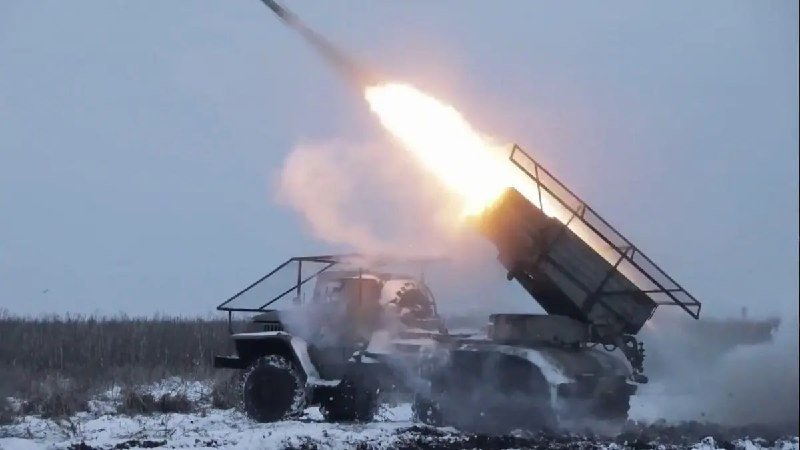
On the morning of 24 May 2026, the sound of explosions echoed through Cherkasi and the outskirts of Kyiv. Ukrainian media reported that a facility near the capital was targeted by a Russian hypersonic missile — what pro-Russian channels identified as an Orshnik — while air raid alerts blared across multiple regions simultaneously. The strike, if confirmed as using the Orshnik system, would represent the first employment of that platform since March, marking a notable recalibration of Russia's strike posture at a moment when diplomatic activity around the conflict has quietly resumed.
This is not an accident. Russia's strike cadence has followed a discernible pattern: escalation follows any softening in Western rhetoric, and the timing is rarely coincidental. The Orshnik — a ballistic missile reportedly capable of carrying multiple warheads and designed to defeat existing air defense architectures — represents the most operationally significant capability in Russia's inventory that has actually been deployed rather than merely announced. Its use near Kyiv carries a message that extends well beyond the immediate military target.
The message is partly for domestic consumption: demonstrating to a Russian audience that the military remains capable of project force deep into Ukrainian territory even as sanctions bite and casualties mount. But it is equally directed at Western capitals. Every strike that penetrates Ukrainian air defenses — regardless of how many systems the West has supplied — is a data point in a calculation being made in Washington, Berlin, Paris, and London. The calculation is whether continued military support is worth the political cost, and whether the systems being provided are adequate to the threat. Russia's Orshnik deployment is designed to make that calculation harder, not easier.
There is a structural parallel worth noting. Across multiple conflicts, the pattern is consistent: when a patron power supplies defensive systems to a recipient under regular bombardment, the subsequent strike cadence often increases rather than decreases. The provider's technology is tested; the aggressor's engineers observe, adapt, and probe for gaps. The result is a slow-motion erosion of the defensive advantage, not because the systems are inadequate in isolation, but because the broader architecture — early warning, logistics, maintenance, ammunition supply — is never as complete as the theoretical capability implies. Ukraine's air defense network, assembled from donated NASAMS, IRIS-T, Patriot, and SAMP/T batteries, is impressive on paper. In practice, it covers a country the size of Texas with systems that require sustained ammunition supply chains that have repeatedly strained under pressure.
What complicates the picture is the information environment around this strike. The Orshnik designation appears first in pro-Russian channels, with Iranian state-adjacent media subsequently amplifying the claim. Ukrainian official sources have confirmed explosions occurred near Kyiv but have not independently attributed the strike to the Orshnik system. Western governments have not issued formal assessments as of the time of publication. Independent confirmation of the specific missile type employed remains unavailable from open sources.
That uncertainty matters. An Orshnik strike that turns out to be a modified Iskander would be a very different story than a confirmed hypersonic capability deployment — the latter would represent a genuine capability gap in the air defense architecture the West has assembled. Until credible confirmation arrives from Ukrainian or Western official sources, the classification should remain: claimed, not verified. The distinction is not a technicality. How this strike is categorized in Western defence ministries will shape the next tranche of decisions on what to supply and in what quantities.
The Orshnik Gambit
The Orshnik system entered public discourse as a system designed to solve a specific problem: defeating modern Western air defense architectures through a combination of speed, maneuverability, and saturation. Russia announced the system in November 2024 and claimed successful deployment in a strike on Dnipro in December of that year, though Ukrainian officials disputed whether the system used was genuinely the hypersonic variant or a modified ballistic missile. The ambiguity has been a feature, not a bug — the psychological effect of a declared hypersonic capability requires only that the threat be credible, not that every claimed deployment be confirmed.
If Russia is now deploying Orshnik variants near Kyiv as part of a deliberate campaign, the operational intent would be to stress-test the Western-supplied air defense network under combat conditions. Each successful interception demonstrates system capability; each failure — or near-miss — generates data that Russian planners can use to calibrate subsequent strikes. This is not the indiscriminate bombardment of the early war years. This is targeting calibrated to extract intelligence from the defensive response.
The strategic logic, from Moscow's standpoint, is coherent: the longer the war continues, the more Western support visibly depends on whether Ukraine can demonstrate it can absorb Russian pressure without catastrophically failing. Each successful Russian strike on strategic infrastructure erodes the political case for continued support in Western capitals where public fatigue is real even if not yet decisive. The Orshnik is a tool in that erosion campaign, not merely a weapons system.
The Western Dilemma
The practical implication for Western policymakers is uncomfortable. The air defense architecture Ukraine currently operates was built under the assumption that the primary threat was Soviet-era cruise missiles and tactical aircraft. Russia's missile inventory has evolved substantially since 2022, incorporating new glide-vehicle systems, improved electronic countermeasures, and — if Orshnik reports are accurate — operational hypersonic delivery. The architecture that works against legacy threats may be insufficient against evolved ones, and the supply chains for the more advanced interceptors needed to counter those threats are constrained by production capacity that cannot easily be scaled.
This creates a structural dilemma: Western governments committed to Ukraine's defence are being asked to make procurement decisions against threats that are actively evolving. Every decision to supply additional Patriot batteries or IRIS-T interceptors is a decision to deplete one's own readiness stocks — a consideration that has already generated internal friction in several NATO capitals. The Orshnik deployment, if confirmed, sharpens that dilemma. It is not a binary choice between supplying more systems or accepting defeat; it is a question of whether the systems already supplied are being used efficiently, whether the targeting data being gathered from Ukrainian air defense engagements is being shared rapidly enough to allow Western engineers to adapt, and whether the political will to sustain this effort outlasts the demonstrated capacity of the defensive architecture to hold.
Ukraine's front is also fighting. The strike near Kyiv is part of a broader pattern of strikes targeting energy infrastructure, command and control facilities, and rear-area logistics hubs — a pattern designed to degrade Ukraine's ability to sustain operations across the full width of the front while exhausting air defense resources. The goal is not a single decisive blow; it is the cumulative effect of sustained pressure on a system that has finite capacity to absorb it.
What Remains Unclear
The sources reviewed for this article do not include independent attribution from Ukrainian military officials or Western defence ministries. Whether the strike involved an Orshnik system or an alternative ballistic platform cannot be verified from open sources alone. Ukrainian media reported the explosions and the targeting of a facility near Kyiv; pro-Russian channels provided the Orshnik designation. The gap between those two descriptions is where the operational truth currently resides, and it is a gap that Western governments are likely working to close.
Also unclear is whether this strike represents an isolated deployment or the opening of a new operational phase. Russia has previously used high-profile weapons systems — the Kinzhal missile, the Lancet drone — in patterns that alternated between sporadic demonstration and sustained deployment. The Orshnik's track record since December 2024 has been sparse enough that a single confirmed strike would be significant; a repeated deployment would be more significant still. The sources reviewed do not indicate whether additional strikes are anticipated or whether this was a one-time demonstration of operational capability.
The political backdrop is equally uncertain. Ceasefire negotiations have not formally resumed, but the infrastructure for back-channel communication between the parties — and between the parties and their respective patrons — appears to remain intact. Whether an Orshnik strike is designed to shape those back-channel dynamics by demonstrating a willingness to escalate, or whether it represents a straightforward operational decision untethered from diplomacy, cannot be determined from available sources.
The Stakes
What is clear is the direction of travel. Russia is probing the limits of the air defense architecture the West has built, and it will continue to probe. The Orshnik, if it is what the sources say it is, represents the most capable tool in that probing toolkit. Each deployment, confirmed or claimed, advances Russian understanding of what works against Western air defenses — knowledge that has value far beyond the Ukraine conflict, given the overlap between the systems Ukraine operates and those deployed by NATO members.
The stakes for Ukraine are immediate and human: civilian infrastructure, energy security, and the psychological weight of living under a sustained strike campaign. The stakes for Western governments are political and strategic: whether the air defense architecture they have built and are sustaining can hold under the pressure being applied to it, and whether the political case for continued support survives whatever the next strike reveals.
If the Orshnik works — in the sense of penetrating defenses that the West expected to hold — the downstream effect on procurement decisions, defence industrial output, and the credibility of Western security commitments will extend well beyond Ukraine. If it does not work, Russia recalibrates. Either way, the strike on a facility near Kyiv on 24 May is not an isolated incident. It is a data point in a contest that is still very much ongoing.
Wire provenance
This editorial synthesis draws on the following public wire/social posts:
- https://t.me/JahanTasnim
- https://t.me/tasnimnews_en
- https://t.me/JahanTasnim