Rubio's Dual Warnings Reveal the Architecture of American Leverage
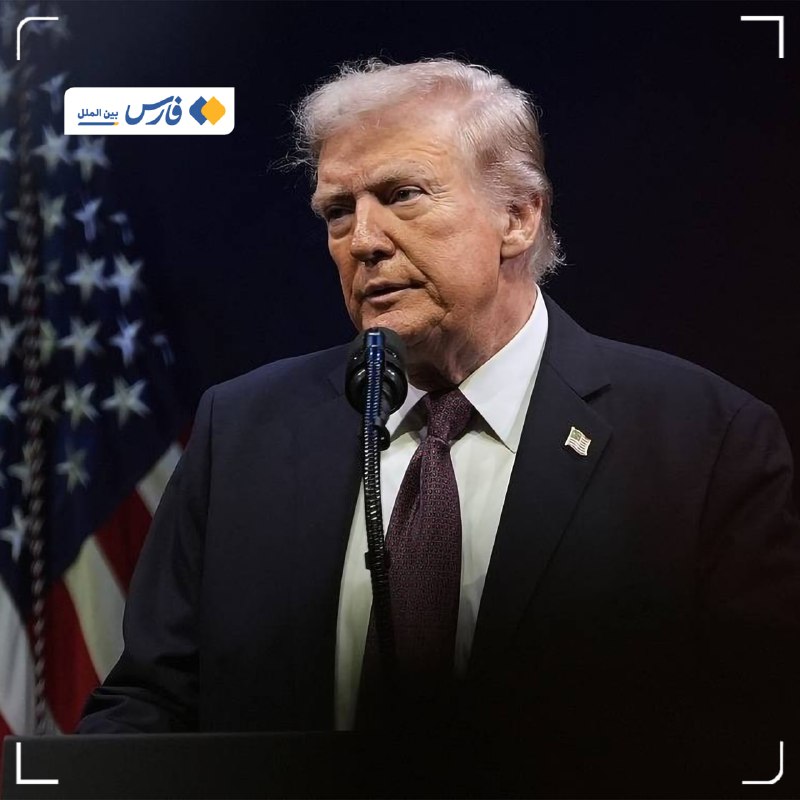
Speaking in Washington on 24 May 2026, Secretary of State Marco Rubio offered two declarations that, read together, sketch the outer contours of the administration's foreign policy doctrine. On Venezuela, he pointed to the removal of highly enriched uranium from Caracas's reach as a rare instance of cooperative compliance. On Iran, he drew a sharp contrast: the Tehran system had refused even to discuss the same subject. A third comment, on international waterways and airspace, suggested the doctrine extends well beyond the nuclear file.
The juxtaposition is deliberate. In Rubio's framing, Venezuela represents what happens when a nominally sovereign government accepts the terms of the Washington-led order — or at least enough of them to extract a concession. Iran represents what happens when it does not. The uranium handoff, whatever its operational complexity, is presented as proof of concept: the pressure-facilitated agreement works, if the target state can be sufficiently isolated.
The Venezuela Precedent
Venezuela's uranium surrender was not spontaneous. The Maduro government, squeezed by years of financial isolation, had been signaling openness to limited cooperation with Washington since mid-2025. The removal of highly enriched material from facilities that once hosted Russian technical assistance represents a concrete deliverable — one that the State Department can hold up as evidence that sustained pressure produces results.
Whether the same model applies to other hemispheric actors remains open. Cuba has not moved on its limited nuclear-adjacent research. Nicaragua's relationship with Tehran, while symbolically significant, has not produced any equivalent crisis. The Venezuela case is exceptional in the degree of Western leverage applied — and in the level of domestic collapse that preceded cooperation.
The structural lesson Rubio seems to be extracting is not subtle: compliance is rewarded with de-escalation. This is a doctrine constructed for domestic political consumption as much as for foreign audiences.
The Iranian Contrast
Iran's refusal to discuss its nuclear program stands in sharp relief. Tehran has consistently maintained that its enrichment activities are purely civilian and therefore non-negotiable — a position that successive US administrations have rejected. The current Iranian leadership, having watched Venezuela's capitulation from a distance, has shown no inclination to follow the same path.
The asymmetry is worth dwelling on. Iran sits at a far greater remove from direct US military pressure than Venezuela did. It has developed a network of regional proxies, a functioning ballistic missile arsenal, and relationships with both China and Russia that insulate it from the kind of comprehensive isolation that strangled Caracas. Rubio's demand that Tehran "discuss" its program implicitly concedes that coercion alone cannot achieve denuclearization — which raises the question of what additional tools the administration is prepared to deploy.
That the Secretary of State frames this as a matter of political will rather than structural constraint is itself informative. It suggests an administration that believes the international system, properly wielded, can compel behavioral change in non-aligned states — a belief that the Venezuelan precedent both sustains and complicates.
International Waterways and the Normative Signal
Rubio's declaration that "no international waterway, no international airspace should ever be used or nationalized by any country" introduces a second strand of the doctrine. The statement is absolute in its framing — no exceptions, no carve-outs — and appears calibrated to address several flashpoints simultaneously.
The most immediate reference is likely to ongoing disputes in the South China Sea, where China's expansive territorial claims have brought it into repeated friction with Southeast Asian states and the US naval presence. But Rubio's language is broad enough to encompass Venezuelan attempts to renegotiate access to the Orinoco, Iranian control of Strait of Hormuz transit, and any number of future disputes in which the administration might wish to establish a precedent.
The normative posture matters because it forecloses the diplomatic flexibility that previous administrations used as leverage. If every nationalization of international transit constitutes an unacceptable breach, then every such act demands a response — which either exhausts American diplomatic capital or requires military deterrence to enforce. Rubio is signaling a willingness to accept that constraint.
Stakes and Forward View
The doctrine, as currently articulated, has clear beneficiaries and clear costs. The beneficiaries are states willing to operate within the American-led order: they receive relief from pressure in exchange for concrete deliverables. The costs fall on states that calculate resistance is sustainable — Iran chief among them, but also Belarus, North Korea, and the broader anti-Western bloc that has grown more vocal since 2023.
For those states, Rubio's statements are a direct challenge: the Venezuelan model will be held up as the only available path, and the alternative is sustained isolation. Whether that calculus holds depends on factors the Secretary of State did not address — the willingness of China and Russia to absorb the costs of patronage, the cohesion of the Western sanctions regime, and the durability of American political commitment to a doctrine that requires continuous enforcement.
The uranium removal in Venezuela is a real accomplishment. Whether it constitutes a replicable template or a singular outcome in exceptional circumstances is the question the next six months will test.
Desk note: Wire coverage of Rubio's remarks led with the uranium statement in Venezuela as the primary frame. This piece foregrounds the comparative structure — the Venezuela/Iran contrast and the waterways doctrine — which received less prominence in the initial Telegram-thread pass.
Wire provenance
This editorial synthesis draws on the following public wire/social posts:
- https://t.me/ClashReport/84730
- https://t.me/ClashReport/84729