Russian Forces Launch Mass Ballistic and Drone Strike on Kyiv, Local Officials Report
Multiple Telegram channels monitoring the conflict confirmed a large-scale Russian attack on Kyiv overnight on May 23–24, 2026, with ballistic missiles and cruise missiles targeting the Ukrainian capital and a high-rise residential building reportedly struck on the city's left bank.
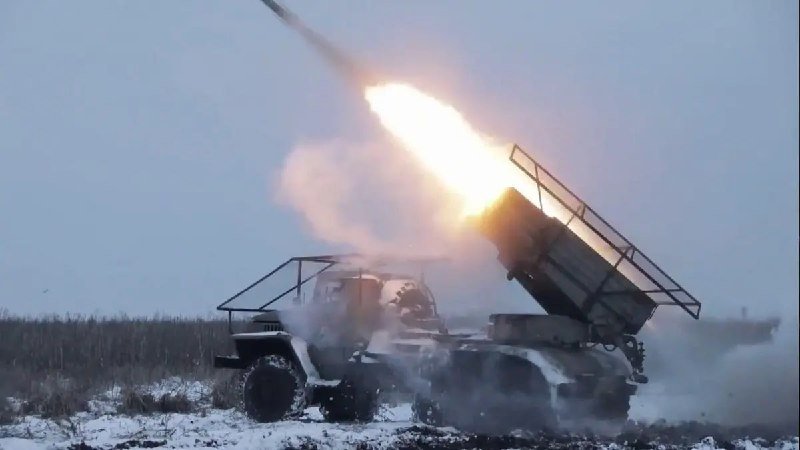
At approximately 00:56 UTC on May 24, 2026, Russian forces began a significant aerial assault on Kyiv, with multiple Telegram channels monitoring the conflict documenting a combination of ballistic missiles and cruise missiles — colloquially referred to as "KR" in open-source tracking circles — converging on the Ukrainian capital from southern approach vectors.
The left bank of Kyiv, a densely populated residential district on the eastern side of the Dnieper River, came under what monitoring accounts described as intense fire. By 00:56 UTC, one monitoring channel had already documented damage to a high-rise building in that area, the first concrete indication of the strike's impact on civilian infrastructure. As the attack progressed through the early hours, all incoming ordnance was reported to be targeting Kyiv specifically, with multiple interceptions confirmed by Ukrainian air defence units operating over the city.
\n\n## Escalating Pattern of Capital Targeting
The May 24 strike follows a well-documented pattern of Russian attacks on Kyiv that has persisted throughout the conflict. Telegram channels tracking military activity — including WarMonitorRT, AMK Mapping, and War Monitor — relay a consistent account of multiple missile groups detected approaching the city, with at least three cruise missiles confirmed heading toward Kyiv from the south, and additional groupings splitting off toward central districts. The timing, in the early hours of a Sunday morning, places the assault during a period when civilian activity in residential areas would be at its lowest, though such considerations have never constrained Russian strike planning.
Oleksiy Mylovanov, a Ukrainian official whose Telegram account was cited by monitoring channels, described the situation starkly: "Kyiv is under a massive ballistic attack. It is not fun…. My house is shaking all the time." The personal testimony, while anecdotal, aligns with the technical accounts of multiple monitoring feeds documenting the scale of the bombardment. By 02:18 UTC, Kyiv remained shrouded in smoke according to multiple independent reports, indicating sustained damage and ongoing fires in the affected areas.
This attack arrives amid continued Western debate over support levels for Ukraine, a context that Russian military planners almost certainly factor into their targeting calculus. The strike's timing — coming on a weekend when Western governments operate on reduced staffing and public attention is lower — is unlikely coincidental, though such patterns are difficult to verify definitively from open-source accounts alone.
\n\n## Counter-Narratives and Verification Limits
Russian state media had not issued public statements on the strike as of 02:18 UTC, consistent with Moscow's pattern of minimizing or obscuring attacks on Ukrainian civilian infrastructure. The Telegram monitoring ecosystem, while providing granular real-time accounts, operates under inherent constraints: missile trajectories are inferred from public flight-tracking data, and strike impacts are reported before formal damage assessments are available. The high-rise building damage, while visually documented in the feeds reviewed by this publication, could not be independently verified through official Ukrainian emergency services or government sources within the reporting window.
It is worth noting that open-source monitoring of this conflict operates on varying degrees of reliability. Some channels, such as AMK Mapping, provide geolocated visual corroboration of strike activity; others relay accounts from officials or witness networks without independent verification. The convergence of multiple independent monitoring feeds on the same general facts — multiple missile groups, Kyiv targeting, civilian damage — lends结构性 credibility to the overall account, even as specific details may be refined in subsequent hours.
Ukrainian air defence has repeatedly demonstrated the capacity to intercept significant portions of incoming ordnance, and the monitoring accounts confirm multiple interceptions occurred over Kyiv during this strike. The extent of successful interceptions versus ordnance that reached its target remains a point of uncertainty in the immediate aftermath.
\n\n## Structural Context: Civilian Infrastructure as Target
Russian strikes on Kyiv have repeatedly targeted residential buildings, power infrastructure, and urban areas away from military installations. International humanitarian law treats such attacks on civilian objects as potential war crimes, and documentation of strikes on Ukrainian cities — including the systematic targeting of energy infrastructure during winter months — has formed part of ongoing investigations by international bodies.
The May 24 strike fits within a broader Russian operational pattern that has seen the capital subjected to waves of aerial bombardment throughout the conflict. What changes is the composition of the attack — ballistic missiles, cruise missiles, Iranian-origin Shahed drones — rather than the fundamental targeting logic. Kyiv's residential neighbourhoods remain in the strike envelope regardless of the specific platform employed.
Western military analysts have noted that Russia's continued willingness to conduct large-scale strikes on Ukrainian cities suggests either a calculated effort to degrade civilian morale and infrastructure or an inability to generate sufficient strike packages capable of meaningfully degrading military targets, or both. The specific military utility of destroying a high-rise residential building on Kyiv's left bank — as documented in the May 24 attack — is difficult to identify from any conventional military logic.
The conflict's trajectory continues to be shaped significantly by the volume and timeliness of Western air defence transfers to Ukraine. The interceptions confirmed by monitoring accounts during the May 24 strike reflect the operational status of Ukraine's air defence network as of this reporting period, a network whose coverage depends on continued resupply from allied partners.
\n\n## Immediate Stakes and Forward View
The immediate human stakes of the May 24 strike remain unfolding as of this publication. Residential damage in a densely populated urban district carries predictable consequences: civilian casualties — not yet quantified in available monitoring accounts — structural damage to housing stock, and disruption to civilian services in affected areas. The smoke observed over Kyiv at 02:18 UTC suggests fires remain active, with rescue and recovery operations likely underway.
The broader political stakes intersect directly with ongoing debates in Western capitals regarding continued support for Ukraine. Each major strike on Ukrainian cities provides data points for those arguing that support must be sustained to prevent further civilian harm, while simultaneously creating pressure on Western governments to demonstrate that their aid transfers are producing tangible defensive results. Russian strike operations, in this reading, are as much a communication directed at Western audiences as at military targets.
The monitoring accounts reviewed by this publication will continue to be updated as the situation develops. Formal damage and casualty assessments from Ukrainian authorities are expected to emerge over the coming hours, providing a clearer picture of the strike's human cost. The pattern of Russian targeting, however, is well established — and the May 24 assault on Kyiv's residential districts falls squarely within it.
\n\nThis publication relied on open-source monitoring feeds providing real-time documentation of the strike activity. Mainstream wire services had not published confirmed reports as of 02:30 UTC, consistent with the reporting lag that typically applies to overnight events in the European conflict zone. The Telegram-sourced accounts documented here are the most immediate available record of the attack's progression.
Wire provenance
This editorial synthesis draws on the following public wire/social posts:
- https://t.me/Tsaplienko
- https://t.me/war_monitor
- https://t.me/AMK_Mapping
- https://t.me/war_monitor
- https://t.me/AMK_Mapping
- https://t.me/intelslava
- https://t.me/osintlive