Russia's Coordinated Missile Barrage on Kyiv Signals a New Escalation Calculus
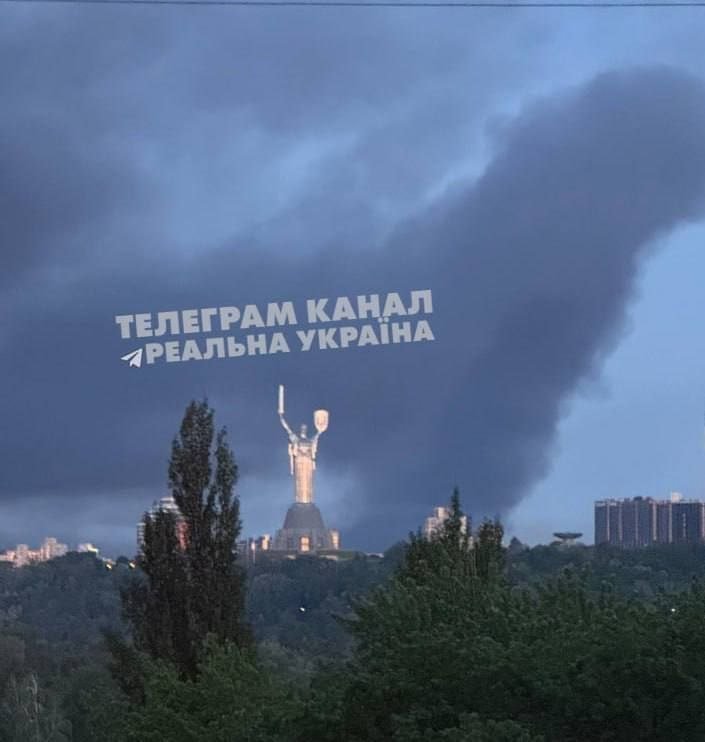
At 23:52 UTC on May 23, 2026, Iskander-M ballistic missiles launched from Bryansk Oblast, crossed into Ukrainian airspace, and began threading toward Kyiv. Over the next fifty-two minutes, the pattern grew more complex and more alarming. First Iskander-K strikes landed on the eastern outskirts of the capital; then Kh-101 cruise missiles, launched in groups from the direction of Sumy Oblast, entered Chernihiv Oblast and curved northwest toward Kyiv Oblast. By 00:44 UTC, multiple Iskander-K impacts had been confirmed on Kyiv's northeastern suburbs. The strike was over. The message was not.
The Iskander-K — a variant of the Iskander-M short-range ballistic system that Moscow has employed against Ukrainian cities since 2022 — has now been documented attacking Kyiv's eastern periphery for the first time. Independent OSINT trackers monitoring flight paths and impact locations recorded at least two distinct launch events originating from Bryansk, followed by coordinated waves of cruise missiles shifting course from the west and northwest simultaneously. The result was a compressed, multi-azimuth assault designed to saturate rather than penetrate.
The Geometry of the Attack
What distinguishes this strike is not simply its scale but its geometry. Russian forces appear to have structured the assault around three distinct axes: ballistic missiles from the northeast, cruise missiles banking west from Chernihiv Oblast, and additional cruise missiles approaching from the northwest after an initial course correction. OSINT analysis of flight paths, corroborated across multiple independent trackers, shows six Iskander-K missiles altering heading to the west mid-flight — a maneuver suggesting real-time coordination, either from a ground controller or via pre-programmed loitering logic built into the weapons' guidance package.
This is not the Russia of early-war Telegram videos, improvised drone launches from pickup trucks in fields. This is an industrial strike architecture, refined over four years of continuous bombardment, now layering cruise and ballistic platforms against a single target in overlapping windows. The Kh-101, a subsonic cruise missile with a reported range exceeding 2,500 kilometers, and the Iskander-M/K family, with its reported 500-kilometer range and terminal guidance, are being employed together not because one is sufficient but because together they stress air defense systems in ways neither could alone.
What the Iskander-K Variant Tells Us
The specific appearance of the Iskander-K in this strike warrants attention. Open-source investigators have tracked Iskander-M variants — the conventional short-range ballistic missile — against Ukrainian infrastructure throughout the conflict. The Iskander-K, by contrast, has remained largely outside confirmed strike reporting against Kyiv proper. Its deployment against the capital's eastern sector suggests one of two possibilities, or some combination of both.
The first is operational testing. A weapon system that has not previously been used against a specific target represents an unknown variable for Ukrainian air defenders. Forcing Ukraine to recalibrate its interception calculus — to account for a missile variant with potentially different radar signatures, flight profiles, or payload configurations — has independent strategic value even if the strikes cause limited physical damage. The second possibility is deliberate escalation signaling. Moscow has escalated rhetoric alongside material strikes before; using a new variant against the capital, rather than a more distant city, carries communicative weight whether or not physical outcomes justify the additional risk.
Neither interpretation is mutually exclusive, and the sourcing does not permit a definitive judgment on intent. What the record does confirm is that the Iskander-K arrived over eastern Kyiv from a known Bryansk launch site, impacted in a residential sector, and was documented by OSINT trackers with sufficient precision to identify the variant. The weapon is now part of the confirmed threat matrix over the capital.
The Air Defense Burden
Kyiv's air defense architecture has performed remarkably across four years of sustained assault. Patriot batteries, NASAMS launchers, and Soviet-era systems have intercepted thousands of missiles and drones. But interception is not costless — in resources, in readiness cycles, or in the strategic reserve that must be held back for higher-threshold events. Complex, multi-vector strikes like the one recorded on May 24 are specifically designed to consume that reserve. Every interceptor launched at a Kh-101 is an interceptor unavailable for an Iskander-M at close range.
The 6 Iskander-K missiles that shifted course mid-flight to fly west rather than continuing northeast represent a particularly demanding scenario for defenders. A ballistic missile with a predictable flight profile is interceptable with calculated intercept windows. One that adjusts heading in flight — whether through radio command or inertial navigation updates — collapses those windows and forces a choice between engaging the weapons where they are or waiting to see where they end. In an urban corridor where civilian exposure is unavoidable regardless of which option defenders choose, that dilemma is itself the payload.
The Escalation Signal and Its Limits
Western observers have grown accustomed to parsing Russian strike patterns for meaning beyond their physical effects. The pattern on May 24 is not random. A complex, multi-axis strike using a previously unconfirmed variant on the capital, timed in the early morning hours of a spring day, falls into a window of continued pressure on Ukrainian morale, infrastructure, and air defense stocks.
But parsing the signal requires also understanding its limits. Moscow has repeatedly demonstrated that it can sustain high-intensity strike operations for extended periods; the May 24 barrage, while alarming in its coordination, did not represent a qualitative break from the established strike template. The Kremlin does not appear to be preparing for a one-time maximalist strike — it is conducting a rolling, adaptive campaign that adjusts tools and timing to stress Ukrainian defenses in durable fashion.
That distinction matters for how Western partners think about air defense resupply, about the political sustainability of support narratives, and about what Kyiv can reasonably promise its population. The strike did not announce a new war. It refined an existing one.
The night sky over Kyiv on May 24 carried the familiar orange glow of impact fires and intercepted debris. The missiles came from the north, from the east, from the air. The city held. The question — for defenders, for policymakers, for anyone watching this conflict's trajectory — is not whether Kyiv can survive another night. It is whether the architecture supporting that survival can remain funded, supplied, and politically viable long enough to outlast Moscow's patience for a war it planned to end in days and has now prolonged into its fifth year.
— Monexus tracked this strike against Kyiv's air defense infrastructure across multiple independent OSINT feeds. Western wire services had confirmed the strike by the time of publication.
Wire provenance
This editorial synthesis draws on the following public wire/social posts:
- https://t.me/AMK_Mapping/
- https://t.me/war_monitor/
- https://t.me/AMK_Mapping/