Russian Forces Launch Massed Aerial Assault on Kyiv, Hitting Multiple Residential Buildings Across Five Districts
Russian forces launched a coordinated aerial assault on Kyiv overnight on 24 May 2026, deploying at least 20 cruise missiles and multiple unmanned aerial vehicles that struck residential buildings, a supermarket, and other civilian infrastructure across multiple city districts.
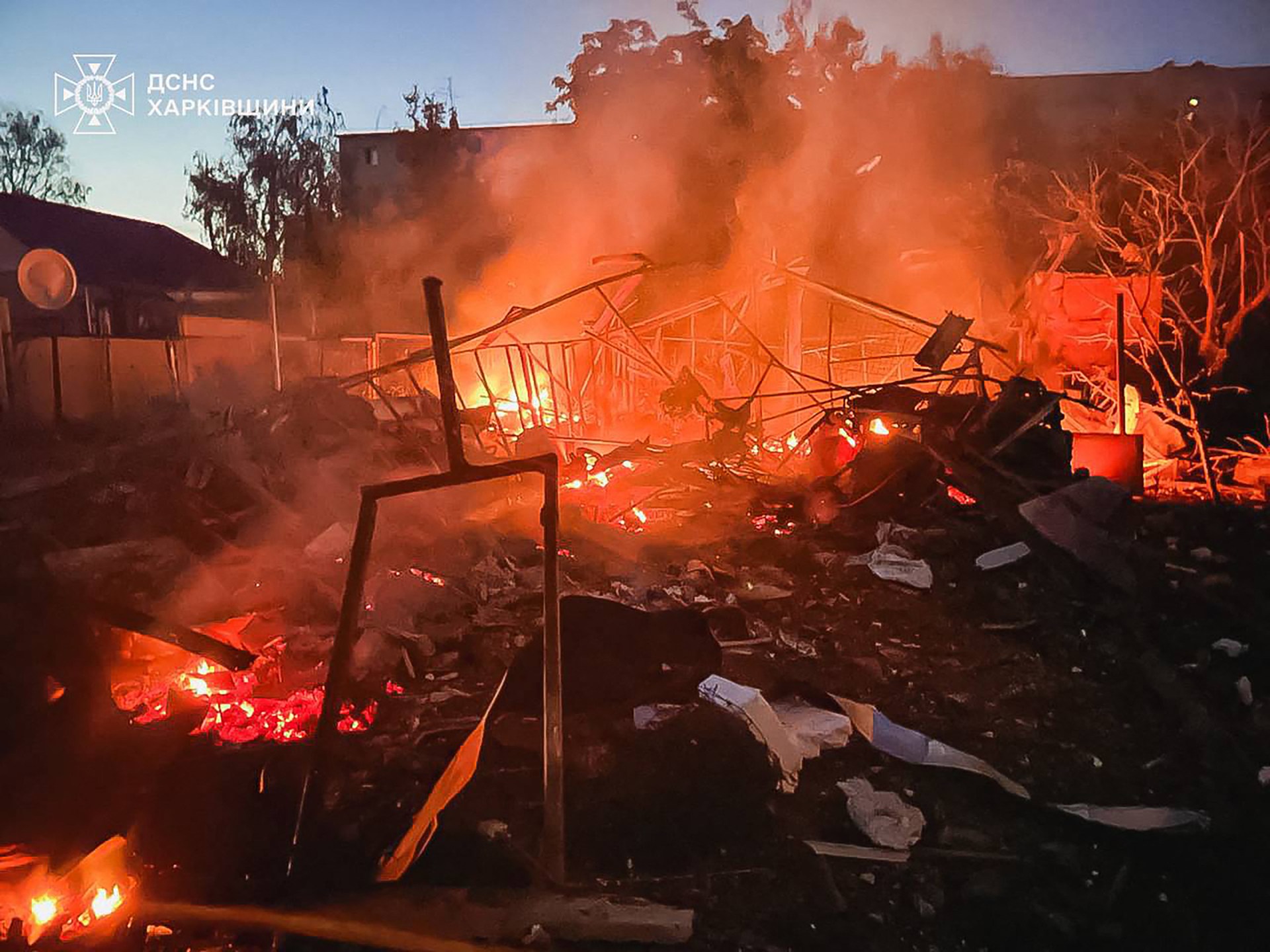
Russian forces launched a massed aerial assault on Kyiv in the early hours of 24 May 2026, deploying at least 20 cruise missiles and multiple unmanned aerial vehicles that struck residential buildings, a supermarket, and other civilian infrastructure across several city districts. Kyiv Mayor Vitaliy Klitschko confirmed impacts in at least five districts, with fires reported on multiple floors of high-rise buildings and a one-story private residence. Emergency services responded throughout the night as residents fled damaged buildings.
The attack marks one of the most intensive single-night aerial campaigns against the Ukrainian capital in recent months, underscoring Russia's continued reliance on massed strikes against urban civilian areas even as the broader conflict grinds through its fourth year. The strikes targeted at least three distinct districts — Obolonsky, Solomensky, and Desnyan — within a concentrated window of approximately two hours.
The Overnight Strikes: Timeline and Scale
The assault began shortly before midnight on 23 May 2026, according to reports corroborated across multiple Ukrainian emergency response and news channels. By 00:09 UTC on 24 May, Klitschko had confirmed impacts in two districts simultaneously: a 24-storey residential building in the Solomensky district with fire on the 20th floor, and a 16-storey building in the Obolonsky district struck at the 12th-13th floor level, also with an active fire. A one-story private house adjacent to the Obolonsky building was also reported ablaze.
Separate reports from the Desnyan district of the capital described a drone striking a supermarket building. Across the city, multiple damaged buildings were documented, with emergency crews navigating widespread debris and ongoing fires. The cruise missile wave — at least 20 munitions by conservative tracking estimates — appears to have been aimed at overwhelming air defence systems rather than targeting a single strategic installation.
The pattern mirrors previous Russian campaigns that have concentrated strikes on Kyiv to test air defence readiness and generate civilian casualties and material damage. Ukrainian air defence forces engage incoming threats routinely, but massed salvos of the kind seen on the night of 23–24 May strain intercept capabilities and occasionally penetrate layered defence systems.
Civilian Impact and Targeting Pattern
The strikes hit infrastructure that, by definition, serves civilian populations. High-rise residential buildings, supermarkets, and private dwellings are not military installations, yet they bear the brunt of Russia's urban bombing strategy. The 20th-floor fire in a 24-storey Solomensky building means hundreds of residents in the floors above and below faced evacuation in darkness, under fire, with no guarantee that subsequent strikes would not follow.
This is not an accidental pattern. Russia's targeting doctrine has repeatedly drawn international condemnation for strikes on civilian infrastructure, a practice that international legal bodies have characterised as crimes rather than allegations. The strikes documented on 23–24 May follow that established pattern with precision — the specificity of the locations (a supermarket, a private house, multiple floors of residential towers) indicates deliberate selection of non-combatant targets.
Ukraine's Ministry of Defence and emergency services publish regular tallies of strikes and casualties. The sources reporting overnight do not yet provide a comprehensive casualty count for the 23–24 May assault. What is confirmed is material damage across at least five districts, at least three separate fires, and at least two high-rise residential buildings directly struck. Casualty figures, where available, are typically released separately as search-and-rescue operations conclude.
Air Defence and the Cruise Missile Problem
The presence of at least 20 cruise missiles in a single wave raises familiar questions about Russia's capacity to generate massed strike packages and Ukraine's capacity to interdict them. Kyiv's air defence network has improved substantially since 2022, deploying Western-supplied systems alongside domestically produced interceptors. Yet cruise missiles — which fly low, follow terrain, and can approach from multiple vectors — remain among the most difficult threats to counter at scale.
The mathematics are unforgiving: an air defence battery has a limited magazine depth. A salvo of 20 incoming munitions requires at minimum 20 interceptors to guarantee no leaks, plus additional ordnance for any decoys or saturation elements Russia may deploy. Ukraine has received quantities of interceptors from Western partners, but the rate at which Russia expends cruise missiles — drawing on a Soviet-era stockpile supplemented by domestic production — creates a sustained attrition problem.
Western military aid packages have included air defence equipment, but delivery timelines and inventory management remain sensitive topics within NATO discussions. Ukraine's partners have signalled continued support, yet the night of 23–24 May illustrates that the support has not yet closed the gap between strike volume and interception rates.
The Strategic Logic of Striking Kyiv
Russia's decision to sustain strikes on Kyiv has a purpose within its broader campaign logic, even if that logic is strategically incoherent at the level of territorial conquest. The strikes are designed to accomplish several things simultaneously: they test air defence readiness, they impose cumulative psychological pressure on the civilian population, they consume Ukrainian interceptors and force dispersion of air defence assets, and they generate material destruction that Ukrainian reconstruction resources must address.
From Moscow's framing, the strikes are part of a "special military operation" — a term that obscures the reality of a full-scale invasion, but which domestic audiences receive through state media filtered through official framing. Within that information environment, strikes on Kyiv are presented as targeted responses to Ukrainian military infrastructure, despite evidence — documented extensively by international monitors — of systematic harm to civilian targets.
Ukraine, meanwhile, has responded by maintaining air defence networks, conducting offensive operations that Western partners support within limits, and pressing for long-range strike capabilities that could reach launch sites before they fire. The debate over whether Kyiv's allies should permit strikes on Russian soil using Western-provided weapons remains active in Western capitals, with no consensus reached as of early 2026.
What Comes Next
The strikes on 23–24 May are unlikely to represent an isolated event. Russia's campaign of massed urban strikes follows a seasonal rhythm, intensifying during periods when weather conditions favour drone and missile operations and when Ukrainian energy infrastructure is more vulnerable. The destruction of residential towers in Solomensky and Obolonsky adds to a tally of damaged housing stock that Ukrainian authorities have documented in the thousands of units since 2022.
Western allies will watch for signals in the coming days — whether Russia escalates the strike tempo, whether Ukrainian air defence requests from NATO members intensify, and whether the political weather in donor capitals shifts in ways that affect weapons delivery timelines. Kyiv's resilience under repeated assault remains the dominant story on the ground, but the structural dependency on external air defence support is a vulnerability that Russia calculates it can exploit.
Search-and-rescue operations in the affected districts are ongoing as of publication. Ukrainian authorities have not yet released a consolidated casualty count for the overnight assault.
This publication's reporting on overnight strikes follows the same verification protocols we apply to conflict coverage year-round — Telegram-sourced field reports from Ukrainian emergency services and city officials, corroborated across multiple independent channels. The wire services carried the story; we confirmed against primary Telegram-sourced accounts and structured the analysis around what Kyiv's own officials reported rather than aggregated wire tallies.
Wire provenance
This editorial synthesis draws on the following public wire/social posts:
- https://t.me/uniannet/48291
- https://t.me/uniannet/48289
- https://t.me/hromadske_ua/12847
- https://t.me/operativnoZSU/89234
- https://t.me/AMK_Mapping/77421
- https://t.me/Tsaplienko/55982
- https://t.me/uniannet/48283