Russia's relentless midnight war on Kyiv
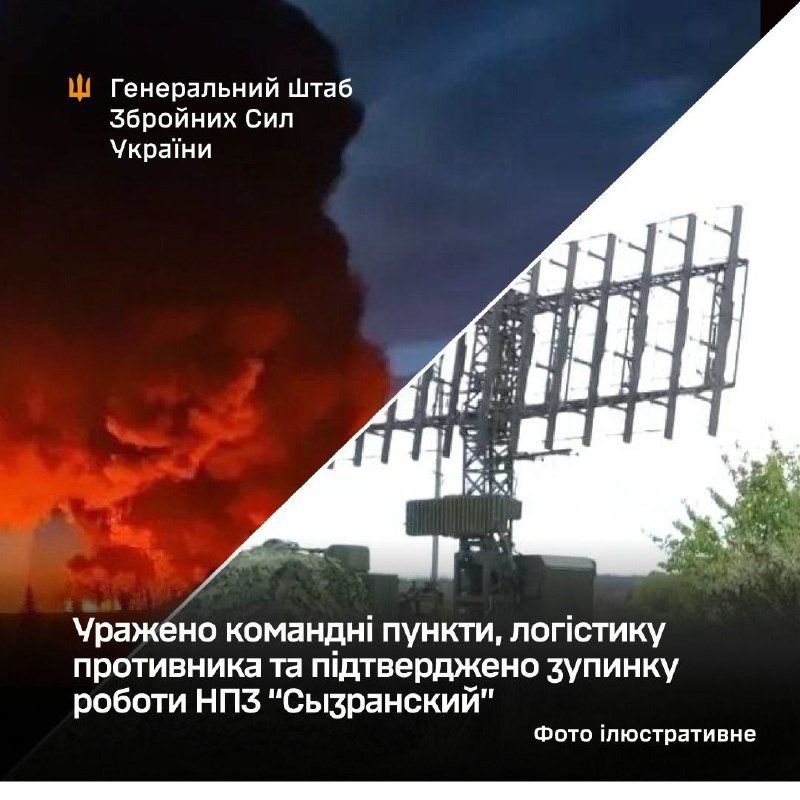
What the Telegram posts from the early hours of 24 May 2026 recorded was not a singular event. It was a repeated one. Around 23:31 UTC on 23 May, open-source monitors identified Shahed drones moving in multiple formations — south past Kyiv toward Cherkasy, southwest from Chernihiv toward Kyiv, and west past Kharkiv toward Poltava. By 23:52 UTC, Iskander-M ballistic missiles had been launched from Bryansk Oblast and entered Chernihiv Oblast flying toward Kyiv. Two to four Zircon hypersonic missiles were reported approaching Kyiv Oblast from the south at 23:58 UTC. And approximately 16 Kh-101 cruise missiles, tracked entering Sumy Oblast before swinging north through Chernihiv toward Kyiv, arrived in the early minutes of 24 May.
This was not a probe. It was a multi-layered strike package designed to saturate air defenses. The combination of ballistic, cruise, and hypersonic assets, timed across a 50-minute window, was intended to overwhelm Ukrainian air defense command — forcing interception systems to address simultaneous inbound threats across different attack vectors. That Russia's planners chose to execute this at midnight, local time, carries its own logic: night strikes maximize civilian psychological impact, disrupt sleep cycles across a population that has lived under this pressure for years, and exploit any gaps in coverage during shift-change periods.
The attack barely registered in Western headlines. That is the story.
The normalization of nocturnal violence
Coverage in most major English-language outlets treated this as a data point, not an event. Drone formations moving in herds. Missiles launching from Bryansk. Hypersonic assets threading through air defense grids. The language of these Telegram posts — clinical, technical, tracking flight paths in near-real time — captures a rhythm that Western audiences have largely stopped noticing. This is what sustained warfare looks like when it becomes routine: not a dramatic incursion but a recurring imposition, executed from Russian territory on a schedule that has become, functionally, normalized.
The normalization of Russian strikes against Ukrainian cities is a documented phenomenon in how Western media covers the conflict. It manifests not as explicit bias but as editorial weight: the story of a fresh strike takes the same column inches as the story of a strike three days prior, even when the scale and composition differ substantially. Night attacks from Russian territory — drones launched, missiles fired, Shaheds vectored toward population centres — rarely lead newscasts unless accompanied by significant civilian casualty figures or striking visual evidence of damage. The attack on the morning of 24 May 2026, with its hypersonic component and layered strike package, did not make that threshold.
That threshold, and its consequences, deserves scrutiny.
The strategic logic of persistence
Russia has demonstrated, repeatedly, a willingness to sustain high-intensity strike operations against Ukrainian cities for extended periods. This persistence is not accidental — it is a calculated approach to maintaining pressure on Ukrainian air defenses, civilian morale, and Western attention. The strategic goal is not merely the destruction of specific targets but the normalization of a baseline level of violence that renders each individual strike unremarkable. If the international order absorbs these strikes without meaningful consequence, the baseline shifts. What was once exceptional becomes background noise.
The combination of Zircon hypersonic missiles — which existing air defense architectures struggle to intercept — with more numerous but more interceptable assets like the Kh-101, creates a layered problem for defenders. Ukraine's air defense commanders are making hard calculations about which assets to prioritize, knowing that depleting interceptor stocks against cruise missiles leaves less capacity for ballistic or hypersonic threats. Russia understands this arithmetic. The strike package on 24 May was designed not just to damage but to consume.
This is a test — of Ukrainian air defense endurance, of Western attention spans, of the threshold at which the international system responds. That the attack was covered as a routine update rather than an escalation event suggests the test is yielding results.
What the world should be watching
The Telegram posts from AMK_Mapping and war_monitor tracked this strike in real time from open-source signals. The data was available. The composition — approximately 16 Kh-101s, 2-4 Zircons, multiple Iskander-Ms, and drone swarms — was documented. The targeting of Kyiv, from three approach vectors, was confirmed. What was not confirmed, in most Western reporting, was the significance of what had occurred.
Each night these attacks continue, the baseline inches upward. The question is not whether Ukraine can intercept tonight's strike — it is whether the international system will notice that the strike happened at all. Kyiv's air defense teams are not asking that question. They are already tracking the next approach. The world, for the moment, is not.
This publication tracked the 24 May strike package via open-source monitoring channels on Telegram. The data was available in real time.
Wire provenance
This editorial synthesis draws on the following public wire/social posts:
- https://t.me/AMK_Mapping/
- https://t.me/war_monitor/
- https://t.me/AMK_Mapping/
- https://t.me/AMK_Mapping/
- https://t.me/AMK_Mapping/
- https://t.me/AMK_Mapping/