Secret Service Shoots Armed Suspect Near White House Perimeter
A man fired three shots near the White House on the evening of 23 May 2026 before Secret Service agents returned fire, striking the suspect who later died in hospital. The incident raises questions about perimeter security and how authorities frame high-profile security breaches.
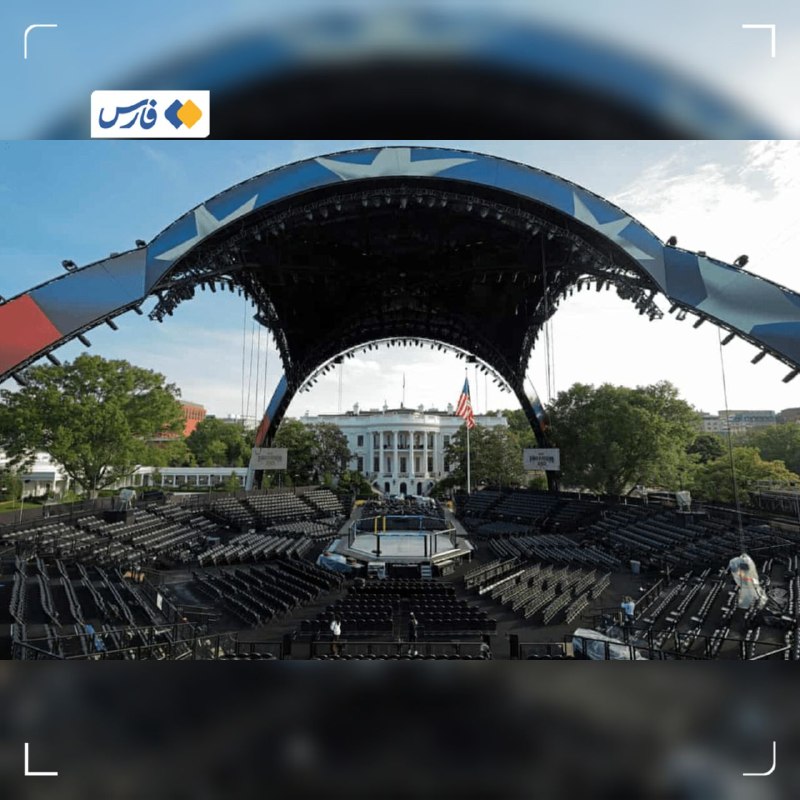
A man approached the White House perimeter with a pistol on the evening of 23 May 2026 and fired three shots before Secret Service agents returned fire, striking the suspect, according to initial wire reports confirmed across multiple outlets. Two adults were hit, including the shooter. The suspect was taken to hospital and later died of his injuries, per reporting from Insider Paper at 00:04 UTC on 24 May. Authorities identified the individual as an emotionally disturbed person who had previously been subject to a stay-away order, Reuters reported at 23:57 UTC on 23 May.
The shooting, which unfolded near a security checkpoint on the White House grounds, represents the most significant security breach at the executive mansion since a similar incident in 2023. The immediate physical threat was neutralised within minutes, but the episode has opened a broader conversation about how high-profile security failures are narratively managed once the immediate danger has passed.
What happened on the evening of 23 May
The sequence of events is, by the standards of such incidents, relatively well-documented through wire reporting. According to NewsNation, which was cited across multiple Telegram channels including WFWitness, a man walked up near the White House with a pistol and fired three times before Secret Service personnel returned fire and struck him. PBS News, cited by Al Alam Arabic at 23:16 UTC, confirmed that two people were injured in the shooting, one of them the suspect. Fox News, reported through Tasnim English and Jahan Tasnim at 22:59 UTC, stated that security forces had captured the shooter and brought the situation under control. The language of "capture" was later superseded by the more accurate characterisation that the suspect had been neutralised and taken to hospital.
The timeline, reconstructed from timestamps on the thread, runs from approximately 22:59 UTC to 00:04 UTC the following morning. The suspect died in hospital, confirming what initial reports described as a critical injury.
The official characterisation of the suspect arrived quickly. Reuters, cited by Georgia News at 23:57 UTC, identified the individual as an emotionally disturbed person who had previously been served with a stay-away order — a legal directive prohibiting approach to a designated location or person. That detail matters. It means the individual was known to some combination of law enforcement or judicial authorities before the shooting occurred. How that knowledge translated into — or failed to translate into — protective posture is one of the structural questions this incident surfaces.
The framing problem: psychological language and institutional narratives
Within hours of the shooting, a competing narrative was already in circulation. Tasnim News English, at 00:10 UTC on 24 May, reported that an American official claimed the effort of media and authorities was to make the shooting agent around the White House look "psychological." The phrasing is notable. Iranian state-linked outlets, including Al Alam Arabic and Tasnim, framed the official response as an attempt to depoliticise or medicalise the incident — to move it from the category of political or security event into the category of individual pathology.
There is a structural logic to this critique, regardless of its provenance. When a security breach occurs at a site of executive power, institutions face a dual pressure: the operational requirement to understand and close whatever gap was exploited, and the political requirement to manage public confidence in protective infrastructure. The language of mental illness, when it appears early in official communications, tends to serve both functions — it answers the question of motivation by removing it from the realm of ideology or coordination, and it distances the incident from any systemic failure in the security architecture.
The sources do not establish what, if any, ideological motivation the suspect may have held. The stay-away order suggests prior contact with the legal system, but the grounds for that order are not yet in the public record. What can be said is that the rapid deployment of psychological framing is a pattern visible across comparable incidents, and the counter-narrative — that this framing is itself a form of institutional management — is a pattern visible in outlets positioned outside the Western media mainstream.
Structural context: perimeter security and known threats
The White House security perimeter has evolved significantly since the 2015 breach in which a man with a knife reached the mansion's doors. The Secret Service has invested in hardening entry points, expanding the no-vehicle zone, and increasing canine and uniformed patrols. Yet the fundamental challenge remains one of balancing openness — the White House is a public building with an active first lady and visitor programmes — against the containment of individuals who pose a known threat.
The stay-away order is the critical detail in this calculus. If an individual has been identified as sufficiently threatening to warrant a legal order prohibiting approach, and if that order is in force at the time of the approach, the question becomes one of interagency information sharing and active monitoring rather than the initial security architecture. The Secret Service cannot fence every individual who has expressed interest in the White House; it relies on a layered system in which known threats are flagged and monitored at the perimeter.
Reporting from Reuters, cited by Georgia News, does not specify the agency that issued the stay-away order or the mechanism by which it was supposed to be enforced. The gap between a legal order and active surveillance of the subject is precisely where such incidents tend to occur — not because of a failure at the gate, but because of a failure of the intelligence-to-action pipeline upstream.
The information environment in the immediate aftermath
The shooting occurred at approximately 22:59 UTC on 23 May 2026. Within the hour, the story had been picked up by wire services, reported in English and Arabic, and was being parsed through the lens of competing media ecosystems. By 00:10 UTC, the Iranian framing — that authorities were attempting to pathologise the shooter — was already live on Telegram channels. By 00:04 UTC, the suspect's death had been confirmed by Insider Paper.
This compressed timeline is not incidental. High-profile security incidents are, almost by definition, information events as much as physical ones. The immediate aftermath is a period of competitive narrative construction, with official sources, wire services, and international outlets each bringing their own institutional priors to the characterisation of what occurred. Western outlets, drawing on Secret Service and administration officials, prioritised the shooter-as-threat and the shooter-as-medical-case. Outlets positioned outside that framework prioritised the shooter-as-pretext — a figure whose characterisation by American authorities was itself a form of information management.
Neither framing is fully satisfying on the available evidence. The sources do not establish what motivated the individual, whether he acted alone, or whether the stay-away order was actively monitored. What the sources do establish is the physical sequence of events and the speed with which official language moved to frame those events in a particular way.
Stakes and what remains uncertain
The immediate stake is operational: the Secret Service and the Department of Homeland Security will conduct a review of perimeter security and interagency threat-sharing protocols. If the stay-away order was not properly communicated or enforced, that represents a systemic gap that the review will be expected to close. Congress will likely request briefings. The public record of the stay-away order — its issuer, its basis, and its monitoring status — will become a matter of congressional and media inquiry.
The broader stake is epistemological. The pattern of early psychological framing, followed by counter-narratives from outlets outside the Western mainstream, reflects a wider dysfunction in the information environment surrounding security events. When official accounts are immediately contested on credibility grounds by significant portions of the global audience, the practical effect is to make it harder for any account — accurate or not — to gain traction. The sources do not adjudicate between these framings; they record both and note the structural incentives that produce them.
What remains genuinely uncertain: the identity of the suspect (not yet publicly named at time of publication), the specific basis for the stay-away order, whether the individual had any organisational affiliation or ideological motive, and whether any systemic failure in threat monitoring contributed to the breach. The sources do not address any of these questions directly. They establish what happened at the perimeter; the rest will emerge through official investigation.
This publication's coverage of the White House shooting leads with the physical sequence of events — the gunfire, the response, the casualty — and surfaces the competing characterisations of the suspect as a matter of journalistic record. The framing that emphasises the shooter's psychological state and the counter-framing that treats that emphasis as institutional management both appear above, in their structural logic, rather than as competing truth claims to be adjudicated here.
Wire provenance
This editorial synthesis draws on the following public wire/social posts:
- https://t.me/insiderpaper/1842
- https://t.me/georgenews/15428
- https://t.me/wfwitness/12358
- https://t.me/alalamarabic/89421
- https://t.me/alalamarabic/89419
- https://t.me/alalamarabic/89417
- https://t.me/tasnimnews_en/58921
- https://t.me/JahanTasnim/71209
- https://t.me/JahanTasnim/71205
- https://t.me/tasnimnews_en/58923