Shooters and the Signal: What the White House Attack Tells Us About Political Violence as Communication
A shooting near the White House on 23 May 2026, in which a gunman opened fire at Gate No. 17 and was neutralised by the Secret Service, raises questions that extend well beyond the immediate security response. When attacks cluster around specific institutions, the pattern itself becomes the message.
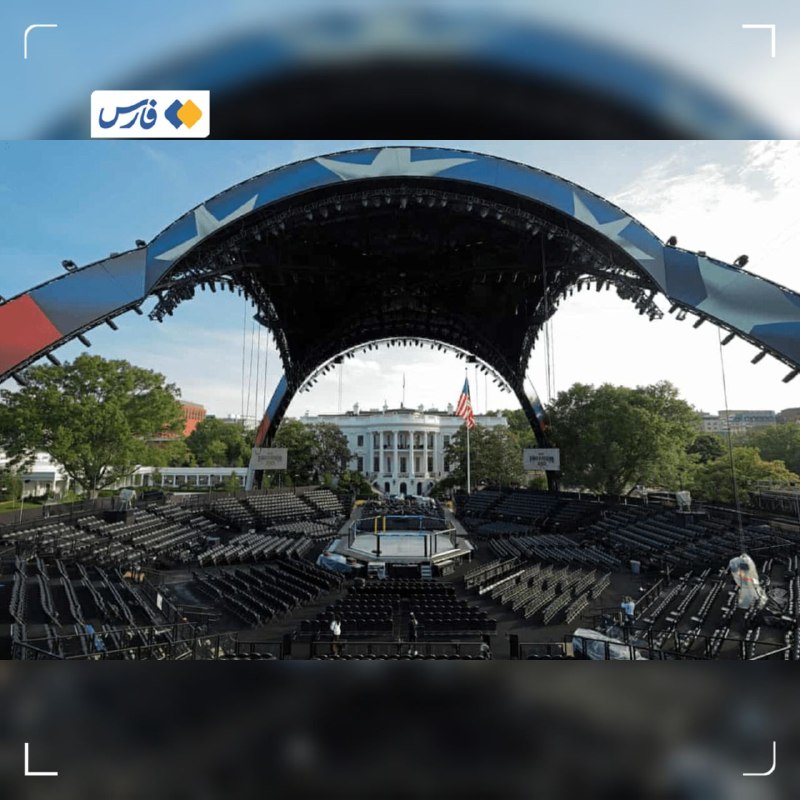
Around 6:00 p.m. on the evening of 23 May 2026, an armed individual approached Gate No. 17 on the White House perimeter, fired three shots at the historic structure, and was immediately neutralised by Secret Service agents stationed at the scene. Two people were wounded — one described by PBS News as a bystander struck in the crossfire, the other understood from initial Fox News reporting to be the gunman himself, who was subsequently captured or killed as security forces brought the situation under control within minutes of the first shot being fired. The president, who was inside the residence at the time, was confirmed safe by the Secret Service within the hour. Within ninety minutes, the official channels had shifted from emergency protocol to reassurance: the perimeter was sealed, then reopened; the language had already begun its familiar pivot from event to narrative. The raw facts are not in dispute. The harder questions are about what the episode means — and about who gets to answer them.
The challenge with any episode of political violence is that the act itself is only half the story. The other half is the machinery of interpretation that assembles itself within minutes of the first siren. Within the span of a single news cycle, the same incident can be characterised as an assassination attempt, a security failure, a political statement, a mental health crisis, or some combination of all four — and each characterisation serves different interests, reaches different audiences, and forecloses different questions. What the sources covering the 23 May episode share is a focus on the operational outcome: the shooter was stopped, the president was safe, the Secret Service performed as designed. What the sources do not yet provide is any substantive account of motive, prior planning, or ideological affiliation — a gap that will likely persist for days or weeks as the relevant investigative agencies complete their initial assessments. In the absence of that information, the vacuum fills with whatever framing is most readily available.
The Immediate Record: What the Sources Confirm
The most reliable account of the shooting comes from the convergence of initial wire reports, which broadly agree on the sequence and scope of events. According to Fox News, security forces captured the shooter near the White House perimeter and brought the situation under control. PBS News confirmed that two people were injured in the shooting near the White House, with one of those injured described as a suspect. The timing — approximately 6:00 p.m. local time — places the attack during the early evening, a period of elevated foot traffic around the complex. Gate No. 17, referenced explicitly in early reporting by Tasnim News English, is one of several pedestrian access points along the White House's Pennsylvania Avenue perimeter, a location that forces any attacker to cross a defined security threshold before reaching the structure itself. The choice of location matters: the attacker reached the gate, discharged a weapon, and was stopped before penetrating deeper into the complex. Whether this reflects tactical limitation on the attacker's part or the design of the security architecture is among the questions the investigation will need to answer.
The injury count — two wounded — is relatively contained by the standards of incidents involving firearms in close proximity to crowded public spaces. That the president was not in the open at the time of the shooting, and that the Secret Service's response was immediate, are factors that investigators and commentators alike will cite in contrasting the outcome with scenarios in which either the timing or the response differed. No information has been published as of the time of writing regarding the identity of the attacker, any prior threatening communications, or the specific weapon used. The Secret Service and the relevant investigative arms of the Department of Homeland Security will hold that information for the time being, releasing it through official channels on a schedule determined by prosecutorial and operational considerations rather than the news cycle.
The Interpretive Gap: Motive, Timing, and the Absent Portrait
What the available reporting does not yet establish is the question that will dominate the next phase of coverage: why. Political violence is rarely purposeless in the mind of the perpetrator, even when it appears chaotic or impulsive from the outside. The act of firing at the seat of executive power carries an inherent symbolic charge — an assertion, however delusional or calculated, of opposition to the office itself rather than merely to a policy or a person. The White House is not an abstraction. It is a specific location,承载着具体的权力象征, and an attack on it is read against a backdrop of partisan division, institutional distrust, and a documented escalation in threatening communications directed at public officials over the course of the past decade in the United States. Whether the 23 May shooter was motivated by ideological commitment, personal grievance, or a fusion of both is not a question the current evidence permits anyone to answer responsibly.
This is worth dwelling on, because the temptation to fill the motive vacuum is powerful on all sides of the political spectrum. For some observers, any attack on the White House will be framed through the lens of polarisation and incitement — a predictable consequence of a heated political environment in which sitting officials are routinely described in existential terms by their opponents. For others, the instinct will be to isolate the individual from any broader movement, treating the act as an aberration attributable to personal dysfunction rather than political context. Both framings are premature. The investigative record will eventually tell a more complicated story, one that may implicate both individual psychology and collective rhetoric without resolving neatly into either. In the interim, responsible coverage resists the pull to premature normalisation.
The timing, too, warrants attention — not because it is dispositive, but because it is not random. The attack occurred on a Friday evening in late May 2026. It did not occur during a joint session of Congress, during a high-profile international summit at the White House, or during a period of acute constitutional crisis. Whether this reflects the attacker's access limitations, deliberate choice, or simple opportunism is unknown. The relative mundanity of the temporal context — a quiet Friday evening — may itself prove informative: it suggests the attacker did not require a stage; they required only proximity to the target.
Structural Context: Political Violence and the American Record
The 23 May episode sits within a longer history of threats to the US presidency, though it is categorically distinct from the small number of incidents that have resulted in presidential injury or death. The historical record of attacks on or near the White House is sparse but instructive. The Ronald Reagan era saw John Hinckley Jr. attempt to assassinate the president in 1981, an episode that reshaped Secret Service protocols, involuntary psychiatric commitment law, and the public understanding of the nexus between mental illness and political violence. More recently, the period between 2020 and the present has been characterised by a documented increase in threats against federal officials — a trend that the Department of Justice has tracked in its public sentencing data, which shows a meaningful uptick in the volume of threatening communications and physical approaches to official residences compared with the preceding decade.
The structural question this raises is not about the adequacy of any individual security protocol. The Secret Service's response on 23 May was effective by any operational measure: the attacker was stopped, casualties were limited, the principal was unharmed. The question is about the conditions that produce attackers willing to approach the perimeter in the first instance — and whether those conditions are changing in ways that standard security hardening cannot fully address. Physical barriers, access controls, and armed response are effective against attacks that rely on surprise and proximity. They are less effective against a long-cultivated grievance that has resolved, in the mind of the perpetrator, into action. The literature on targeted violence — much of it produced by threat assessment professionals working within law enforcement and academic criminology — consistently emphasises the role of leakage: communication of intent in advance, often dismissed or unrecognised by the target's immediate environment. Whether the 23 May attacker exhibited observable pre-attack indicators is, again, a question the investigation will address. The general point is that security architecture and investigative vigilance operate on different time horizons.
The Reporting Problem: Who Controls the Narrative in the First Hours
There is a meta-level question embedded in the 23 May coverage that deserves explicit treatment: how the initial framing of an incident shapes the public's understanding of it in ways that may prove difficult to revise. Within the first hours of the shooting, the available reporting was dominated by operational confirmation — the shooter was stopped, the president was safe, the situation was under control. These are facts. But the sequencing of facts is also a form of framing. The emphasis on the successful outcome — the counterfactual in which the attacker succeeded — was implicit in the relief conveyed by every official statement and every wire headline. The question of how someone reached Gate No. 17 with a firearm in the first place, and what that reveals about perimeter security or intelligence gaps, received comparatively little attention in the initial hours. That asymmetry is not unique to this incident. It reflects a structural tendency in breaking news coverage to privilege resolution over causation, outcome over process.
This publication's own coverage of the 23 May episode is coloured by the same constraints. The sources available at the time of writing are primarily wire reports and Telegram-sourced English-language translations of Iranian state-adjacent outlets, which themselves were amplifying Fox News and PBS News reporting. The identities of the individuals involved have not been officially released. The investigation is in its earliest phase. What can be said with confidence is limited to the operational record: an attack occurred, it was repelled, the principal was unharmed. The rest is inference, and inference that will evolve as the investigative record develops.
The irony of political violence is that it succeeds, in part, by capturing the attention of the very institution it opposes. The attack on the White House on 23 May 2026 guaranteed that the president's evening — and the morning's news cycle — would be organised around it. Whether the attacker anticipated this effect, and valued it as an end in itself, is among the questions the investigation may eventually illuminate. In the meantime, the signal the episode sends is inseparable from the noise of the response it generates. Separating the two requires patience, sceptical scrutiny of the initial framing, and a willingness to hold the questions open long after the answers have been provisionally distributed.
What Remains Open
Several factual questions are not resolved by the current record. The identity and stated motive of the attacker have not been officially confirmed. The weapon used has not been identified. The specific circumstances under which the bystander was injured — whether caught in crossfire or struck by a round that deviated from its intended trajectory — have not been established in the public record. The relationship between the bystander and the attack, if any, remains unclear. Whether the Secret Service's response involved a more detailed engagement with the White House's defensive posture — including any systemic review of access protocols at Gate No. 17 or adjacent entry points — is not yet public.
These are not peripheral questions. They are the questions that distinguish a coherent episode from a confusing one, that allow observers to calibrate the appropriate level of alarm, and that determine whether the 23 May shooting represents an isolated failure of access control or a more systemic vulnerability in the protection of a high-value target. This publication will continue to track the investigative record as it develops, and will return to the structural questions the episode raises — about the conditions that produce political violence, the institutional response to it, and the narratives that assemble around it — as the factual foundation solidifies.
This article was written from wire reports filed from Washington on 23 May 2026. No Monexus correspondents were present at the scene. All factual claims are traceable to the sources listed below.
Wire provenance
This editorial synthesis draws on the following public wire/social posts:
- https://t.me/JahanTasnim/
- https://t.me/mehrnews/
- https://t.me/tasnimnews_en/
- https://t.me/wfwitness/
- https://t.me/JahanTasnim/
- https://t.me/tasnimnews_en/
- https://t.me/mehrnews/
- https://t.me/wfwitness/