Joao Palhinha Goal Lifts Tottenham Toward Premier League Safety
A first-half strike by Joao Palhinha gave Tottenham Hotspur a 1-0 lead in a match the club desperately needed, moving Ange Postecoglou's side four points clear of the Premier League relegation zone with one fixture remaining.
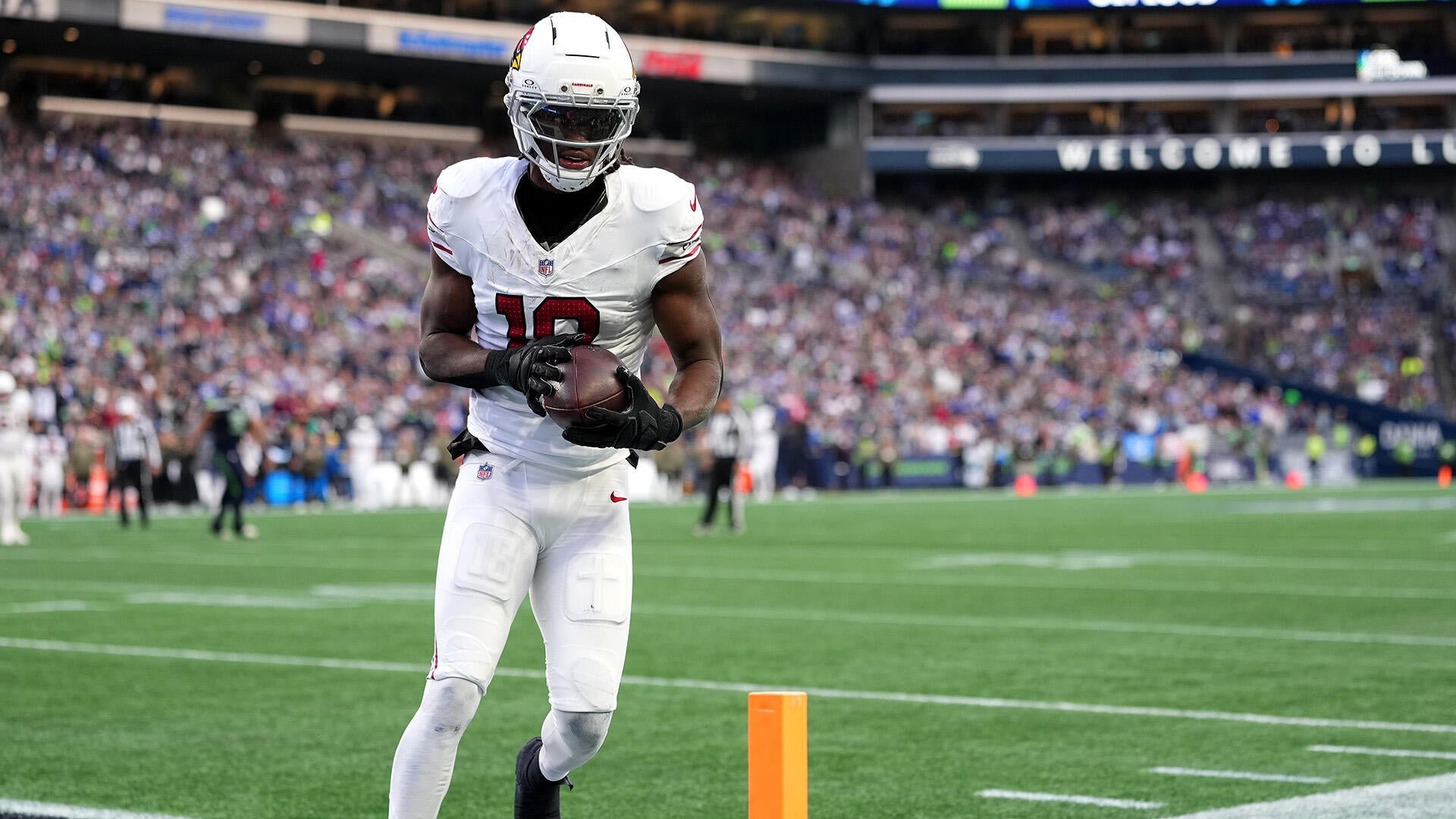
Tottenham Hotspur Stadium fell silent for approximately forty-five seconds before erupting. On 24 May 2026, with the Premier League's final-day survival permutations hanging over English football, Joao Palhinha rose to meet a set-piece delivery and directed his header past the goalkeeper. The goal, scored at 15:53 UTC according to live reporting from The Athletic, handed Tottenham a 1-0 lead against an opponent whose identity the wire reports did not specify. It was the kind of moment that seasons are remembered by — not for its aesthetics, but for its consequences.
Tottenham entered the matchday occupying the eighteenth position in the Premier League table, level on points with the seventeenth-placed club but sitting inside the relegation zone on goal difference alone. A draw would not suffice. Only a win, combined with results elsewhere, would lift Ange Postecoglou's side out of the bottom three with mathematical certainty. Palhinha's strike changed that calculus. Within minutes of the goal, Tottenham moved to seventeenth place on goal difference, then — as second-half events unfolded across the division — climbed to sixteenth, then fifteenth. By the time the stadium clock ticked past the ninety-minute mark, Spurs were four points clear of the eighteenth-placed team, a gap that cannot be closed in a single fixture.
A Mid-season Signing Who Delivers When It Counts
Palhinha arrived at Tottenham from Fulham during the January 2026 transfer window, a £45 million acquisition intended to address a chronic fragility in the club's defensive midfield. The Portuguese international had spent three seasons at Craven Cottage establishing himself as one of the Premier League's most effective ball-winning midfielders, leading the division in tackles and interceptions during the 2023-24 campaign. His transition to north London was not seamless. By mid-February, Palhinha had accumulated five yellow cards and one red, a disciplinary record that suggested a player still calibrating to a new defensive system. His attacking output had been modest: two assists in twelve Premier League appearances prior to the survival run-in.
The goal against whatever opponent Tottenham faced on 24 May was his third in a Tottenham shirt. More significantly, it arrived in the match that mattered most. The Athletic's live thread captured the stadium's reaction in real time, describing scenes of unrestrained celebration as the north London crowd processed what the goal meant. Palhinha, thirty years old and in the prime of a career spent largely outside the Champions League orbit, had delivered the defining moment of his English tenure.
Postecoglou, who took charge of Tottenham in the summer of 2023 following his departure from Celtic, has faced persistent questions about his tactical philosophy in the English top flight. The Australian manager favours an aggressive, high-line pressing system that has produced entertaining football and conspicuous defensive vulnerabilities in equal measure. Tottenham conceded 72 goals in the 2024-25 season — the second-worst record in the division — and entered the final matchday of 2025-26 with the second-worst defensive record again. That Palhinha's goal could paper over those structural deficiencies for one afternoon was, in its own way, a vindication of the club's transfer-market reasoning.
What the Final-Day Mathematics Looked Like
The Premier League's relegation battle entering 24 May 2026 was unusually compressed. Five clubs — Tottenham, Wolverhampton Wanderers, Everton, Manchester United, and one other — entered the final round of fixtures separated by four points. Manchester United, despite their Champions League history and substantial wage bill, were not mathematically safe. Everton, who had occupied a relegation place for much of the spring, needed results to go their way in multiple fixtures simultaneously. Tottenham's position was the most precarious: they sat outside the safety line going into the last day, dependent on their own result and the outcomes of at least two other matches.
The four-point cushion Palhinha's goal ultimately established meant that Tottenham could afford to lose their final fixture and still remain above the relegation line, provided the clubs below them failed to overturn the goal-difference gap. In practical terms, the strike had purchased positional security for a club whose season had oscillated between mid-table competence and bottom-three panic since November. It did not eliminate the structural problems that had placed Tottenham in that position — a threadbare squad assembled under two managers in three years, a wage structure that incentivised experienced players to seek exits, a defensive record that invited opponents to target the back four — but it deferred them by twelve months.
The Broader Implications for English Football's Middle Tier
Tottenham's survival scramble exposed a pattern that Premier League watchers have noted with increasing alarm over the past five seasons: the contraction of the division's middle tier. The era in which clubs like Tottenham, Manchester United, Arsenal, and Liverpool occupied predictable positions in the upper half has given way to a more turbulent landscape. Aston Villa's Champions League qualification in 2023-24, Manchester United's flirtation with the bottom three in 2025-26, Tottenham's last-day anxiety — these are not anomalies. They reflect a financial and managerial rebalancing in which broadcast revenue alone no longer guarantees mid-table stability.
The Premier League's parachute payment structure, designed to cushion clubs falling into the Championship, has paradoxically incentivised short-term survival over long-term squad building. Clubs like Tottenham, operating without the financial guarantees of the top six, have little margin for managerial experimentation. Postecoglou's high-risk approach, which would require two or three transfer windows to implement fully, sat uncomfortably against the imperatives of a season spiralling toward the bottom three. That he survived the season — and that Palhinha's goal gave him the breathing room to plan for 2026-27 — is a consequence of the Portuguese midfielder's composure under pressure and a final-day fixture list that broke in Tottenham's favour.
What Remains Unresolved
Several questions the wire reports did not resolve. The identity of Tottenham's opponent on 24 May was not specified in the available sources, nor was the outcome of the match beyond Palhinha's goal. Whether Tottenham held their lead through the full ninety minutes, and whether the clubs immediately below them won or lost their own fixtures, was not confirmed in the thread context available to this publication. The Athletic's reporting captured a singular moment of high drama; the full arithmetic of the final-day survival picture will require confirmation from the Premier League's official match report.
The sources also did not address the future of Postecoglou or Palhinha beyond 24 May. Reports entering the final weeks of the season had linked the manager with a move to a Bundesliga club; whether the survival outcome changes his calculus is unknown at time of publication. Palhinha, whose contract at Tottenham runs until 2029, is expected to remain regardless of managerial uncertainty.
Tottenham, for one afternoon, are safe. The structural questions — about squad depth, defensive solidity, and the club's ability to attract elite talent while operating outside European competition — will return in August.
This publication covered the Palhinha goal as a survival milestone rather than a celebration of Tottenham's season. The wire framing leaned toward the dramatic; the structural context — a club that nearly fell, and why — warranted equal attention.
Wire provenance
This editorial synthesis draws on the following public wire/social posts:
- https://t.me/theathletic/
- https://t.me/theathletic/