Trump's $149 Billion Refund: The Mathematics of American Sovereignty
The president frames foreign aid remittances as a refund owed to American taxpayers, but the figure conceals a deeper conversation about dollar hegemony, creditor relationships, and who ultimately underwrites the global financial system.
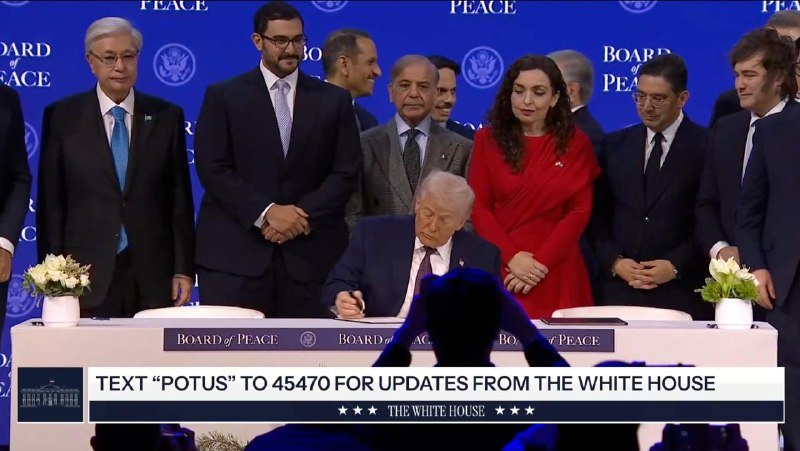
The president told supporters on a recent stage that the United States had been wiring $149 billion a year to foreign governments and multilateral institutions — money, in his framing, going to people who "hate us" and to countries that had "ripped us off for years." The figure is specific. The framing is coherent. And it obscures something important about how the world's reserve currency actually works.
The $149 billion figure the president cited refers to what the United States disburses as official development assistance, membership dues to international bodies, and bilateral security aid — the accounting category Washington labels as "foreign aid" in its budget justifications. The number is real, documented in Congressional Research Service analyses and Treasury outlay tables. But treating it as a simple outbound transfer misses the structural role the dollar plays in global finance, and who holds the leverage when that money moves.
What the $149 Billion Actually Represents
The figure encompasses several distinct budget lines. Bilateral economic assistance funds development programmes and governance reform in partner countries. Contributions to the United Nations, World Bank, and International Monetary Fund support multilateral operations the United States helps design. Security assistance — much of it flowing to allies whose defence capabilities the Pentagon relies upon — appears in the same accounting column as food aid and disaster relief.
By mixing these categories into a single, emotionally resonant number, the administration sidesteps a distinction that budget analysts have long flagged: not all foreign aid is charity, and not all of it returns a financial cost to American taxpayers. Some of those outflows are purchasing agreements for American defence manufacturers. Some fund intelligence-sharing arrangements with partners who provide base access. Some underwrite institutions where Washington holds veto power over major decisions.
The administration has not released a line-item breakdown of how it arrived at the $149 billion figure, and the sources reviewed do not include the underlying calculation methodology.
The Debt Counterweight
Simultaneously surfacing in the data: the United States national debt surpassed $39 trillion in mid-March 2026, according to Treasury data cited by financial tracking outlets. The debt dipped below that threshold for several weeks before climbing back to that level. That figure — $39 trillion — dwarfs the $149 billion in foreign disbursements by a factor of more than 260 to one.
The debt portfolio is held by a mix of domestic institutions, foreign central banks, and international investors. China, Japan, and a consortium of European sovereign wealth funds remain the largest foreign holders. Those holdings are not grants. They are loans, denominated in dollars, that the United States services with interest payments that flow back into the global financial system.
The foreign aid disbursements the president called a "refund" are dwarfed by the interest the United States pays annually to foreign creditors. According to Congressional Budget Office projections, net interest payments on the national debt will exceed $1 trillion annually by 2027, the majority of which flows to bondholders — many of them foreign — rather than back into domestic programmes.
Dollar Hegemony and Its Discontents
The deeper structural question the framing avoids: why do foreign governments accept dollars in the first place, and what does the United States receive in return beyond the invoice?
The dollar's reserve currency status means that global trade — in oil, in commodities, in manufactured goods priced in dollars — generates persistent demand for American currency and American debt instruments. Foreign central banks hold dollars because dollar-denominated assets are liquid, fungible, and backed by the world's deepest capital markets. That demand allows the United States to borrow at lower interest rates than peer economies and to run current account deficits that would trigger currency crises if attempted by nations without reserve status.
The $149 billion in foreign disbursements is, in structural terms, a relatively cheap price for maintaining a currency system that allows the United States to finance its debt at favourable rates and to impose financial sanctions with global reach. When Washington freezes Iranian central bank assets or excludes Russian banks from SWIFT, it is exercising power derived from the dollar's centrality — not from the size of its aid budget.
The administration appears to be running a different calculation: one that treats aid outflows as losses rather than as infrastructure maintenance for a system that benefits American borrowers and investors. Whether that calculation is sound depends on what you believe the $149 billion is purchasing — and what you believe would be lost if the arrangement changed.
Brazil's Debt Crisis as Counterpoint
The administration is not alone in grappling with household and sovereign debt at a scale that constrains policy choices. Brazil is currently navigating a household debt crisis that has left over 82 million people behind on payments — a figure that represents nearly half the adult population, according to regional financial reporting. High interest rates have compounded the problem, leaving borrowers unable to service obligations while central banks in emerging markets face a trilemma between supporting growth, controlling inflation, and managing debt service costs.
The Brazilian example illustrates a tension that cuts both ways in the global monetary conversation: countries with limited reserve currency advantages face sharp constraints that the United States does not. When Brazil's central bank raises rates to defend its currency, it does so knowing that dollar-denominated debt does not exist on its balance sheet in the way it does for American households and the federal government. The United States borrows in its own currency. Brazil borrows, ultimately, in dollars — and that asymmetry shapes every policy decision Brasília makes.
The Stakes Going Forward
The administration's framing treats foreign aid as a wasteful outflow to be eliminated. The structural reality is more complex: some of that money underwrites alliance infrastructure that the Pentagon values, some funds institutions where Washington holds decision-making power, and some represents the operating cost of a currency system that allows the United States to borrow cheaply and to enforce financial sanctions globally.
What the $149 billion does not represent is a net loss to the American treasury in any straightforward sense. The question of whether the arrangement delivers value to American workers, taxpayers, and strategic interests is legitimate — and it is the right question to ask. But it is not answered by reducing a multi-line budget to a single emotionally resonant number and calling it a refund.
The $39 trillion debt, by contrast, represents real obligations that the United States must service regardless of how foreign aid is characterised. The interest payments on that debt — flowing to a mix of domestic and foreign bondholders — constitute a more significant transfer than the foreign assistance budget, and they are less politically salient because they are dispersed, institutional, and lack the human-interest framing that makes aid spending a recurrent target.
The administration has framed the choice as one between sovereign independence and subsidised ingratitude. The data suggests the choice is more accurately between two different kinds of international financial engagement — and the costs and benefits of each require more than a $149 billion headline to resolve.
This desk noted that while the unusualwhales.com wire highlighted the $149 billion figure and the debt threshold independently, the connection between foreign aid disbursements and the cost of dollar hegemony — rather than simply its benefit — was underplayed in the wire framing. The Brazil debt crisis reporting, by contrast, focused on domestic household stress without connecting it to the structural constraints that emerge-market economies face under a dollar-denominated global financial architecture.