Trump's Hormuz Gambit: Conceding the World's Most Strategic Waterway to Cut a Deal with Tehran
A leaked bilateral memorandum offers Iran sanctions relief and an end to the port blockade — but Tehran is already making clear that Hormuz remains its leverage, not America's.
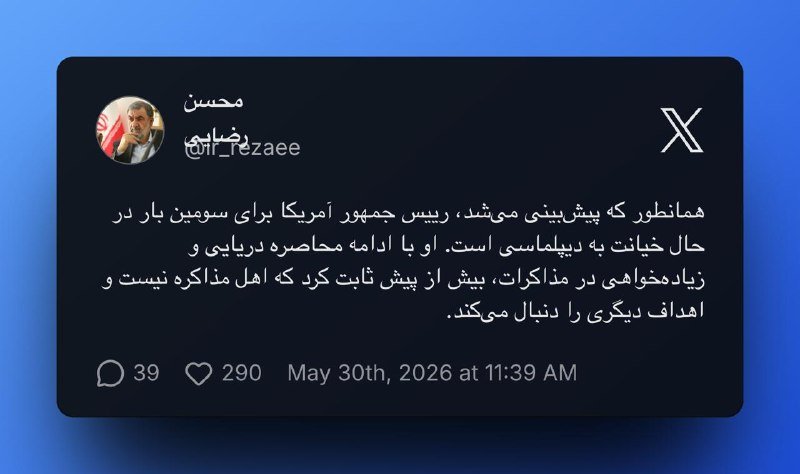
The Trump administration wants a deal with Iran badly enough to hand Tehran something no American president has ever formally conceded: acknowledgment that the Islamic Republic controls the Strait of Hormuz. That is the structural reality buried inside the bilateral memorandum Axios reported on 24 May 2026 — a draft agreement that lifts the port blockade, eases sanctions, and extends the ceasefire for sixty days while nuclear talks continue.
The terms sound like a win for diplomacy. Read them alongside what Iranian state media is simultaneously reporting, and they look like something else entirely. Tasnim, the semi-official Iranian wire, carried three reports in the space of an hour on the morning of 24 May: Iran would assert control over the Strait of Hormuz "in various ways"; the situation in the waterway would "not return to what it was" if the memorandum were agreed; and a thirty-day window would govern the Hormuz-related measures and the end of the blockade. Thirty days. While the nuclear talks get sixty.
The sequencing is not accidental. Iran receives immediate economic relief — port access restored, sanctions wound loosened — before any binding nuclear commitment is on the table. That is leverage converted into cash, not concessions. And the Hormuz provision is the load-bearing clause: a formal end to the American blockade that the US Navy has enforced since 2019, paired with language that allows Tehran to frame continued "control" as consistent with the agreement. The strait does not get handed back. It gets re-characterized.
What the Memorandum Actually Says
The Axios draft, attributed to reporting by Barak Ravid, outlines a straightforward if unusual trade: ceasefire extension for sixty days, American removal of the port blockade, and sanctions easing in exchange for Iranian participation in nuclear talks that would run the same duration. The blockade in question is the naval enforcement mechanism — not merely the sanctions regime — that has physically restricted Iranian port access. Lifting it is a concession of operational reach, not just economic policy.
The Iranian side, per Tasnim, is simultaneously communicating that Hormuz is not a negotiable element of any deal — it is the context in which the deal happens. The thirty-day provision governing Hormuz-related measures suggests implementation steps that would formalize some new status quo, not a restoration of pre-blockade conditions. This is Tehran speaking plainly about what it intends.
The Hormuz Leverage That Won't Be Surrendered
Hormuz is not a metaphor. The strait handles roughly twenty percent of global oil shipments and is the sole navigable exit for Gulf crude that cannot be fully rerouted via pipeline. Every major power with skin in global energy markets has an interest in its openness. Iran knows this. It has built a military and strategic posture around the waterway for four decades — missiles positioned on the northern shore, minesweeping and fast-attack craft fleets, and the periodic exercises and incidents that remind the world what closing it would mean.
That posture is now being parlayed into diplomatic legitimacy. The memorandum does not restore the old rules; it codifies a new arrangement in which Iran's "control" of Hormuz is implicitly acknowledged, and the American role shifts from blockade-enforcer to co-manager of a waterway Tehran considers its sovereign interest. For a nation that has spent years under maximum pressure, that is a significant structural shift — achieved without firing a shot, without conceding the nuclear program, and without accepting international inspection regimes that previous deals required.
What the 60/30 Split Reveals About negotiating geometry
The sixty-day nuclear timeline is ambitious. Comprehensive nuclear agreements normally require months of technical inspection protocols, enrichment limits, and verification mechanisms. Sixty days is a political window, not a technical one. It suggests the administration wants something signed before that period closes — a visible diplomatic deliverable — rather than a durable arms-control architecture.
The thirty-day Hormuz timeline is shorter still, and it governs the most operationally sensitive element of the agreement. That compression raises a question the sources do not answer: what exactly is supposed to happen in those thirty days? Is the American blockade lifted and replaced by some other monitoring arrangement? Does Iran withdraw forces, or merely stop asserting new presence? The lack of specificity is where the risks concentrate.
The asymmetry — sixty days for nuclear talks, thirty days for Hormuz — also suggests Iran has negotiated itself a faster path to the economic benefits it most needs right now. Sanctions easing and port access come within a month. The harder questions about enrichment levels and monitoring are deferred to a process that could run the full sixty days without resolution. Tehran gets the oxygen now; Washington gets a promise to talk.
Who Wins, Who Loses, and on What Timeline
If the memorandum holds — and that is a significant conditional — Iran wins the near-term argument. Sanctions relief, restored trade routes, and a formal end to American naval enforcement give the Islamic Republic economic breathing room it has not had since 2018. Domestically, that quietens hardliners who have resisted any deal that looked like capitulation; Tehran can frame Hormuz as secured, sanctions as lifted, and nuclear talks as ongoing — not concluded.
The Gulf states — Saudi Arabia, the UAE, Bahrain — are the losers in plain sight. They have watched their primary security patron negotiate away the blockade without extracting binding commitments on Iran's missile program or regional proxy networks. The strait's new status, whatever form it takes, will be one in which Iranian naval posture is less constrained than it has been since 2019. Riyadh and Abu Dhabi will recalibrate accordingly, and that recalibration will reshape regional alliance geometry in ways the memorandum itself does not address.
The longer timeline — six months to a year — is where the nuclear question resurfaces. If talks collapse or stall, the ceasefire ends, sanctions snap back, and the blockade resumes in a context where Iranian forces have had thirty days to consolidate whatever Hormuz arrangement the agreement codified. The worst-case scenario for Washington is not a failed deal; it is a failed deal that leaves Iran with a strengthened position in the strait and a grievance narrative about American bad faith.
What Remains Uncertain
The sources do not confirm that Tehran has signed off on the draft as Axios reported it, nor do they establish whether the Trump administration has the congressional backing to lift the blockade absent new authorizing legislation. The domestic political calculus on both sides is underspecified: which constituencies are being managed, which are being traded away, and whether any final agreement will survive the inevitable criticism from hawks who will call it a capitulation. The nuclear talks themselves — their format, their participants, their scope — are named only as an intention, not a framework.
What is clear is that the Hormuz question is now a negotiating item, not a settled one. For decades, American policy treated the strait's openness as a given, enforced by presence. That era may be ending — not because Iran won a war, but because a White House eager for a diplomatic legacy decided Tehran's geographic leverage was the price of admission to a deal it wanted more than it wanted the old order preserved.
Whether that price was right depends entirely on what comes next. And right now, the sources offer only the draft, not the outcome.