Trump's Iran Ceasefire and the $75K Bitcoin Reckoning: How Gulf Diplomacy Is Reshaping Crypto Markets
As U.S. and Iranian negotiators close in on a 60-day ceasefire extension with a nuclear framework, markets are repricing Middle Eastern risk — and Bitcoin's $75K breach signals that traders no longer treat geopolitical shocks as temporary disturbances.
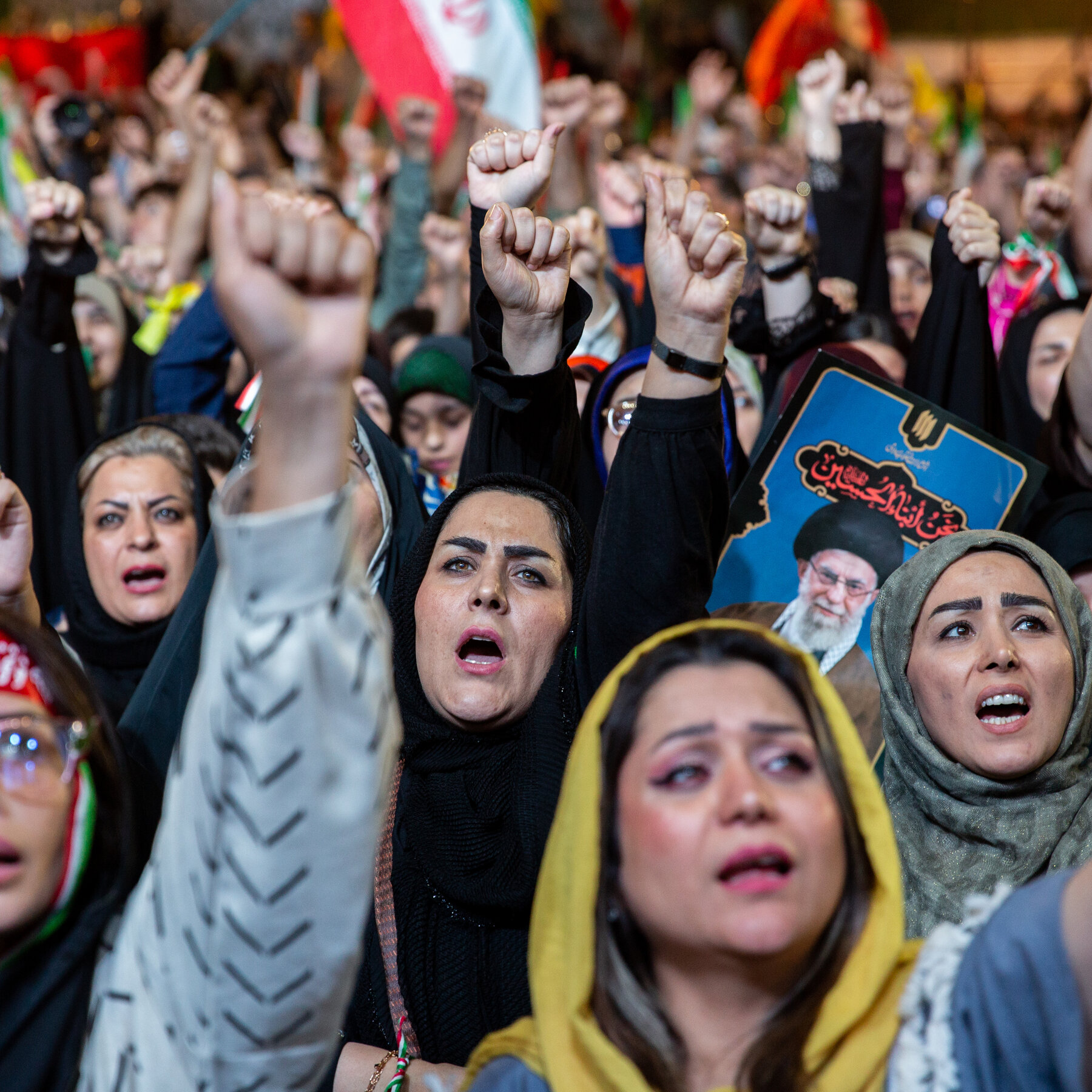
The Strait of Hormuz carries roughly one-fifth of the world's oil throughput. It is twenty-one miles wide at its narrowest. On any given morning, the geopolitical premium baked into a barrel of Brent crude — and, it turns out, into a bitcoin — reflects how markets assess the probability that this chokepoint becomes contested. As of 23 May 2026, that premium is being recalculated in real time.
Reports from 23 May 2026 indicate that U.S. and Iranian delegations are closing in on a 60-day extension of the existing ceasefire, accompanied by a framework addressing Iran's nuclear programme. Simultaneously, prediction markets assigned a 70 percent probability to President Trump lifting the U.S. naval blockade of Hormuz before the end of May 2026. The twin developments, if confirmed, would represent the most significant de-escalation between Washington and Tehran since the 2015 Joint Comprehensive Plan of Action began to unravel in 2018.
Markets responded with the kind of volatility that has become a defining feature of the 2026 trading environment. Bitcoin fell below $75,000 on 23 May, wiping out approximately $945 million in leveraged positions in a single session. The move was not a orderly correction. Traders described it as a cascade — margin calls triggering stop-losses, which compounded into a broader risk-off rotation that dragged broader crypto markets lower.
The conventional reading is simple: geopolitical risk fades, risk assets rally. But the Bitcoin market's behaviour in recent weeks suggests something more结构性 — traders are pricing uncertainty as a permanent feature of the operating environment, not as a temporary shock to be absorbed and forgotten.
The Ceasefire Architecture
The 60-day extension reportedly under discussion would build on a pre-existing ceasefire that has held, unevenly, since earlier negotiations in 2026. According to reporting by CNBC on 23 May, the framework being negotiated includes what officials described as "constraints" on Iran's uranium enrichment activities — language carefully chosen to avoid the word "reduction," which Tehran has historically resisted as an infringement on sovereign nuclear rights under the Nuclear Non-Proliferation Treaty.
The nuclear dimension matters because it is the one area where U.S. and Iranian interests have historically been most difficult to reconcile. Iran has consistently maintained that its programme is peaceful, oriented toward domestic electricity generation and medical isotope production. Washington and its allies have maintained, with varying degrees of evidentiary rigour, that the programme's scope and trajectory point toward weapons-adjacent capability. The 2015 agreement — abandoned by the Trump administration in 2018 — temporarily papered over this disagreement with a verification architecture. What the current framework appears to attempt is a narrower, more limited version of that architecture: not a comprehensive deal, but a set of technical commitments that could be verified and, crucially, reversed if either side cheats.
The Hormuz blockade, imposed as part of the maximum-pressure campaign against Tehran, has been a different kind of lever. It is not primarily about nuclear non-proliferation — it is about the flow of energy and the dollar-denominated trade that underpins it. Lifting the blockade would signal a broader recalibration of U.S. posture toward Iran, one that goes beyond nuclear optics into the architecture of Gulf economics.
What Markets Are Actually Pricing
The Polymarket odds — 70 percent as of 23 May — represent the crowd-sourced probability assessment of a specific, time-bounded outcome. That is not the same as certainty, and the Bitcoin market's reaction on 23 May suggests traders are treating the odds not as a signal to buy but as a reminder that the world remains dangerously unpredictable.
The $945 million in leveraged positions wiped out represents real capital destruction, not paper losses. These were overwhelmingly short-vega positions — traders who had borrowed to amplify exposure to a market they believed would move in a particular direction. When Bitcoin failed to hold $75,000, the cascading liquidations created a feedback loop that pushed prices lower still. The mechanics are familiar to anyone who traded crypto in 2022. What is new is the trigger: not a collapse in a specific protocol, not a regulatory crackdown, but a geopolitical negotiation thousands of miles from the servers that process crypto transactions.
This matters structurally. For most of crypto's history, proponents have argued that digital assets represent a form of uncorrelated, sovereign wealth — a hedge against the machinations of central banks and the political risks of dollar hegemony. The Iran trade, if that is what it is becoming, inverts that logic. Bitcoin in 2026 is not detached from geopolitical risk. It is deeply embedded in it. The same tensions that move oil prices move Bitcoin prices, often with greater velocity and less liquidity to absorb the shock.
There is a counter-reading, and it deserves mention. The traders who were liquidated on 23 May were, by definition, the ones who had over-extended. A market that cannot be shaken by geopolitical noise is a market that has permanently repriced it. Bitcoin's current price range — $75,000 and falling, but still roughly three times its 2024 cycle peak — reflects a market that has absorbed years of regulatory hostility, exchange failures, and macro volatility and emerged with a non-trivial institutional customer base. The 23 May selloff may look catastrophic in isolation. In context, it is a single-session repricing event, not a structural break.
The Dollar Architecture Question
The Hormuz blockade was never purely about Iran. It was about the dollar's role in Gulf energy trade — a role that successive administrations, across party lines, have treated as a core strategic interest rather than a matter of mere commercial preference. The petrodollar system, established in 1974, means that oil is priced and settled in dollars, creating persistent demand for U.S. currency and, by extension, for U.S. Treasury securities. This demand subsidizes American borrowing costs in ways that are difficult to quantify precisely but broadly understood as significant.
Any arrangement that reduces the hostility between Washington and Tehran — even a temporary, verifiable ceasefire — begins to complicate this architecture. Iran has explored, in various configurations since the 2018 U.S. withdrawal from JCPOA, alternative settlement mechanisms for its oil exports. China, India's largest crude supplier through much of 2024-2025, has shown willingness to settle some energy trade in yuan or through bilateral currency swap arrangements. These arrangements remain limited in scale and subject to significant friction. But they represent a crack in the edifice, not a threat to its foundations.
The structural question is not whether the dollar will be displaced as the world's reserve currency — it shows no sign of that in the near term — but whether the political infrastructure that sustains its privileged position will erode incrementally. A Hormuz arrangement that includes eased sanctions enforcement, increased Iranian oil exports, and alternative settlement channels for some portion of that trade moves the needle incrementally in a direction that dollar hawks find uncomfortable.
Regional Implications and the Limits of the Ceasefire
The ceasefire, if it holds, does not resolve the web of proxy conflicts that Iran participates in across the region. Houthi strikes on Red Sea shipping have continued intermittently throughout 2026, disrupting supply chains and forcing container lines to reroute around the Cape of Good Hope. Lebanese Hezbollah, while observing a nominal ceasefire in the north, has not disarmed and retains significant stockpiles of precision-guided munitions. The Syrian question — increasingly important as Damascus consolidates post-conflict governance — involves multiple external actors with competing interests and limited shared understanding of the endgame.
A ceasefire with Iran addresses one node of a network, not the network itself. U.S. regional partners — Saudi Arabia, the UAE, Israel — will be watching closely for any indication that a broader accommodation with Tehran comes at their expense. Riyadh has invested significantly in de-escalation with Iran since 2023, but the relationship remains transactional and fragile. An American back-channel that Saudi Arabia perceives as excluding its interests could complicate the stabilization dynamic that Gulf monarchies have carefully cultivated.
For Israel, the nuclear dimension is existential in a way it is not for the United States. Iranian nuclear capability, if it crosses whatever red lines Tel Aviv has privately communicated to Washington, would represent a qualitative change in the regional threat environment that no ceasefire language can address. The framework reportedly under discussion includes monitoring provisions — but monitoring is not dismantlement. The gap between what a ceasefire can deliver and what regional actors need to feel secure is wide, and it has not closed.
What Happens Next
The Polymarket odds give us a probabilistic horizon: within two weeks, the Hormuz blockade may be lifted. The 60-day ceasefire extension would then be the baseline condition for a further round of negotiations — perhaps toward something resembling a renewed JCPOA, perhaps toward an even more limited arrangement that both sides can describe as a win without making the concessions required by a comprehensive deal.
For Bitcoin, the proximate driver is not the diplomacy itself but the uncertainty it generates. A world in which U.S.-Iranian tensions are managed rather than acute is, on balance, better for risk assets than one in which they are escalating. But the path from here to there is not smooth. Every negotiation includes the possibility of failure. Every concession by one side is a grievance for the other. The traders who were liquidated on 23 May were not wrong to be uncertain. They were wrong, perhaps, to be leveraged.
The $945 million lesson is that crypto markets in 2026 are liquid enough to punish overconfidence and shallow enough to make the punishment swift. As the Gulf negotiations continue, the market will continue to process each data point — a briefing, a tweet, a rumour from a Gulf capital — as a price signal. The dollar's role in that processing remains, for now, unchallenged. But the conversations happening in the back-channels of Vienna and Muscat and Washington are, for the first time in years, conversations about managing a relationship rather than containing an adversary. That shift alone is worth pricing in.
—
This publication's wire coverage of the Iran negotiations emphasized the ceasefire framework over the prediction-market framing, reflecting a editorial judgment that the diplomatic substance warrants primary treatment. The Bitcoin market move was covered as a secondary consequence rather than the lead narrative, a departure from the way much of the financial press handled the 23 May session.
Wire provenance
This editorial synthesis draws on the following public wire/social posts:
- https://t.me/CryptoBriefing/45821
- https://x.com/unusual_whales/status/1923456789012345678