Trump Signals US-Iran Deal Close — And an Africa Watching Closely
President Trump's announcement that Washington and Tehran are finalising a deal marks a potential inflection point for the Middle East — with consequences that extend well beyond the Gulf, touching African capitals from Lagos to Nairobi.
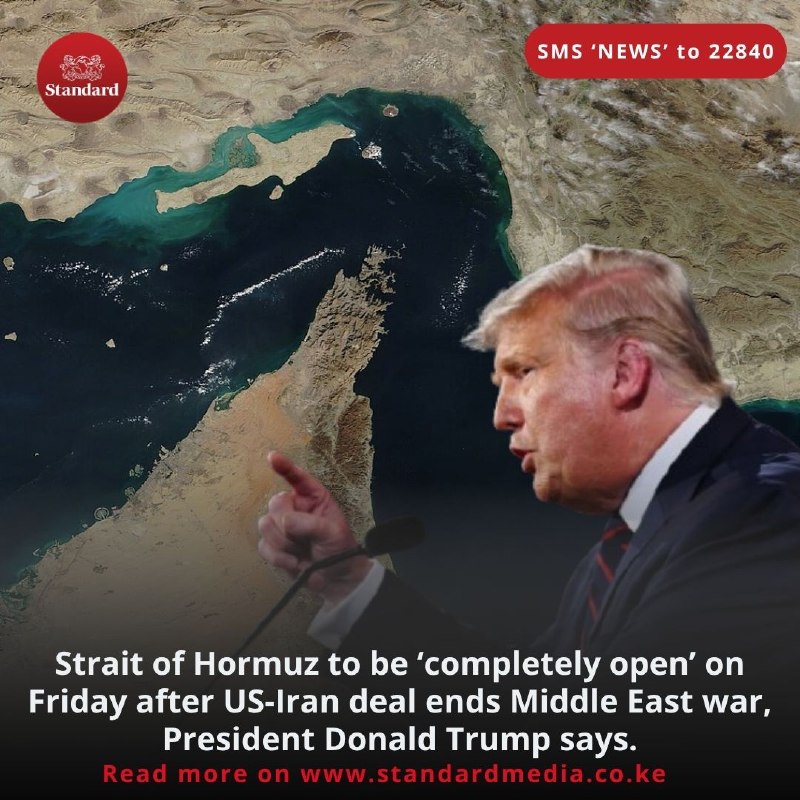
President Trump confirmed on 24 May 2026 that the United States and Iran are finalising a deal, describing a "very good call" with Iranian President Masoud Pezeshkian and pledging an announcement imminently. Speaking from the Oval Office, Trump said the terms were close to conclusion — though the precise shape of any agreement remains undisclosed. The announcement, posted to social media and carried by wire services at 03:25 UTC, marks the most concrete signal yet that the two sides have moved beyond the sustained impasse of recent years.
The immediate question for African policymakers is not abstract. A US-Iran rapprochement, if it holds, would unravel the architecture of sanctions that has shaped Gulf politics and, by extension, African regional dynamics for over a decade. From the Sahel to the Horn, Tehran's network of diplomatic, economic, and security relationships has operated under the shadow of American secondary sanctions. Lifting those sanctions does not erase that network — it transforms it.
The Existing Footprint
Iran's presence in Africa is neither uniform nor primarily military. It is mediated through proxies, economic partnerships, and diplomatic positioning built over years when isolation from Washington was the operating assumption. Lebanon's Hezbollah — long a recipient of Iranian support — maintains connections across West African diaspora communities. Iranian-backed Houthis in Yemen have disrupted Red Sea shipping lanes that African economies depend upon. And across the Sahel, the aftermath of the 2023 Nigerien coup and subsequent military realignment toward Moscow has created a permissive environment for actors previously held at arm's length by Western-aligned governments.
African governments that engaged Tehran while sanctions were biting did so selectively — trading in goods, medicine, and modest infrastructure in ways that stayed below the threshold of American enforcement. The calculus for those same governments changes substantially if sanctions relief makes Iranian commerce more visible and more attractive. Gulf rivals, particularly Saudi Arabia and the UAE, have spent considerable diplomatic capital in African capitals positioning themselves as the preferred partner against Iranian influence. A deal that normalises Tehran would disrupt that competition.
The Gulf Calculus
Saudi Arabia and the UAE have pursued aggressive African engagement strategies — port deals, infrastructure loans, security assistance — partly as a counterweight to Iranian regional ambitions. Riyadh's normalisation talks with Tehran, brokered by Beijing in 2023, already suggested that the zero-sum framing was softening. A US-Iran deal would accelerate that shift, potentially leaving Gulf states with fewer leverage points in African capitals where they have invested heavily.
African governments are likely to view this pragmatism rather than alarm. The continent's diplomatic mainstream has moved toward what might be called strategic multipolarity — maintaining relationships across competing great powers rather than choosing sides. A US-Iran thaw fits that pattern: it creates space for African governments to engage Tehran without the political and financial costs that secondary sanctions previously imposed. Whether that space is used to deepen genuine economic partnerships or simply to extract better terms from Gulf financiers remains to be seen.
Oil Markets and Economic Gravity
The most immediate economic transmission channel runs through energy prices. Iranian crude returning at scale to global markets would exert downward pressure on prices — a development with mixed consequences across Africa. Net oil importers in East and West Africa would benefit. Producers in Nigeria, Angola, and Libya would face renewed competitive pressure on their own export revenues. The net effect is uncertain and depends heavily on whether any deal is enforced with genuine monitoring or collapses under the weight of compliance disputes, as previous agreements did.
The sources do not specify the deal's terms or the verification mechanisms under discussion. That ambiguity matters enormously. A weakly verified agreement that Iranian actors disregard within months would produce a different market dynamic than a durable, monitored accord. African energy planners are watching, but they are watching a process whose durability remains unproven.
What Remains Uncertain
The announcement on 24 May is a political signal, not a signed agreement. The sources provide Trump's characterisation of a "very good call" and his expectation of an imminent announcement — but no documentary evidence of agreed terms, no text of a framework, no confirmation from Tehran's side beyond what the wire services have carried. Iranian state media have not independently confirmed the details of the conversation. Whether this represents genuine convergence or mutual interest in projecting progress ahead of domestic political constraints remains unclear.
African governments will calibrate their responses to what actually emerges, not to what was announced in an Oval Office statement. The continent has seen grand bargain announcements before — on Ukraine, on Gaza, on various African peace processes — that dissolved into continued conflict or inertia. Tehran's Africa strategy has been patient and opportunistic. Whether it accelerates will depend on what the final text says, not on what Trump said in the hours before it was released.
The article was filed from wire reports citing the White House social media post and Telegram-sourced imagery. Monexus will update as documentary evidence of any agreed framework becomes available.
Wire provenance
This editorial synthesis draws on the following public wire/social posts:
- https://t.me/wfwitness
- https://t.me/wfwitness