Trump Says Iran Deal Is Nearly Done. Tehran Says He's Lying.
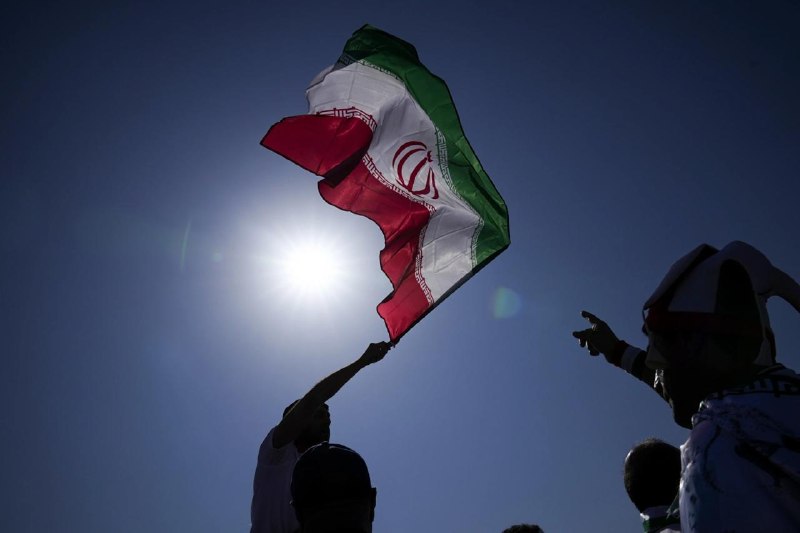
Three days after Iran reportedly sent a new proposal to end the conflict and reopen the Strait of Hormuz, President Donald Trump told reporters on May 23, 2026 that a deal was «largely negotiated» and that the strait's reopening was part of the draft framework. By the following morning, Iranian state media had published a blunt rejection: Trump's claims were «incomplete and inconsistent with reality.» The whiplash between those two statements — separated by less than 24 hours — was not a diplomatic misunderstanding. It was a structural artefact of how great powers use press management to signal resolve, test appetite for concessions, and keep adversaries off-balance.
The Polymarket odds told a more cautious story. As of May 23, 2026, betting markets placed a 10% probability on Trump agreeing to let Iran charge fees for tanker transit through Hormuz by June 30, and just 5% by the end of May. Those numbers suggest that traders assigning real probability to a comprehensive Hormuz deal understood something the President's public framing obscured: any agreement that explicitly authorises fee collection would represent a direct challenge to the free-transit norms that have underpinned US naval dominance in the Persian Gulf since the 1980s. That is not a concession a White House hands out casually, regardless of how encouraging the surrounding rhetoric sounds.
The Announcement and the Denial
Trump's comments came during a photo opportunity with Indian Prime Minister Narendra Modi at the White House, according to reporting carried by the Indian Express on May 24, 2026. «Final details are being discussed,» the President said, describing a draft agreement that included the reopening of the Strait of Hormuz — the 21-mile channel through which roughly a fifth of the world's oil shipments pass. The phrasing «largely negotiated» carried a deliberate ambiguity: it could mean the outlines were settled and fine-tuning remained, or it could mean the two sides had talked extensively without agreeing on anything concrete. In White House communications, such ambiguity is rarely accidental.
The response from Tehran arrived within hours, carried by Iranian state media outlets including Mehr News and Tasnim. Iran's Foreign Ministry described Trump's characterisation as incomplete and inconsistent with reality, declining to elaborate on which specific elements it disputed. That restraint was itself a message: a detailed point-by-point rebuttal would have conceded that negotiations were taking place at all, lending credibility to a process Tehran may prefer to leave formally unacknowledged until a deal is signed or the talks collapse.
Oil markets reacted sharply to the Polymarket report of a new Iranian proposal on May 23. Crude fell as traders priced in the possibility of restored tanker traffic through Hormuz, which Iranian forces had disrupted as part of escalating pressure on the United States and its allies. A Hormuz reopening would remove a significant geopolitical risk premium that has supported elevated oil prices throughout 2026. Markets moved before Trump's announcement, suggesting that the initial proposal had already circulated in trading desks' intelligence networks.
What Tehran Is Actually Saying No To
The Polymarket odds on Hormuz fee authorisation deserve closer examination. A 10% chance of Trump agreeing to let Iran charge fees by June 30, and a 5% chance by the end of May, reflects genuine uncertainty about whether the Administration has the political capital — and the internal consensus — to accept a arrangement that many in Washington would frame as surrendering a core tenet of US maritime hegemony. The free-transit principle for international straits is not a courtesy; it is the legal and operational foundation on which US Fifth Fleet operations in the Gulf rest. Accepting Iranian fee-collection, even in a restricted form, would require a public explanation that several senior US national security officials have reportedly resisted.
Tehran's rejection of Trump's framing does not necessarily mean negotiations have broken down. It may mean that the Iranians are signalling a preference for a quieter, more technically negotiated process — one that does not lend itself to presidential press releases until the ink is dry. Iranian officials have consistently maintained a distinction between exploratory talks and formal commitments, and a public claim of imminent agreement threatens to foreclose negotiating room that Tehran values.
There is a second reading available. Iran may be genuinely far from a deal and using the Polymarket-briefed proposal as a pressure tactic, a way to test whether the Trump Administration would publicly accept a fee-collection framework that would be politically toxic in a US election year. The White House's willingness to describe the draft as «largely negotiated» may itself be a counter-signal — an attempt to lock Iran into a public position before the details can be worked out in private.
The Structural Stakes of Hormuz
The Strait of Hormuz is not simply a chokepoint. It is a node in a global energy architecture whose stability depends on the credible threat of US naval enforcement. For four decades, that credibility has been the mechanism that kept the strait open without requiring formal bilateral agreements or legal frameworks. Iran has repeatedly tested that architecture — with mine-laying exercises, fast-boat provocations, and the seizure of tankers — to demonstrate that its geography gives it leverage the US military cannot fully neutralise.
What has changed in 2026 is the geopolitical context surrounding those tests. A United States simultaneously managing the Russia-Ukraine conflict, renewed strategic competition with China, and domestic political constraints on defence spending has weaker capacity for a simultaneous Hormuz enforcement mission. That is not a secret in Tehran. Iranian strategists have calculated that the cost of keeping the strait open through coercive presence is rising, which gives them incentive to negotiate on their own terms — and reason to reject any framing that makes them look like they are receiving a concession from Washington rather than extracting one.
The Polymarket odds on fee authorisation also reflect the China dimension. Beijing has significant interests in Hormuz transit. Chinese oil imports from the Gulf have grown steadily, and any arrangement that formalises fee collection or legitimises Iranian control over aspects of the strait's operations would require Chinese acceptance to be durable. It is notable that the reported Iranian proposal circulated at a moment when US-China trade tensions were again elevated. A Hormuz deal that required Chinese buy-in could become an unexpected diplomatic channel between Washington and Beijing — or it could become a new source of friction if the US is seen to have negotiated a security arrangement that bypasses its Gulf partners.
The Regional Calculus
Saudi Arabia, the UAE, and Bahrain have watched the Hormuz negotiations with acute interest and visible anxiety. All three Gulf states have invested in alternative export infrastructure — pipeline networks, port expansions, refining complexes — precisely because the strait's vulnerability has long been a structural risk for the region's energy revenue. A deal that ends Iranian disruption may look like good news for Riyadh and Abu Dhabi on the surface, but any agreement that grants Tehran a formalised role in strait governance would raise questions about whether the US is preparing to reduce its own security commitment to Gulf partners in exchange for a bilateral understanding with Iran.
Israel has been largely silent on the reported negotiations, which itself constitutes a data point. Tel Aviv's public silence on US-Iran diplomatic tracks typically reflects either active coordination with Washington or deliberate restraint while the process remains in an early phase. The absence of Israeli commentary during the May 23-24 announcement window suggests that either the deal is not close enough to trigger a response, or that back-channel communication has already prepared the ground.
What Happens Next
The Polymarket odds imply that the most likely near-term outcome is no agreement by the end of May — and perhaps not by the end of June either. The gap between Trump's public confidence and Tehran's public rejection suggests that the negotiating process is in a phase where both sides are using the press to communicate internally rather than to announce externally. That is normal for high-stakes diplomacy, but it makes the public record difficult to read.
If a deal does materialise, the immediate effect on oil markets would be a significant downside correction in crude prices as the Hormuz risk premium deflates. The secondary effects — on US-Gulf alliance dynamics, on the broader US-China strategic competition, and on the internal politics of all three governments involved — would unfold over months and years. The strait will not stay closed forever. The question is whether the eventual arrangement reflects a genuine balance of interests or a momentary tactical accommodation that collapses under the weight of its own contradictions.
This publication covered the Trump Administration's announcement and the Iranian denial as a diplomatic signalling exchange, drawing on wire reporting and Polymarket market data rather than treating either government's public framing as a reliable guide to the negotiating substance. Readers tracking this developing story should weight the Polymarket probability data alongside official statements, recognising that both are instruments of communication rather than transparent records.