Trump Claims US-Iran Deal Largely Negotiated as Tehran Pushes Back on Exemption Reports
The Trump administration and Tehran are sending conflicting signals about the state of nuclear negotiations, with the President claiming significant progress while Iranian officials reject reports of preferential terms.
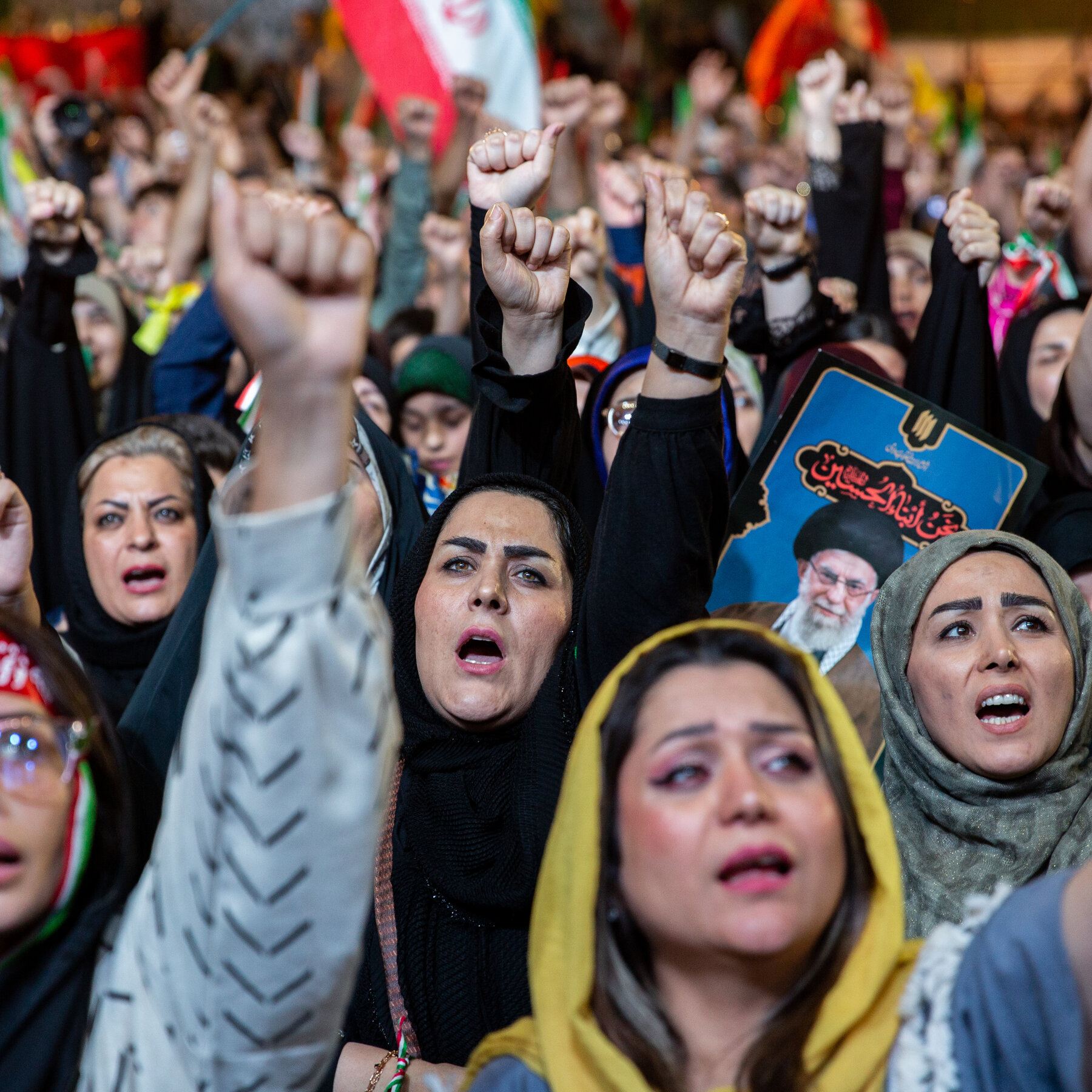
The Trump administration and the Iranian government ended the past week sending markedly different signals about the state of nuclear negotiations that both sides have described as the most consequential in years. On Saturday, the President told reporters aboard Air Force One that an agreement to end the ongoing regional hostilities was "largely negotiated," while Secretary of State Marco Rubio stated separately that "significant progress" had been achieved. Iranian officials, however, moved quickly to rebut published reports that the framework under discussion would grant Tehran exemption terms they had not agreed to.
The divergence in public messaging underscores the delicate political calculus on both sides. For Washington, portraying progress serves domestic and regional audiences who want an exit from sustained tension. For Tehran, any perception that it has conceded substantive ground in exchange for sanctions relief invites domestic political backlash from hardliners who have opposed engagement with the United States for decades. Iranian state-linked media on Saturday rejected what it called "hellish" characterizations of the emerging framework, a phrase that signals the level of sensitivity surrounding the terms.
The Negotiating Position
The talks, which resumed in earnest after a months-long pause, have centered on limitations to Iran's uranium enrichment programme in exchange for the phased lifting of economic sanctions that have strangled the country's oil exports and banking sector since 2018. The core sticking point has consistently been the scope and pace of sanctions removal versus the extent of Iran's nuclear concessions. Previous agreements, most notably the 2015 Joint Comprehensive Plan of Action, collapsed partly because neither side trusted the other's implementation timeline.
What appears different this time, according to officials familiar with the negotiations, is the degree to which both governments have accepted a sequencing framework that front-loads some sanctions relief while Iran freezes enrichment at specific thresholds. The arrangement reportedly includes monitoring provisions administered by the International Atomic Energy Agency, with the agency granted extended access to declared sites. Whether this satisfies the hardliners in Tehran's political establishment remains genuinely uncertain.
Rubio, speaking to reporters on Saturday, described the talks as having moved beyond preliminary stages. The Secretary of State did not detail specific provisions but suggested that the remaining gaps were narrowing. "Significant progress" is a phrase calibrated to manage expectations while signalling movement. Whether it reflects a substantive deal or optimistic framing depends on what the final text, if there is one, actually contains.
Tehran's Response and the Alliance Question
Iranian officials have been consistent in rejecting published characterizations of the talks as settled or near-final. The response to reports of exemption terms — provisions that would allegedly allow certain Iranian activities under a separate track — was particularly sharp. "Hellish response" appeared in Iranian state-linked reporting as a direct dismissal of what Tehran views as fabricated details designed to either pressure its negotiating team or preemptively shape the deal's terms.
The timing of this pushback coincides with a broader question about the durability of Iran's strategic partnerships. Reporting from Al Jazeera English on Saturday examined whether the Russia-Iran alliance, which deepened significantly following Western sanctions over the Ukraine invasion, was beginning to show fractures. The headline — "They don't like each other" — reflects a growing body of analysis suggesting that Moscow's interests in a deal with Washington may not align with Tehran's preference for sustained confrontation. Russia has its own calculations around energy markets, its relationship with Saudi Arabia, and its desire to avoid being permanently bracketed as a junior partner to Beijing's more cautious approach to the region.
The friction, if real, would have consequences for both governments. Iran has relied on Russia's diplomatic cover in international forums and on the supply of advanced military technology. Russia, for its part, has used Iran as a diplomatic hedge and a signal to the Gulf states that alternatives to Western alignment exist. If that architecture is weakening, the regional balance shifts.
Structural Stakes
The negotiations sit inside a much larger pattern. The Trump administration came into office with stated ambitions to engineer a grand bargain across the Middle East — resolving the Iran question, normalising Saudi-Israeli relations, and consolidating an anti-Iranian security architecture across the Gulf. That ambition has faced obstacles on multiple fronts simultaneously, and the Iran track has been both more and less central than initially advertised.
More central because an Iran with a deliverable nuclear capability would undermine every other arrangement in the region. Less central because the administration has been pulled in competing directions — between a Gulf-Israeli axis that wants maximum pressure on Tehran and a pragmatic centre that recognizes the costs of sustained conflict are unsustainable. The deal, if it materialises, will likely reflect that tension rather than resolve it.
For Tehran, the stakes are economic and political simultaneously. The sanctions regime has inflicted genuine hardship, and the government faces genuine public pressure for relief. But capitulating on nuclear enrichment — the one asset that gives Iran regional deterrence credibility — carries political costs that the hardliner faction is already using. Any deal will be tested immediately against what hardliners call the "hellish" scenario: a framework that commits Iran without committing the United States.
What remains genuinely unclear is whether the two governments have found a formula that addresses both sets of concerns simultaneously, or whether the public optimism reflects negotiating positions that remain far apart on the substance. The sources consulted for this article do not include the final text of any framework, and both governments have strong incentives to manage expectations in their favour. The next signal will be whether negotiations continue at a technical level or stall again — a distinction that will tell the reader more than any press statement currently available.
This publication's approach to the Iran talks reflects a consistent editorial stance: treat both governments' public claims as positions to be verified rather than facts to be relayed. The wire services focused on the optimism; this article foregrounds the contradiction.