Trump's Iran Gambit: Behind the Sprint to a Ceasefire Deal
Administration officials say a framework is close. Critics warn it rewards a regime that has spent decades mastering delay tactics. The history of nuclear diplomacy with Tehran suggests both camps have a point.
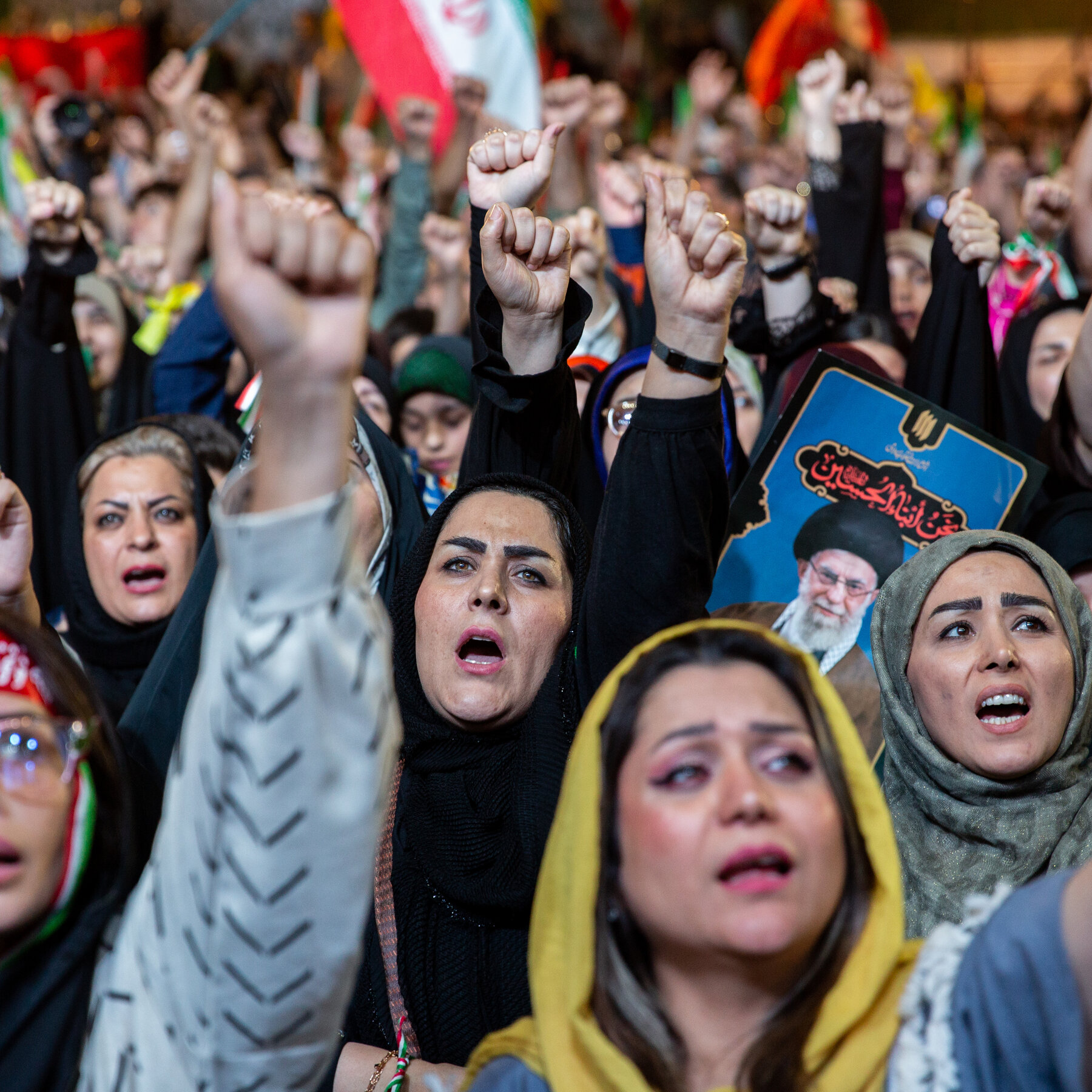
For the second time in three years, senior officials in Washington are using the phrase “within days.” Per reporting by Axios on 24 May 2026, US officials say a framework agreement with Iran is closer than at any point since talks collapsed in 2025, and an announcement could come before the end of the month. The optimism is real—and deliberately amplified. It is also, by the officials’ own admission, contingent on a dozen variables that could still collapse the deal before any ink dries.
The broad parameters, as described by sources close to the negotiations to multiple outlets including The Washington Times, involve a phased quid pro quo: Iran would freeze uranium enrichment above 3.67 percent and submit to enhanced International Atomic Energy Agency inspections in exchange for a phased easing of oil-sector sanctions and the repatriation of frozen central bank assets. A separate understanding—not yet written into the formal text, according to the sources—would address the network of proxy forces Iran has built across Iraq, Syria, Lebanon, and Yemen. Whether that understanding constitutes a binding commitment or a gentleman’s agreement remains the central unresolved question.
The Immediate Context: Talks, Collapses, and a Second Attempt
The revival did not come from nowhere. After the 2025 collapse, mediated in part by Oman and, more contentiously, by intermediaries associated with the BRICS-aligned diplomatic circuit, the Trump administration recalibrated. The initial maximalist position—which demanded a full dismantle of Iran’s enrichment programme in exchange for any relief—gave way to a more transactional approach. A senior US official, speaking to Axios on background, described the current text as “closer than we’ve been, but not done.” That framing—simultaneously confident and hedged—is characteristic of an administration that has learned from its own 2025 overstatement and wants to avoid a second reputational hit.
On the Iranian side, the calculus has its own internal logic. Sanctions have not produced capitulation. The Islamic Republic has instead deepened ties with China and Russia, using its energy leverage and its position in the Gulf to construct a parallel commercial architecture outside dollar-denominated trade. Tehran’s enrichment programme, which in 2025 crossed the threshold of producing weapons-grade material in quantities sufficient for a basic device, has given it a negotiating chip it lacked in 2015. The regime is not coming to the table weak; it is coming with evidence that isolation has produced its own form of resilience.
What changed in 2026 is not Iranian posture but American impatience. The sustained elevation of oil prices driven partly by Middle East risk premiums has complicated the inflation picture the administration had counted on to sustain its political narrative. A managed de-escalation, even an imperfect one, offers a faster path to lower pump prices than waiting for Saudi production adjustments. That economic logic is, sources suggest, as much a driver of the diplomatic sprint as any geopolitical conversion.
The Sceptical Counter-Narrative
Not everyone in Washington shares the optimism. Critics within the US foreign-policy establishment and among Gulf allies—particularly in Riyadh and Abu Dhabi—have pointed to a consistent pattern in Iran nuclear diplomacy: Tehran agrees to frameworks, extracts the sanctions relief, and then negotiates over the implementation details for years while the underlying programme continues. The 2015 Joint Comprehensive Plan of Action is the canonical example. Iran honour’s its initial obligations; the US withdraws under domestic political pressure; the regime, already enriched with institutional knowledge and a research base, resumes its programme at higher levels. The argument is not that Iran cannot be trusted but that the structure of these agreements systematically underweights verification and overweights good-faith assumption.
There is also a more structural objection. The proxy question—what precisely Iran does with Hamas, Hezbollah, the Houthis, and the Shia militias in Iraq—is treated in the current framework as a separate track. Sceptics argue this is precisely the wrong architecture. The weapons programmes and the regional influence networks are not separable from the nuclear file; they are instruments of the same deterrent strategy. An agreement that freezes enrichment but leaves the proxy architecture intact leaves the underlying problem—Iran’s capacity to project power at America’s allies’ expense—unaddressed.
The counter-argument, made by pragmatists within the administration and by European intermediaries, is that perfection is the enemy of adequacy. A partial deal that prevents a nuclear weapon for five years and reduces regional tension by a measurable degree is better than a maximalist position that collapses and leaves both tracks—nuclear and regional—in a worse state. This is the familiar realist case for managed competition over idealistic maximalism. Whether it prevails in an election-adjacent White House atmosphere where strongmen optics matter is a separate question.
Structural Frame: Dollar Architecture and the Diplomatic Detour
There is a layer to this story that the official framing systematically underplays. The sanctions regime against Iran is not only a non-proliferation tool; it is also a mechanism of dollar hegemony. When the US designates Iranian banks, energy firms, and shipping networks for secondary sanctions, it is asserting the reach of the US financial system globally—and punishing any non-American entity that does business with Tehran regardless of where it is headquartered. This extraterritorial reach has made the dollar the default settlement currency for global energy trade not because of its intrinsic qualities but because of the legal exposure that comes with alternatives.
Iran’s pivot toward yuan-denominated oil contracts, toward barter arrangements with Russia, and toward cryptocurrency-based settlement systems is, in part, a response to this architecture. It is also, inadvertently, an existence proof for alternatives. If Iran can trade energy without dollars—even imperfectly, even at a cost—then the implicit guarantee that dollar-denominated trade is the only reliable option weakens slightly. Other countries are watching. The urgency of the US-Iran talks, therefore, is not only about preventing a nuclear weapon. It is about closing the escape hatch before the precedent of dollar-free energy trade becomes too comfortable for others to ignore.
This framing does not appear in the official accounts. It is, however, consistent with the pattern of US diplomatic engagement with adversaries: the overt goal is the stated goal, but the structural goal—maintaining the architecture of American financial primacy—is always present underneath. The 2015 deal was not only about enrichment percentages; it was also about whether Iran remained inside or outside the dollar-denominated global economy. The 2026 version serves the same structural function.
Historical Precedent: What Previous Deals Tell Us
The track record of US-Iran nuclear diplomacy offers no clean verdict. The 2015 JCPOA, brokered under the Obama administration, was widely praised for reducing Iran’s enriched uranium stockpile and limiting enrichment to low grades for fifteen years in exchange for sanctions relief. It collapsed after the Trump administration withdrew in 2018, arguing that the sunset clauses left Iran too close to a bomb too quickly and that the inspection regime was insufficient. The reimposition of sanctions drove Iran back toward enrichment, but it also ended whatever domestic political constituency existed in Tehran for compliance. By 2024, the JCPOA was effectively dead; by 2025, the programme had advanced beyond its terms.
The lesson most analysts draw is not that deals with Iran are impossible but that deal structures matter as much as deal content. A future agreement that lacks robust verification, that contains generous sunset provisions, and that does not address the full fuel cycle leaves the underlying proliferation risk largely intact. The counter-argument is that any deal is preferable to no-deal, because the alternatives are military conflict or a nuclear-armed Iran—and neither of those outcomes serves anyone, least of all the American public.
Gulf states, watching from the periphery, have their own read of the precedent. Saudi Arabia and the UAE have pursued their own nuclear programmes—under civilian covers, with US blessing—in part because they watched Iran’s programme advance and judged that their security required a similar deterrent option. A US-Iran deal that leaves Iran’s enrichment infrastructure intact, even in reduced form, accelerates that regional cascade. The structure of non-proliferation is premised on a single standard; exceptions—whether Israeli or Saudi or Iranian—undermine the norm. This structural inconsistency has been present since the NPT was written, but a new Iran deal will make it more visible, not less.
Stakes and the Road Ahead
If the framework holds and an announcement comes before the end of May 2026, the immediate winners are oil consumers globally, the Trump administration heading into a midterm cycle that has been defined partly by inflation anxiety, and—less visibly—the Chinese and Russian intermediaries who have spent years building diplomatic relationships with Tehran and who now have a tangible return on that investment. The immediate losers are the hardliners in Tehran who built the programme as a bargaining chip and who now face a regime that may negotiate it away, and the Gulf allies who preferred continued pressure to managed engagement.
The deeper stakes are structural. Whether this agreement produces a durable de-escalation or becomes another chapter in the long history of Iranian nuclear diplomacy—partial compliance, gradual erosion, eventual collapse—will depend on the verification mechanisms built into the text, on the willingness of successive US administrations to sustain sanctions pressure on non-signatories who violate the agreement, and on whether Tehran’s clerical leadership decides that the benefits of re-integration outweigh the ideological costs of appearing to have capitulated to American pressure.
What is clear is that the sprint to an announcement before the end of May is as much about domestic political calendars as about nuclear timelines. The regime in Tehran knows this. The administration in Washington knows that Tehran knows it. And the gap between “optimism” and “deal” is, historically, where the most consequential details get lost.
Monexus covered this development primarily through Axios and the Washington Times reporting, both of which emphasised the fragility of the current text. The wire framing leaned toward confidence; this article foregrounds the structural conditions that have repeatedly complicated US-Iran agreements rather than treating the current moment as exceptional.
Wire provenance
This editorial synthesis draws on the following public wire/social posts:
- https://t.me/wfwitness/12491
- https://x.com/unusual_whales/status/1924412849384149408
- https://t.me/Cointelegraph/48391
- https://t.me/Cointelegraph/48391