Trump's Iran Gambit: Progress or Pressure?
The Contradiction in Plain Sight
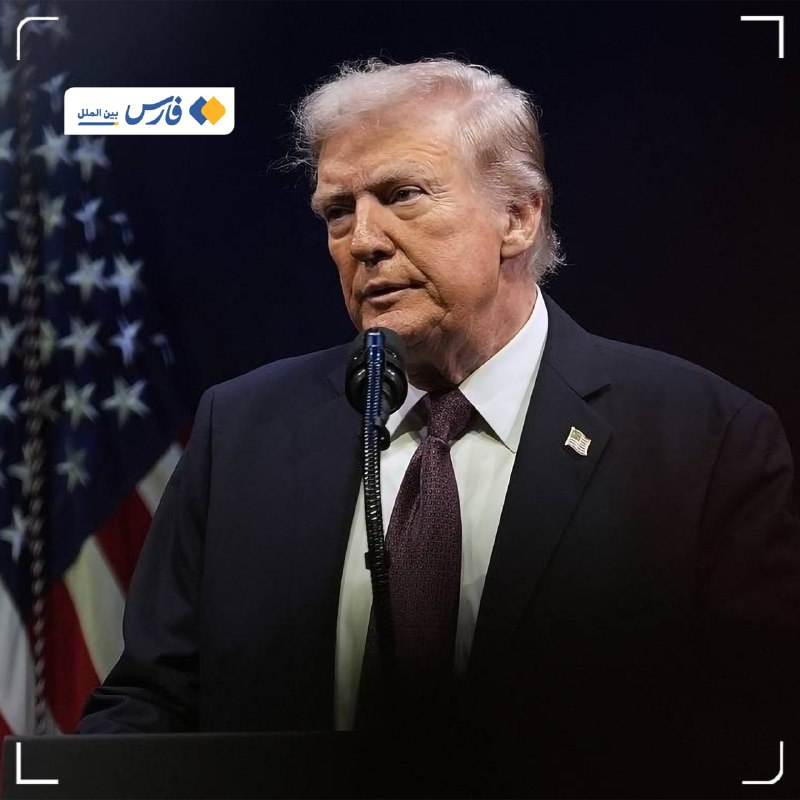
The message from Washington on May 24, 2026, was, by any measure, confused. According to reporting from LiveMint, President Trump announced that morning that his administration had made significant progress toward a peace deal with Iran that would see the Strait of Hormuz reopened. The waterway, through which roughly one-fifth of the world's oil passes, is the most critical maritime chokepoint in the global energy architecture. Hours later, according to Middle East Spectator, the President issued fresh threats against Iran in the middle of the negotiating process itself. And still later that day, per OSINTdefender, Trump told his representatives not to rush into any deal — a caution that cuts directly against the framing of imminent breakthrough.
The juxtaposition is difficult to reconcile on its face. How does an administration simultaneously offer to reopen a strategic waterway, threaten military action against the same target, and warn its own negotiators against moving too quickly? The answer matters, because it determines whether this is a coherent strategy or a malfunctioning one — and because the distinction has real consequences for regional stability, energy markets, and the credibility of American diplomacy.
Strategy or Dysfunction?
The charitable reading is that this is a negotiating tactic. Trump has built a political brand on unpredictability; the oscillation between threats and offers is a well-documented feature of his approach to counterparties both foreign and domestic. Viewed through that lens, the Hormuz announcement is an incentive — sanctions relief in exchange for nuclear concessions — while the threats serve as a reminder of the alternative. The administration is simultaneously dangling the carrot and brandishing the stick, keeping Tehran uncertain about which instrument will define the American posture.
The less charitable reading is that the mixed signals reflect genuine disagreement within the administration itself. The President's economic team may see a deal as a vehicle for stable oil prices and a useful prop for markets heading into a difficult political season. The security establishment, or factions of it, may prefer a harder line — one that preserves maximum pressure, keeps Iran economically isolated, and avoids the optics of an accommodation with a regime the administration has repeatedly designated as a sponsor of terrorism. The sources reviewed by this publication do not establish which camp is dominant, and the public statements offer no clear resolution.
What is clear is that this is not new terrain. The first Trump administration combined maximum pressure with back-channel overtures; the current one appears to be running the same playbook at higher velocity. The question is whether the playbook still works. Iran in 2026 is not Iran in 2017. The nuclear program has advanced considerably. The regional position, while constrained, has been reinforced by the experience of surviving the maximum pressure campaign and watching the United States exit the original nuclear agreement.
What History Teaches About Leverage
The 2015 Joint Comprehensive Plan of Action offers the most relevant historical precedent. That agreement, negotiated by the Obama administration alongside the EU, China, Russia, and others, froze Iran's nuclear program in exchange for phased sanctions relief. Iran complied with the terms for roughly two years. Then came the Trump withdrawal in 2018, the reimposition of sanctions, and the beginning of the maximum pressure campaign.
Iran's response was predictable in retrospect. It began exceeding the JCPOA's enrichment limits, accumulating stockpiles of enriched uranium, and advancing centrifuge technology. By 2026, Tehran possesses far more nuclear material and a shorter breakout timeline than it did in 2015. It also has less appetite for a grand bargain. The lesson drawn from the American withdrawal — that any agreement with the United States is contingent on the political preferences of whoever occupies the White House — is not one Tehran is likely to forget.
This creates a structural problem for any new deal. The United States wants deeper concessions from a position Iran believes has been weakened by years of sanctions. Iran wants ironclad guarantees that the next administration cannot simply tear up the agreement. No such guarantee exists in American constitutional architecture. The deal's survival depends on the durability of executive commitments across electoral cycles — a fragile foundation at the best of times, and a particularly unreliable one in the current political environment.
There is also the question of what a deal would actually contain. The original JCPOA focused narrowly on nuclear constraints. A new agreement might expand into missile programs and regional behavior — demands that Iran has historically rejected as overreach into sovereign affairs. Whether a comprehensive deal is achievable on terms the administration would accept, or that Iran would sign without provisions that make American withdrawal costlier, remains deeply uncertain.
The Regional Dimension
The stakes extend well beyond the bilateral relationship. The Strait of Hormuz is the artery through which the Gulf states — Saudi Arabia, the UAE, Kuwait, Qatar, Oman — export their primary commodity. Any disruption ripples through global energy markets, drives price spikes at the pump in consumer economies, and destabilizes governments in the region whose budgets depend on oil revenues.
Israel has watched the Iran nuclear file with undisguised alarm for decades. The current Israeli government has stated publicly that it will not accept a nuclear Iran and reserves the right to act unilaterally to prevent one. This is not idle rhetoric. Israel has conducted operations in Syria targeting Iranian-affiliated forces and has carried out targeted strikes in Iraq. It has also absorbed Iranian missile barrages in retaliation for operations in Syria and Gaza. The red lines Israeli officials have articulated are not abstract; they are the product of a strategic culture shaped by existential threat perception. A deal that Israeli leaders believe leaves Iran on a pathway to nuclear weapons capability would face fierce opposition from Jerusalem.
Saudi Arabia and the UAE have taken a more pragmatic posture. Both have pursued their own channels with Tehran, seeking to de-escalate tensions and focus on economic development. Neither wants a war. Both understand that the Hormuz chokepoint is a vulnerability for everyone — including Iran, which depends on exporting its own oil through the same corridor. The Saudi and Emirati calculus, broadly, is that a negotiated settlement that eases tensions and opens transit routes is preferable to indefinite confrontation. But they are also wary of an Iran that emerges from sanctions relief with restored regional ambitions.
The Geopolitical Architecture
Stepping back from the immediate negotiating dynamics, what is actually being contested here is not merely the terms of a nuclear arrangement. It is the shape of the regional order and the role of American power within it.
The Trump administration's approach to Iran has always combined transactional and ideological elements. The transactional case for a deal is straightforward: reduced tensions, stable oil markets, a less complicated landscape in which to pursue other priorities. The ideological case against one is equally clear: the regime in Tehran is hostile to American interests, supports armed groups across the region, and cannot be trusted with the infrastructure of a nuclear program under any circumstances.
The administration's simultaneous pursuit of both positions is not necessarily a contradiction. It may be a calculation that the appearance of progress serves multiple constituencies simultaneously — investors and consumers who want stable energy prices, Gulf partners who want continued American engagement, and a domestic audience that responds to the optics of a President who appears to be making deals.
There is also a dollar dimension. The Strait of Hormuz is not merely a physical chokepoint; it is a node in the financial architecture of global oil trade, most of which is conducted in dollars. Any deal that eases sanctions on Iran and allows Tehran to re-enter global energy markets has implications for the dollar's role in commodity transactions — a consideration that extends well beyond the bilateral relationship into broader questions of monetary hegemony.
China's position adds another layer. Beijing is Iran's largest crude oil customer and has significant interests in the stability of Gulf energy routes. A de-escalation between the United States and Iran would remove a source of volatility that complicates China's own strategic planning in the region. But China would also be wary of any settlement that validates American diplomatic leverage or leaves Tehran more dependent on Western rather than Chinese economic ties. The parameters of any deal will reflect, in part, how these competing Chinese and American interests are balanced.
What We Do Not Know
The sources reviewed by this publication leave significant gaps. We do not know whether the administration's talk of progress reflects genuine movement toward an agreement or an exercise in managing market expectations and diplomatic pressure. The same Telegram sources that describe significant breakthrough on May 24 also describe threats and warnings against rushing — a combination that admits multiple interpretations.
We do not know the substance of any proposed deal. The sources reference the Strait of Hormuz but do not specify what nuclear constraints, sanctions relief, or security guarantees are on the table. Without that specificity, it is impossible to assess whether the terms being discussed are ones Iran could accept or that would satisfy domestic American political constraints.
We do not know how Iran is reading the signals. Tehran's negotiating posture will depend on assessments of American intentions, domestic political constraints, and the strategic calculation of whether a deal serves Iranian interests. Those assessments are not visible from the outside.
We do not know whether the administration has a plan for verification — a mechanism that survived the collapse of the original JCPOA and could form the scaffolding of a new agreement — or whether it is prepared to offer the sanctions relief necessary to make a deal politically viable for Tehran.
The Road Ahead
The next several weeks will test whether the contradictions resolve into a coherent strategy or persist as a symptom of a disorganized approach. The administration has incentives to show progress before the political calendar becomes more complicated. Iran has its own internal dynamics that constrain what its leadership can offer and accept.
If the contradictions persist, it will be worth asking whether the ambiguity is the point — whether a President who built his political brand on unpredictability finds strategic value in keeping every party guessing. That reading has the advantage of coherence with everything the sources describe. It also has the disadvantage of being a strategy that succeeds at the level of optics while failing at the level of substance — a pattern that American diplomacy has exhibited before, in other contexts, with consequences that outlasted the immediate political moment.
The Strait of Hormuz will remain open in the near term. The negotiations, whatever their trajectory, will continue. The question is whether the contradictions are a feature or a flaw — and who bears the cost if they turn out to be the latter.
Wire provenance
This editorial synthesis draws on the following public wire/social posts:
- https://t.me/osintlive/2841
- https://t.me/Middle_East_Spectator/1842
- https://t.me/LiveMint/8923
- https://en.wikipedia.org/wiki/Joint_Comprehensive_Plan_of_Action
- https://en.wikipedia.org/wiki/Strait_of_Hormuz
- https://en.wikipedia.org/wiki/Iranian_nuclear_program_framework
- https://en.wikipedia.org/wiki/Iran%E2%80%93Saudi_Arabia_relation
- https://en.wikipedia.org/wiki/Iran%E2%80%93Israel_conflict