Trump, Pezeshkian, and the Nuclear Question: Reading the Iran Diplomatic Opening
President Trump's reposting of Iranian President Pezeshkian's nuclear assurance marks a striking rhetorical shift — but the gap between a statement and a verifiable agreement remains wide. This publication examines what the signals suggest, what the markets are pricing in, and what fundamental questions the diplomatic opening has yet to answer.
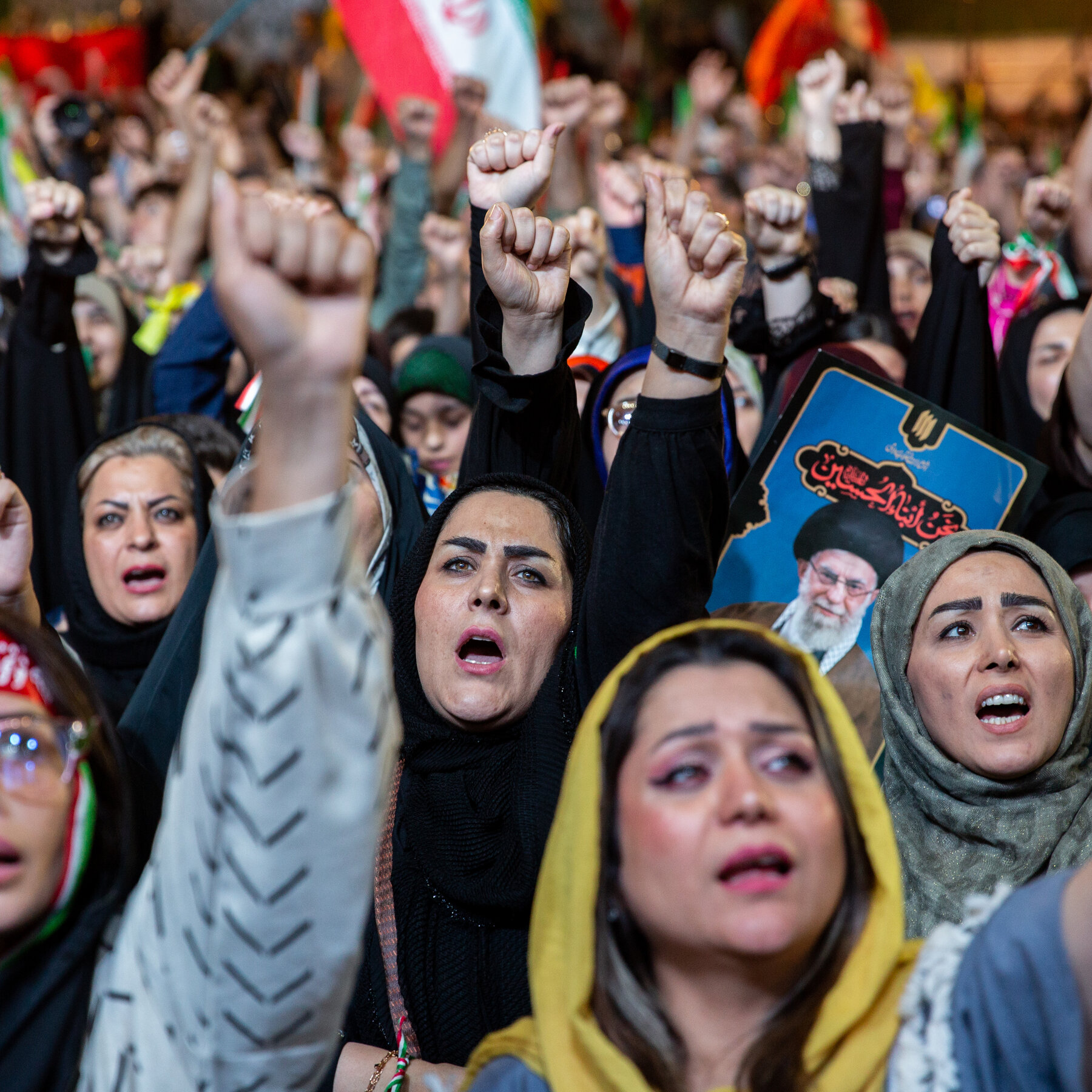
On the afternoon of 24 May 2026, President Donald Trump reposted a statement by Iranian President Masoud Pezeshkian in which the Islamic Republic declared it was prepared to reassure the world it is not seeking nuclear weapons. Hours earlier, Trump had announced to his own platform that a peace agreement between the United States, Iran, and unnamed additional parties had been largely negotiated and was subject to finalization. The Bitcoin price rose approximately 4 percent on the news, according to CoinDesk reporting, reflecting the market's read of a potential de-escalation in a geopolitical flashpoint that has defined Middle Eastern security architecture for two decades.
The signals are arresting. A United States president who began his second term pledging the "maximum pressure" campaign's restoration now appears to be amplifying an Iranian president's explicit nuclear assurance to his own social media audience. The substance of what, precisely, has been agreed — and whether a statement constitutes an agreement — remains unclear from the sources available to this publication. What can be examined is the character of the diplomatic opening, the market signals accompanying it, and the structural conditions that make a durable nuclear understanding either plausible or fragile.
What Tehran Said, and What It Means
Pezeshkian's statement, as reported by Iranian state media on 24 May 2026, is notable for its directness. Iran is prepared, the president said, to assure the international community that it is not seeking nuclear weapons. The phrasing matters: it is an offer of reassurance, not a concession of guilt. Iran has long maintained that its nuclear program is exclusively civilian in purpose, a position that Western intelligence assessments have consistently treated with skepticism — not without reason, given the program's history of concealment prior to the 2015 Joint Comprehensive Plan of Action.
Pezeshkian, who assumed office in 2025 on a platform of economic relief from sanctions, is not a figure who entered office with ideological hostility to engagement with Washington. His election reflected, in part, Iranian public exhaustion with the economic consequences of sustained isolation. That context matters: the willingness to offer explicit written assurances about nuclear intentions is more credible from a leader whose domestic mandate depends on delivering tangible economic relief than from one whose political survival is tied to maximalist posturing.
The question this publication has examined is whether the statement represents a substantive negotiating position or diplomatic theater. The sources reviewed do not contain the detailed terms of any proposed verification mechanism, monitoring framework, or sanctions relief sequence that would typically accompany a binding nuclear agreement. A statement of assurance, without an architecture of verification, is not a deal. The gap between the two is where the diplomatic work either succeeds or collapses.
Markets Are Listening
The Bitcoin market's reaction to the peace deal announcement is a useful diagnostic. Bitcoin rose approximately 4 percent, according to CoinDesk, on what remains unconfirmed reporting of a broadly negotiated agreement. The move reflects a market that has, for years, treated geopolitical risk as a tail wind for alternative assets — a dynamic that accelerated after the sanctions regime tightened and Iranian digital asset activity increased as a workaround.
The logic is straightforward: a de-escalation between the United States and Iran would ease sanctions pressure, reduce the premium on geopolitical risk across emerging market assets, and potentially redirect capital flows from safe-haven digital assets back into risk-on positions. Whether that capital rotation materializes depends entirely on whether the agreement moves from announcement to implementation. The difference between a 4 percent speculative spike and a sustained reallocation is the difference between a social media post and a verifiable agreement with genuine sanctions relief attached.
The broader financial market implications are worth examining. A credible US-Iran nuclear understanding would affect energy markets, regional security dynamics, and the sanctions architecture that has been a tool of dollar hegemony in Middle Eastern trade for decades. It would also affect the relationships Iran has rebuilt with Arab states across the Gulf — a diplomatic realignment that has proceeded quietly while Western coverage focused on the Israeli-Palestinian dimension of regional security.
The History That Shadows This Moment
The diplomatic opening does not occur in a vacuum. The 2015 JCPOA represented years of painstaking negotiation between Iran and the P5+1 group of world powers, producing an agreement that imposed unprecedented verification requirements on Iran's nuclear program in exchange for sanctions relief. The Trump administration withdrew from the agreement in 2018, reimposing the sanctions that had been lifted, and Iran began breaching the deal's enrichment limits within a year of the withdrawal.
That history matters because it defines what any new agreement must overcome. The JCPOA's critics in Washington argued that the deal's sunset provisions — phases under which restrictions would expire — left the United States with insufficient long-term leverage. Iran's critics argue that the program accumulated knowledge that cannot be unlearned, and that any enrichment capacity represents a latent weapons capability regardless of the restrictions in place. Both critiques contain structural truth. A weapons program that has been demonstrated to exist cannot be undiscovered. The question is whether the verified restrictions in place are sufficient to extend the time required to produce a weapon from months to years — the standard that the JCPOA was designed to meet.
What has changed since 2018 is the geopolitical landscape. Iran has deepened its relationships with Russia and China, weathering sanctions that have arguably been more effective at constraining its oil exports than its political behavior. The Abraham Accords restructured the Israeli-Arab diplomatic map in ways that reduced the salience of the Israeli-Iranian rivalry for several Gulf states. The conditions that produced the JCPOA no longer exist. The conditions that might produce a successor arrangement — or something genuinely different — remain to be defined.
Competing Interpretations
The available sources present two distinct readings of what is underway, and this publication finds that both contain partial truth.
The first reading holds that the Iranian leadership, under genuine economic pressure and facing a changed regional environment, has decided that a nuclear accommodation with Washington is preferable to continued isolation. This interpretation points to Pezeshkian's election platform, the stated willingness to provide written assurances, and the reported pace of the negotiations as evidence of a strategic decision at the leadership level. Under this reading, the deal is real and the diplomatic opening reflects a genuine recalculation in Tehran.
The second reading holds that Iran is engaging in a tactical phase of diplomacy designed to extract sanctions relief without genuine structural concessions on its nuclear program. This interpretation points to Iran's history of nuclear ambiguity, its consistent rejection of indefinite enrichment restrictions, and the gap between a statement of assurance and a verified agreement with teeth. Under this reading, the deal is a negotiating tactic — an offer to talk that defuses pressure while preserving optionality.
The evidence reviewed does not resolve this disagreement. The sources reviewed do not contain the detailed negotiating positions, the proposed verification language, or the enforcement mechanisms that would allow a definitive judgment. What can be said is that the conditions for a durable agreement — verifiable restrictions, credible monitoring, genuine sanctions relief, and durable domestic political support on both sides — have not yet been demonstrated to exist. The announcement of a largely negotiated deal is not the same as the announcement of a durable one.
The Stakes and the Horizon
The stakes of this opening are significant across multiple dimensions. For the Middle East, a verifiable US-Iran nuclear understanding would alter the regional security calculus in ways that extend well beyond the nuclear file: it would affect the trajectory of the Israeli-Palestinian conflict, the Gulf states' hedging strategies, and the architecture of US military presence in the region. For global energy markets, the lifting of Iranian sanctions would add a substantial volume of oil supply to markets that have been navigating OPEC+ constraints — a development with direct consequences for global inflation and for the economic positions of major consumers.
For the dollar's role in Middle Eastern trade, a US-Iran nuclear accommodation carries longer-term implications that are worth examining carefully. Sanctions regimes are enforcement mechanisms for dollar dominance in global trade. The relaxation of sanctions on Iran — if it comes with expanded bilateral trade conducted in currencies other than dollars — represents a small but real stress test of a system that has been foundational to US financial power since the petrodollar agreements of the 1970s. Whether this moment represents a turning point or a one-time exception depends on choices that have not yet been made.
The market signals accompanying the announcement — Bitcoin's rise, the broader risk-on dynamic — suggest that financial markets are pricing in a material reduction in geopolitical risk premium across emerging markets. That pricing is rational only if the agreement survives its first serious test: domestic political opposition in both Washington and Tehran, the inevitable discovery that verification is harder than negotiation, and the pressure from regional actors who may prefer the current arrangement to a normalized one.
Trump's repost of Pezeshkian's statement is a striking signal. Whether it marks the beginning of a durable accommodation or a diplomatic episode whose substance dissolves on contact with implementation remains to be seen. The answer will be written not in social media posts but in the technical architecture of whatever is agreed — the verification provisions, the monitoring access, the sanctions relief sequence, and the enforcement mechanisms that give the whole arrangement teeth. Until those details are known, this publication will treat the announcement as what it is: an opening, not a conclusion.
This publication's coverage of Iran nuclear diplomacy is grounded in the statements and reporting available at time of writing. The sources reviewed do not specify the verification mechanisms or sanctions relief terms reportedly under negotiation. Monexus will continue to report on the technical dimensions of this story as those details emerge from verifiable sources.
Wire provenance
This editorial synthesis draws on the following public wire/social posts:
- https://t.me/ClashReport/18456
- https://t.me/presstv/8234
- https://en.wikipedia.org/wiki/Joint_Comprehensive_Plan_of_Action
- https://en.wikipedia.org/wiki/2025_Iranian_presidential_election
- https://en.wikipedia.org/wiki/Abraham_Accords
- https://en.wikipedia.org/wiki/Sanctions_against_Iran
- https://en.wikipedia.org/wiki/Nuclear_program_of_Iran