The Night Usyk Won and Kyiv Burned
On the same night Oleksandr Usyk reclaimed his heavyweight titles in Riyadh, Russia struck the Kyiv region with a combined attack that killed civilians and burned a school. The world celebrated one Ukrainian victory. It largely missed the other.
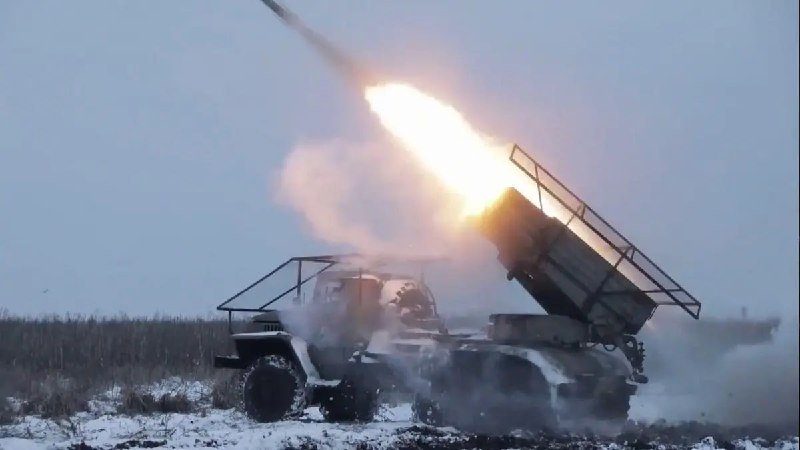
The same night Oleksandr Usyk stood in a Riyadh ring reclaiming his heavyweight crowns, fragments of a Russian missile tore through a school in the Kyiv region. Children had been sheltering inside. The entrance to the bunker had collapsed.
On the morning of 24 May 2026, one story dominated the sports feeds: a Ukrainian boxer had beaten Tyson Fury's replacement opponent and was being celebrated across social media. The other story — casualties, burning residential blocks, a dormitory ablaze — moved more slowly through international channels. Both events unfolded simultaneously. Both involved Ukraine. The world's attention chose one.
This is not a complaint about sports coverage. Boxing finals are supposed to command attention. The complaint — if it is even that — is about what the differential attention reveals. Ukraine has been under sustained Russian assault for over three years. The country produces a steady stream of material that Western audiences can engage with: battlefield victories, drone footage, footballer-turned-soldier stories, Grammy references. The war has become a content category as much as a conflict.
What the Riyadh–Kyiv juxtaposition exposes
The reporting from Ukrainian state services on the night of 24 May was unambiguous about the scale of what had happened. According to updates from TSN_ua and UNIAN, Russian forces launched a combined attack across the Kyiv region, striking residential buildings, a school, and a dormitory. The State Emergency Service published photographs showing multiple structures on fire and released footage of rescue operations underway. The sources confirm at least one fatality; others were trapped when debris blocked the shelter entrance. One update described people being blocked inside a school as emergency crews worked to reach them.
These details matter precisely because they resist easy framing. A school being hit while children shelter inside is not a victory lap. It is the war as it exists in the parts of Ukraine that do not trend. The discrepancy between the celebration in Riyadh and the emergency response in the Kyiv region is not an accident of timing — it is a structural feature of how international attention operates in a conflict that has entered its third year of grinding attrition.
The algorithmic logic of concern
The deeper problem is that sustained attention is physically and psychologically demanding. Audiences, and the editorial operations that serve them, habituate to ongoing wars in ways that allow the actual scale of suffering to become background noise. A strike that would have been the lead item on every news broadcast in March 2023 can pass as a brief item in a morning briefing by May 2026, particularly when it coincides with a more digestible story from the same country. This is not unique to Ukraine, but Ukraine has been the defining case of how the 24-hour environment handles a long war against a nuclear-adjacent adversary.
The coverage gap is not purely a function of reader fatigue. It reflects the incentive structures embedded in modern news production: stories that arrive clean, dramatic, and pre-narrated get amplified. Stories that require assembly — casualty confirmation, context, ongoing response — move more slowly through editorial systems that are themselves under resource pressure. The result is an information landscape that is structurally better at celebrating Ukrainian victories than at documenting the cost of the war that makes those victories necessary.
The limits of sympathy as a political resource
What the differential coverage reveals about sympathy as a political resource deserves closer examination. Ukraine's Western partners have supplied significant military and financial support, and public opinion in the US and EU has remained broadly supportive. But political sustainability depends on the war remaining legible to domestic audiences. An audience that congratulates Ukraine when it wins a boxing match and scrolls past when a school burns is an audience that will eventually be lost — not because it stopped caring, but because the infrastructure for caring has been optimised for different content.
This matters most in the context of the war's next phase. Attrition warfare requires sustained attention and resources from Western governments whose domestic politics are increasingly fractured. The Ukrainian military is managing a multi-front defence while Russian forces methodically probe for weaknesses. The political case for continued support depends on the war remaining present in public consciousness — not as a content category, but as a strategic reality with direct consequences for European security.
The night of 24 May produced both stories simultaneously. Usyk's victory confirmed that Ukrainian excellence persists. The strike confirmed that the war persists — indifferent to sport, indifferent to the world's mood, indifferent to whether anyone is watching. The question worth sitting with is whether the world has developed the institutional capacity to hold both truths at once, or whether it will continue to be a place where one story gets celebrated and the other quietly fades.
Monexus covered the Kyiv region attack from Ukrainian state sources rather than wire service reporting, given the overnight timing of the strike. Western news organisations were still confirming details when this piece published.
Wire provenance
This editorial synthesis draws on the following public wire/social posts:
- https://t.me/TSN_ua/22823
- https://t.me/TSN_ua/22819
- https://t.me/TSN_ua/22821
- https://t.me/uniannet/214823